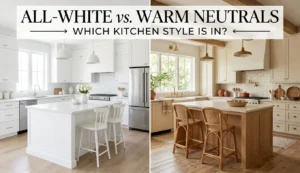

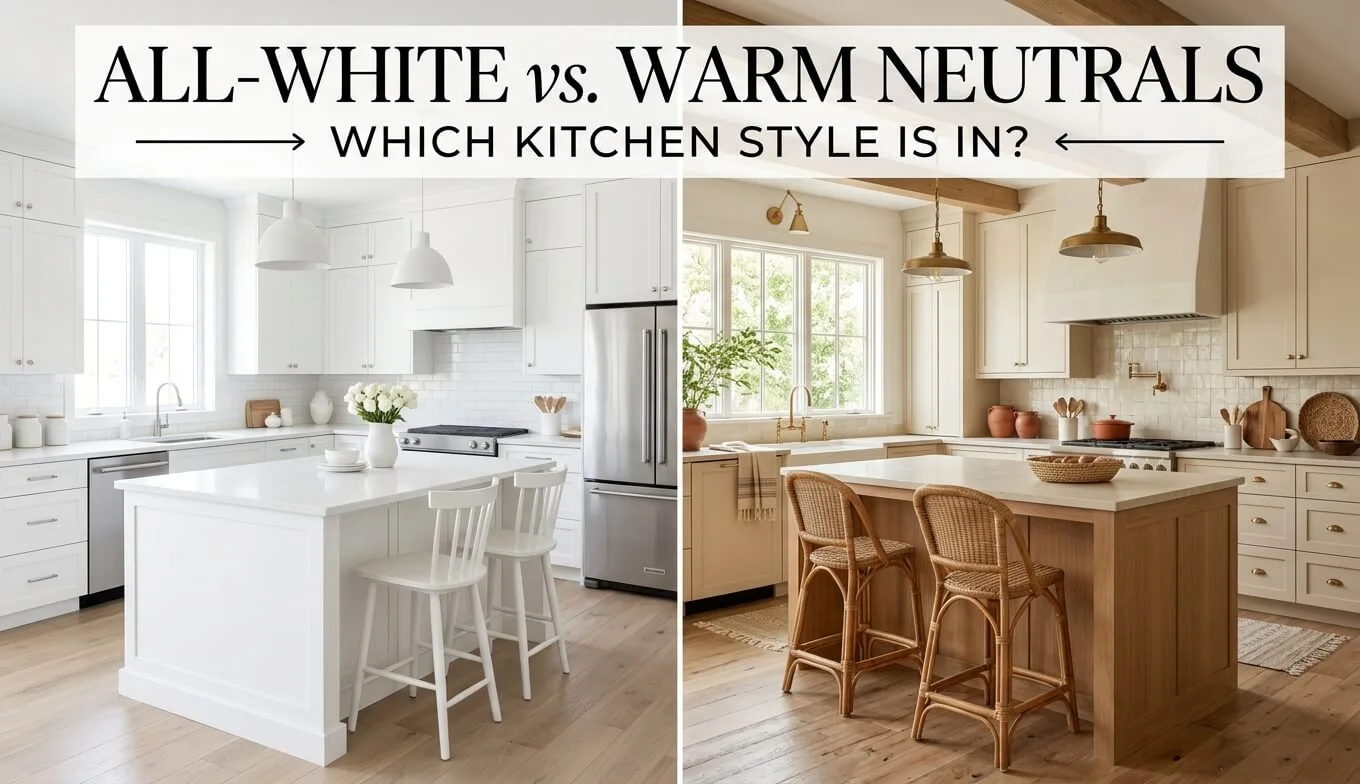
Kitchen design trends are moving toward spaces that feel comfortable, personal, and timeless rather than overly coordinated. One of the biggest choices homeowners face is All-White vs. Warm Neutrals, especially when selecting cabinet colors, countertops, backsplashes, and finishes. While an all-white kitchen offers a clean and bright appearance, warm neutrals bring softness and depth to the room.
So, which kitchen style is right for your home? The answer depends on your lighting, existing finishes, design preferences, and how you want the kitchen to feel. Let’s compare both approaches and explore how you can create a kitchen that looks current without quickly feeling dated.
Understanding All-White vs. Warm Neutrals in Kitchen Design
Before comparing the two styles, it helps to understand what makes each palette distinctive. Both can create beautiful, versatile kitchens, but they produce very different visual effects.
What Defines an All-White Kitchen?
An all-white kitchen typically uses white or off-white cabinetry as the dominant color, often combined with light countertops, backsplashes, walls, and flooring. The goal is usually to create a crisp, cohesive appearance where natural and artificial light can move easily throughout the room.
A white kitchen design does not necessarily have to look stark or clinical. Different shades of white, textured materials, natural wood, patterned backsplashes, and contrasting hardware can add warmth and personality while keeping the overall palette light.
What Are Warm Neutrals in Kitchen Design?
Warm neutral kitchens use colors such as beige, cream, taupe, greige, sand, and soft brown as their foundation. These shades contain warm undertones that make cabinetry and surrounding finishes feel softer and more inviting than cooler whites.
Warm neutrals also work particularly well with natural materials. Wood cabinetry or accents, stone countertops, brushed brass hardware, and earthy backsplashes can all complement the palette without making the kitchen feel visually busy.
Why Kitchen Color Trends Are Moving Beyond Bright White
For years, bright white dominated kitchen renovations because it created a fresh, spacious appearance. Today, homeowners are increasingly interested in kitchens that feel more relaxed and connected to natural materials.
This does not mean white kitchens are disappearing. Instead, current kitchen color trends are becoming more layered, with designers combining whites, creams, wood tones, and other subtle neutrals to create greater depth.
All-White vs. Warm Neutrals: Key Differences
The best way to compare All-White vs. Warm Neutrals is to consider how each palette performs in everyday living. Color affects more than appearance; it can influence how spacious, comfortable, and practical your kitchen feels.
| Feature | All-White Kitchen | Warm Neutral Kitchen |
| Overall feel | Bright and clean | Warm and inviting |
| Light reflection | High | Moderate to high |
| Visual style | Crisp and streamlined | Soft and layered |
| Best materials | Marble, quartz, glass, metal | Wood, stone, brass, natural textures |
| Maintenance | Can show stains and marks | Often more forgiving |
| Design flexibility | Highly versatile | Highly versatile with an earthy feel |
Color and Visual Appearance
All-white kitchens create a strong sense of consistency because cabinetry and surrounding surfaces share a similar color family. This can make architectural features and decorative elements stand out more clearly.
Warm neutrals provide more variation without introducing bold colors. A combination of cream cabinets, taupe walls, and natural stone can create subtle contrast while maintaining a cohesive appearance.
Warmth and Atmosphere
White reflects light and can make a kitchen feel fresh, energetic, and open. However, cooler whites can sometimes feel sterile when used without contrasting textures or warmer accents.
Warm neutral colors naturally introduce a sense of comfort. They are particularly effective in open-plan homes where the kitchen needs to transition smoothly into living and dining areas.
Light and Perceived Kitchen Size
An all-white palette can be especially useful in smaller kitchens because light surfaces reflect more available light. This can make walls and cabinetry appear less visually heavy.
Warm neutrals can also work in smaller spaces, particularly when lighter shades such as cream, ivory, or pale greige are selected. The key is to avoid using too many dark or heavily contrasting finishes in a compact room.
Maintenance and Everyday Practicality
White surfaces can make dirt, spills, and discoloration easier to notice, particularly on frequently touched cabinet doors. This does not make an all-white kitchen impractical, but it does mean regular cleaning may be more noticeable.
Warm neutrals tend to disguise everyday dust and minor marks more effectively. If your kitchen experiences heavy daily use, choosing practical finishes alongside a warmer palette can make maintenance feel easier.
How Each Style Works With Different Materials
Both palettes are flexible, but they interact differently with materials. White pairs beautifully with marble-look quartz, stainless steel, glass, and dark hardware for a crisp contemporary appearance.
Warm neutrals naturally complement wood, limestone, natural stone, rattan, aged metals, and other organic finishes. This makes them particularly useful when creating a layered kitchen with plenty of texture.
What Makes an All-White Kitchen a Timeless Choice?
Despite changing preferences, white remains one of the most dependable choices for kitchen cabinetry. Its simplicity gives homeowners considerable freedom to change decorative elements without needing to replace the main finishes.
An all-white kitchen can also adapt as your personal taste changes. Instead of replacing cabinets, you can update the appearance through hardware, lighting, rugs, artwork, and accessories.
Creates a Clean and Bright Look
White cabinetry immediately creates a sense of brightness and visual cleanliness. It can also help emphasize natural light, making the room feel more open during the day.
For a softer result, consider combining multiple white tones rather than choosing exactly the same shade for every surface.
Works Well With Multiple Kitchen Styles
White cabinetry can complement a wide range of design directions, including:
- Modern and contemporary kitchens
- Traditional and transitional kitchens
- Minimalist kitchen designs
- Coastal-inspired interiors
- Farmhouse-style spaces
This flexibility is one reason white remains among the most reliable timeless kitchen colors.
Makes Smaller Kitchens Feel More Open
In compact kitchens, dark cabinetry can sometimes create visual weight. White cabinets help reduce that effect by reflecting light and keeping the room visually continuous.
For an even more spacious appearance, combine light cabinetry with a simple backsplash, reflective surfaces, and minimal visual clutter.
Easy to Refresh With Hardware and Decor
One of the biggest advantages of white cabinetry is how easily it can be updated. Changing cabinet handles from chrome to brass, for example, can completely alter the character of the space without changing the cabinets.
You can also introduce seasonal colors through artwork, textiles, bar stools, and small appliances while keeping the main kitchen neutral.
Why Warm Neutral Kitchens Are Gaining Popularity
Warm neutrals have become increasingly popular because homeowners want kitchens that feel less clinical and more connected to the rest of the home. They offer visual warmth without relying on strong colors.
The palette also works particularly well with the growing preference for natural and tactile materials. Instead of making every surface look perfectly uniform, warm neutral kitchens embrace subtle variations.
Adds Warmth Without Overwhelming the Space
Colors such as cream, beige, taupe, and light greige can add character without becoming visually dominant. They create a softer backdrop for countertops, backsplashes, lighting, and decorative features.
This makes warm neutrals an excellent choice if you want color but prefer an understated look.
Creates a More Inviting Kitchen
Warm colors tend to create a relaxed atmosphere, which can be especially appealing in kitchens that double as dining, entertaining, or family spaces.
Rather than feeling purely functional, a warm neutral kitchen can feel like a natural extension of the home’s living areas.
Pairs Naturally With Wood and Natural Materials
Warm neutral colors work particularly well alongside:
- Natural or stained wood
- Stone countertops
- Travertine and limestone-inspired finishes
- Woven textures
- Brass and bronze hardware
These combinations create visual depth while keeping the overall palette restrained.
Fits Contemporary Kitchen Styles
Warm neutrals are not limited to traditional interiors. Soft greige cabinetry, slab doors, minimalist hardware, and stone surfaces can create a distinctly contemporary kitchen.
The result is modern without feeling overly stark, making this approach particularly appealing to homeowners looking for longevity.
How to Choose Between All-White vs. Warm Neutrals
There is no universal winner when comparing All-White vs. Warm Neutrals. Your home’s architecture, lighting, existing finishes, and personal preferences should guide the decision.
Before choosing cabinet colors, consider how the kitchen will look throughout the day rather than judging samples under showroom lighting alone.
Consider the Amount of Natural Light
A kitchen with limited natural light may benefit from lighter whites, creams, or pale warm neutrals. In a room with abundant sunlight, you have more freedom to experiment with deeper neutral tones.
Always view large samples in the actual kitchen because undertones can look dramatically different depending on the surrounding light.
Think About Your Home’s Overall Color Palette
Your kitchen should connect visually with nearby rooms, particularly in an open-plan layout. Look at kitchen flooring ideas, wall colors, furniture, and existing wood tones before selecting cabinetry.
If your home already contains plenty of warm wood and earthy finishes, warm neutrals may create a more harmonious transition. If the surrounding rooms are light and minimalist, white may provide a cleaner connection.
Match the Kitchen to Your Preferred Design Style
Think about the atmosphere you want to create:
- Choose white for a crisp, airy, and streamlined appearance.
- Choose warm neutrals for a softer, relaxed, and layered look.
- Combine both if you want brightness with additional warmth.
The goal is not simply to follow a trend but to create a space you will enjoy living with for years.
Consider Long-Term Versatility and Resale Appeal
Both white and neutral kitchens can have broad appeal when the design is thoughtfully executed. Avoid overly trendy combinations that could quickly become dated, and focus instead on quality materials and balanced proportions.
A timeless kitchen does not have to be completely neutral. The strongest designs usually combine a dependable foundation with easily replaceable decorative elements.
All-White Kitchen Ideas for a Modern Look
If you prefer the crisp appearance of white cabinetry, small design choices can prevent the space from feeling flat or overly sterile.
Consider these ideas:
- Pair white cabinets with a contrasting or subtly veined countertop.
- Add texture through backsplashes and flooring.
- Introduce natural wood accents to soften the palette.
- Use contrasting hardware and lighting for definition.
- Layer different white and off-white tones for depth.
These details allow an all-white kitchen to feel sophisticated rather than one-dimensional.
Warm Neutral Kitchen Ideas to Try
Warm neutral kitchens benefit from layering. Instead of choosing one beige or cream shade and repeating it throughout the room, combine related tones and textures.
Try these combinations:
- Mix beige, cream, taupe, and greige tones.
- Pair warm cabinets with natural wood elements.
- Use stone-inspired countertops and backsplashes.
- Add brass or bronze hardware for subtle contrast.
- Layer neutral kitchen colors through rugs, lighting, and accessories.
The result is a kitchen that feels cohesive while still having enough variation to remain visually interesting.
Are Warm Neutrals Replacing All-White Kitchens?
The current shift toward warmer palettes does not mean white kitchens have become outdated. Instead, homeowners are moving toward more nuanced interpretations of neutral design.
The Shift Toward Warmer Kitchen Color Trends
Modern kitchens increasingly feature creamy whites, natural wood, soft beige, and greige instead of relying exclusively on bright white. These colors can create a more comfortable atmosphere while retaining the versatility associated with neutral design.
Why White Kitchens Are Still a Timeless Option
White remains popular because it works across many architectural styles and can adapt to changing decor. A well-designed white kitchen can look current for many years when paired with timeless materials and thoughtful details.
The Rise of Layered and Nature-Inspired Palettes
The strongest emerging trend is not necessarily warm neutrals replacing white. It is the combination of both.
Creamy cabinetry, natural wood, stone surfaces, and subtle white accents can create a balanced palette that feels bright, warm, and contemporary at the same time.
All-White vs. Warm Neutrals: Which Kitchen Style Is Right for You?
Ultimately, the choice between All-White vs. Warm Neutrals comes down to the atmosphere and functionality you want from your kitchen.
Choose All-White If You Prefer a Bright, Clean Aesthetic
An all-white kitchen is a strong choice if you love bright interiors, minimal visual clutter, and a versatile backdrop. It can be particularly effective in smaller or darker kitchens where maximizing reflected light is important.
Choose Warm Neutrals If You Want a Cozy, Inviting Feel
Warm neutrals are ideal if you want the kitchen to feel relaxed, comfortable, and connected to natural materials. They are especially effective in open-plan homes and interiors with existing wood or earthy finishes.
Consider a Blended Palette for the Best of Both Styles
You do not have to choose one extreme. Combining white cabinetry with warm wood, cream walls, natural stone, or brass hardware can give you the brightness of white with the warmth of a neutral palette.
This blended approach is also one of the easiest ways to create a timeless kitchen that feels current without being overly trend-driven.
Frequently Asked Questions About All-White vs. Warm Neutrals
Are all-white kitchens still in style?
Yes. All-white kitchens remain a versatile and timeless choice, although many current designs incorporate warmer whites, natural wood, textured surfaces, and contrasting finishes to create more depth.
What are the most popular warm neutral colors for kitchens?
Popular options include cream, beige, taupe, greige, soft tan, and warm off-white. The best choice depends on the kitchen’s natural lighting and the undertones of the surrounding materials.
Which kitchen color is more timeless: white or warm neutrals?
Both can be timeless when used thoughtfully. White offers maximum versatility, while warm neutrals can provide a softer appearance that works particularly well with natural materials and contemporary interiors.
Can you combine white and warm neutral colors in a kitchen?
Absolutely. Combining white cabinetry with cream walls, warm wood, beige backsplashes, or natural stone can create a balanced and layered design without sacrificing brightness.
Do warm neutral kitchens make a space feel smaller?
Not necessarily. Light warm neutrals such as cream and pale greige can maintain a spacious feel while adding warmth. The key is to balance darker finishes with sufficient lighting and lighter surrounding surfaces.
Final Thoughts on All-White vs. Warm Neutrals
When it comes to All-White vs. Warm Neutrals, there is no single style that works for every kitchen. All-white kitchens offer brightness, flexibility, and a clean aesthetic, while warm neutrals provide softness, character, and a more inviting atmosphere.
The best kitchen design considers more than current trends. Look at your home’s natural light, existing finishes, preferred style, and long-term needs before choosing your palette. And if you cannot decide between the two, blending white with warm neutrals may give you the ideal combination of brightness, warmth, and timeless appeal.