
Engineered wood flooring is a popular choice for homeowners who want the look of real wood with added stability and moisture resistance. Before starting a flooring project, it is important to understand the engineered wood flooring installation cost and what factors affect the final budget. Costs can vary widely based on materials, labor, and the condition of your space. Knowing these details helps you plan better and avoid unexpected expenses.
What Determines Engineered Wood Flooring Installation Cost
Several key factors influence the total engineered wood flooring installation cost. Each project is different, and pricing depends on the quality of materials and the complexity of the work.
Material Quality and Wood Type
The type of engineered wood you choose has a major impact on cost. Higher-quality products use thicker hardwood layers and stronger cores. These options look more natural and last longer but come at a higher price.
Lower-grade engineered wood is more budget-friendly but may have thinner wear layers. This affects durability over time. Wood species also matter. Oak and maple are usually more affordable, while exotic woods cost more.
Room Size and Total Square Footage
Flooring is priced by square footage, so the size of your space directly affects the total cost. Larger kitchens or open floor plans require more materials and labor. Even small differences in size can change the final budget. Measuring accurately helps avoid overbuying or underestimating materials.
Labor Rates and Installation Complexity
Labor is a major part of engineered hardwood flooring installation costs. Professional installers charge based on experience, location, and project difficulty. Complex layouts increase labor time. Rooms with tight corners, islands, or uneven layouts require more cutting and precision work. This increases the overall cost.
Subfloor Condition and Preparation Work
The condition of your subfloor also affects pricing. A clean, level surface is required for proper installation. If the subfloor is damaged or uneven, repairs will add to the budget. Moisture issues, old adhesive, or squeaky floors must be fixed before installation begins. This preparation work is often overlooked but can significantly impact total cost.
Average Engineered Wood Flooring Cost Breakdown
Understanding the breakdown of engineered wood flooring cost helps you plan a realistic budget. Prices vary by region and material quality, but general ranges can guide expectations.
Cost Per Square Foot for Materials
On average, engineered wood flooring materials cost between low to mid-range pricing per square foot depending on quality. Basic options are more affordable and suitable for rental properties or budget remodels. Premium engineered wood with thicker wear layers and natural finishes costs more but offers better durability and appearance.
Installation Labor Cost Estimates
Labor typically adds a significant portion to the total project cost. Professional installation includes measuring, cutting, fitting, and securing planks. The complexity of the kitchen layout and subfloor condition can increase labor time. More detailed work results in higher installation charges.
Additional Costs Like Underlayment and Finishing
Extra materials are often required during installation. These may include:
- Underlayment for sound and moisture protection
- Adhesives or nails, depending on the installation method
- Trim and molding for finishing edges
- Sealants or protective coatings
These items may seem small individually but can add up in a full flooring renovation budget.
Total Project Cost Ranges for Different Homes
The total cost depends on home size and project scope. Small kitchens typically cost less due to lower material needs. Medium and large kitchens require more investment. Older homes may also require additional subfloor preparation, which increases overall pricing. Planning for a flexible budget helps manage unexpected costs.
Engineered Wood Flooring Installation Process
Understanding the installation process helps homeowners see where time and money are spent.
Site Preparation and Old Flooring Removal
The first step is preparing the space. This includes removing old flooring such as tile, laminate, or vinyl. The area must be cleared and cleaned before new installation begins. Proper preparation ensures better adhesion and long-term performance.
Subfloor Repair and Leveling
Next, the subfloor is inspected. Any uneven areas are leveled to create a stable foundation. Damaged sections are repaired or replaced. This step is essential because even small imperfections can affect the final flooring result.
Installing Engineered Wood Planks
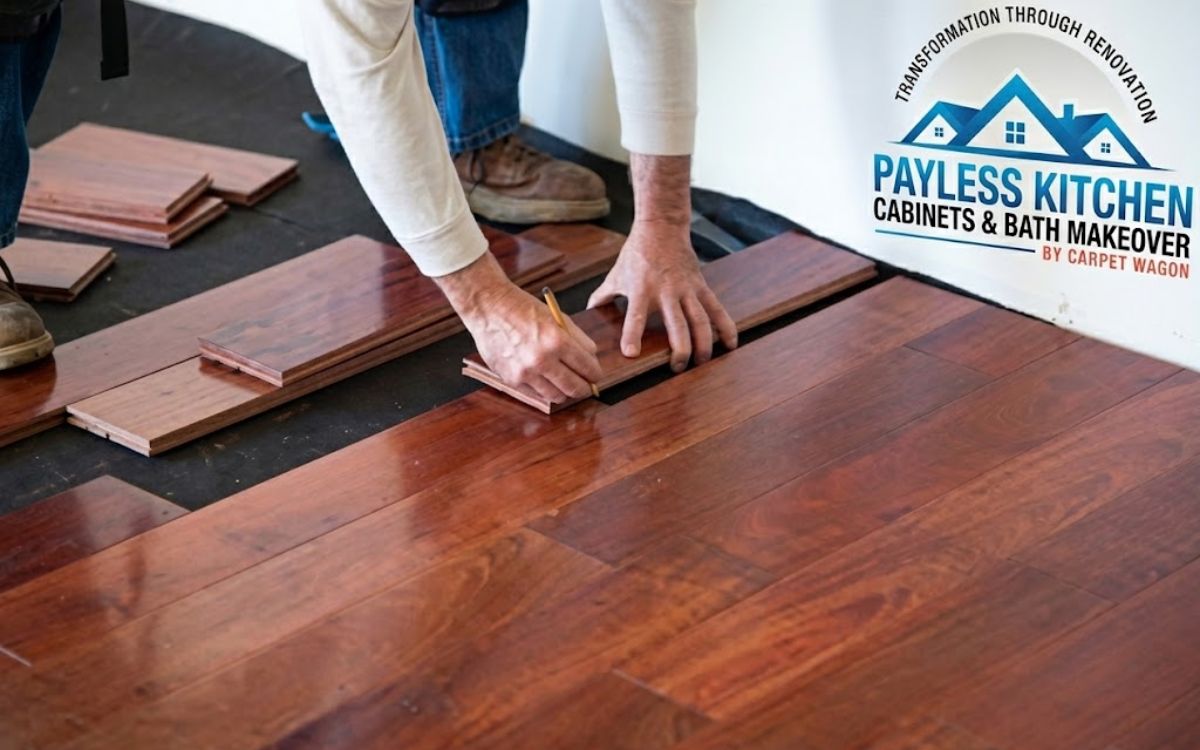
Once the base is ready, installation begins. Planks are carefully measured, cut, and placed according to the layout. Installers ensure proper spacing for expansion and movement. Depending on the method, planks may be glued, nailed, or clicked into place.
Finishing Touches and Quality Inspection
After installation, finishing work is completed. This includes adding trim, cleaning the surface, and inspecting for gaps or uneven areas. A final check ensures the floor is stable and visually consistent.
Comparing Engineered Wood Flooring With Other Kitchen Flooring Options
Choosing the right flooring means comparing different materials based on cost, durability, and style.
Engineered Wood vs Hardwood Flooring
Engineered wood is generally more affordable than solid hardwood flooring. It offers similar visual appeal but performs better in areas with moisture changes. Hardwood is more expensive and can be sensitive to humidity, making engineered wood a practical alternative.
Engineered Wood vs Laminate Flooring
Laminate flooring is usually cheaper than engineered wood. However, it does not offer the same natural wood feel or long-term durability. Engineered wood is a better choice for homeowners who want a more authentic appearance.
Engineered Wood vs Tile Flooring
Tile flooring is extremely durable and water-resistant. However, it can feel colder and harder underfoot. Engineered wood offers a warmer and more comfortable surface, making it a preferred option for many kitchens.
Common Mistakes That Increase Flooring Installation Costs
Avoiding mistakes can help control your flooring budget. Common issues include:
- Not measuring the space correctly
- Ignoring subfloor damage before installation
- Choosing low-quality materials that require early replacement
- Hiring unqualified installers
- Skipping moisture protection layers
- Failing to plan for waste and extra material needs
Careful planning helps reduce unexpected expenses and delays.
FAQs
1. What is the average engineered wood flooring installation cost?
The average cost depends on material quality, labor rates, and room size. Most homeowners spend a moderate amount per square foot for combined materials and installation.
2. Is engineered wood cheaper than hardwood flooring?
Yes, engineered wood is generally more affordable than solid hardwood while still offering a similar natural look.
3. How long does engineered wood flooring installation take?
Most installations take a few days, depending on room size and preparation work needed for the subfloor.
4. What factors increase flooring installation costs the most?
The biggest cost factors include material quality, subfloor repairs, and complex room layouts that require more labor.
5. Is engineered wood flooring good for kitchens?
Yes, engineered wood is suitable for kitchens because it handles moisture changes better than solid hardwood and offers a warm, natural appearance.
Conclusion
Engineered wood flooring is a strong option for homeowners who want style, durability, and value in one solution. Understanding the cost of engineered wood flooring installation helps you plan your project with confidence and avoid unexpected expenses. From material selection to installation and finishing, each step plays a role in the final budget. With proper planning and the right professional guidance, you can achieve a beautiful and long-lasting kitchen floor that fits your needs and budget.