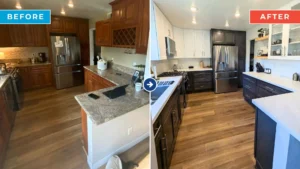

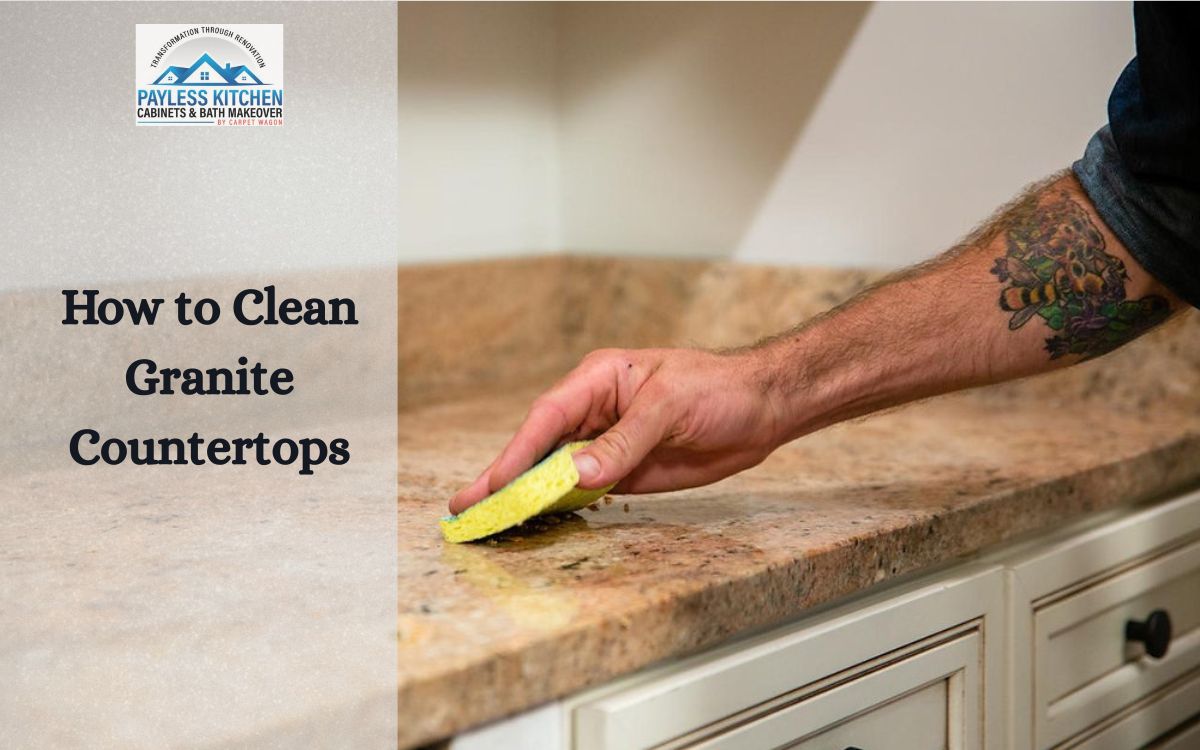
For homeowners in Southern California, a granite countertop is more than just a prep surface; it is a significant architectural investment. Whether you have a stunning slab of Blue Pearl in your Ventura kitchen or classic Venetian Gold in Orange County, the longevity of that stone depends entirely on your daily maintenance habits. Most permanent damage to natural stone isn’t caused by heavy impact, but by the subtle, cumulative effect of using the wrong cleaning agents.
Mastering how to clean granite countertops involves understanding the geological vulnerability of the stone. Granite is porous, and while a professional granite countertop service provides a high-quality initial seal, that barrier is not invincible. Using acidic or abrasive chemicals can etch the surface, leading to dull spots and a higher susceptibility to deep-set staining.
The Daily Maintenance Protocol: Beyond the Spray Bottle
The goal of daily cleaning is to remove oils and food debris without degrading the protective sealant. In our experience with premium SoCal remodels, the most common mistake is the “all-purpose” cleaner trap.
1. The pH-Neutral Standard
Granite requires a pH-neutral cleaner. Many common household cleaners contain vinegar (acidic), lemon juice (acidic), or ammonia (basic). These substances act as solvents that slowly dissolve the professional-grade sealer.
- The Pro Method: Use warm water mixed with a few drops of mild, pH-neutral dish soap.
- The Finish: Always dry the surface with a clean microfiber cloth. Allowing water to air-dry—especially in areas of Riverside with harder water—can leave mineral deposits that cloud the stone’s natural luster.
2. Microfiber vs. Sponges
Avoid the “scrubby” side of a standard kitchen sponge. These are often made of silicon carbide or aluminum oxide, which are hard enough to create micro-scratches in the polish. Microfiber picks up bacteria and debris without the need for abrasive friction.
Expert Insight: Managing Stubborn Stains
Even with diligent care, high-activity kitchens face spills. The key to preventing a spill from becoming a permanent stain is identifying the substance.
- Oil-Based Stains (Grease, cooking oil, milk): These often darken the stone and require a chemical “pulling” agent. A poultice made of baking soda and water, left overnight under plastic wrap, can effectively lift the oil out of the pores.
- Organic Stains (Coffee, wine, fruit juice): These react well to a 12% hydrogen peroxide solution.
- Water Rings: Often just mineral buildup, these can sometimes be buffed out with #0000 grade steel wool but only on dry granite and with extreme care.
Contractor Perspective: “When we revisit clients in Ventura County for follow-up consultations, we often find that ‘clouding’ isn’t a stone defect it’s wax buildup. Homeowners try to ‘shine’ their granite with furniture polish or wax-based sprays. This creates a sticky layer that actually traps dirt. Clean granite shouldn’t feel tacky; it should feel like cool, smooth glass.”
The Sealing Schedule: When Is It Time?
Natural stone is a “living” finish that requires periodic fortification. In the warm, dry climate of Southern California, sealants can dry out faster than in more humid regions.
The Simple Water Test
To determine if your granite needs professional attention, perform the “Water Drop Test.” Place a tablespoon of water on several areas of the counter.
- Beads up: Your seal is strong.
- Soaks in (Stone darkens) after 10+ minutes: It’s time to plan for a reseal.
- Soaks in immediately: Your stone is vulnerable to permanent staining.
Process Transparency: Why Precision Matters
Since 1985, Payless Kitchen Cabinets has emphasized that a remodel is only as good as its long-term viability. With 40 years of business and 1,100+ verified 5-star reviews, we have seen how proper maintenance protects property value. We provide our clients with detailed care kits because we believe transparency in the “aftercare” phase is just as important as the precision of the initial installation.
Whether we are performing a kitchen cabinet refacing or a full stone countertop upgrade, our team ensures the subfloor and cabinetry are reinforced to handle the weight of granite, preventing the micro-fifting and cracking that can happen with inferior installations.
Frequently Asked Questions (FAQ)
1. Can I use Windex on my granite?
A. No. Most glass cleaners contain ammonia or other stripping agents that will dull the shine and remove the protective sealant over time.
2. How often should I professionally seal my granite?
A. For high-traffic SoCal kitchens, we recommend a professional-grade sealer every 12 to 24 months. Lighter-colored granites are generally more porous than darker ones and may require more frequent care.
3. Will heat from a hot pan damage the granite?
A. Granite is highly heat-resistant, but it is not heat-proof. Placing a 450°F pan directly on a cool stone can cause “thermal shock,” leading to a crack. Always use a trivet.
Conclusion
Preserving the elegance of your stone is a testament to the quality of your home. If your countertops have lost their brilliance or you are ready to invest in a premium stone surface that defines your space, our experts are ready to guide you.
Request a Professional Stone Evaluation or visit our showroom to explore the latest 2026 granite arrivals.