Imagine standing in your kitchen, clutching a lukewarm cup of coffee, and looking at a countertop that has seen better days. You know it is time for a change, but the sheer volume of information online is paralyzing. One neighbor swears by the affordability of laminate, while another insists that quartz is the only way to go for long-term value. You want a kitchen that looks stunning, but you also fear making a choice you will regret five years from now when the “newness” wears off and the maintenance kicks in.
Choosing between laminate vs quartz kitchen countertops is one of the most significant decisions you will make during a remodel. It is not just about picking a color; it is about choosing how you will live in your home for the next decade. We have spent over 40 years guiding families through these exact trade-offs, ensuring their investment matches their lifestyle and their home value goals.
Kitchen Remodeling Comparisons Homeowners Struggle With
In our four decades of experience, we have found that homeowners rarely struggle with just one choice. Usually, it is a domino effect of decisions. When comparing laminate vs quartz kitchen countertops, you are often also weighing structural and aesthetic changes like layout and cabinetry.
1. Composition: Paper vs. Stone
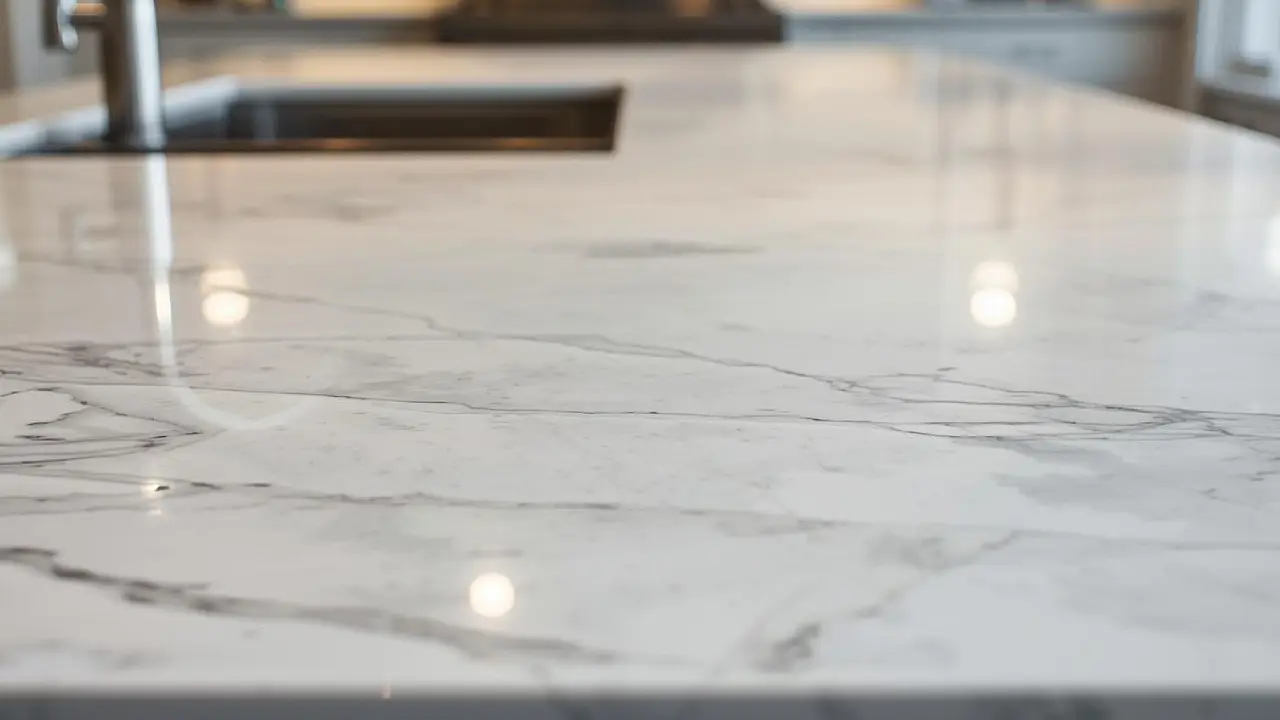
Laminate is constructed from layers of plastic-coated paper bonded to a particleboard core. In contrast, quartz is a man-made stone that combines the beauty of nature with the strength of technology. It is composed of roughly 90 to 93 percent crushed natural quartz stone mixed with high-performance polymer resins. This difference in “bones” dictates everything from how the counter feels to how long it lasts. For homeowners exploring laminate in more detail, HGTV provides a helpful overview of how laminate countertops are designed and used in real kitchens.
2. Resistance to Heat and Scorching
This is a primary area where homeowners experience regret. Laminate can scorch, melt, or blister if a hot pot is moved directly from the stove to the surface. Quartz is significantly more heat-resistant. While we still recommend using trivets to protect the resin, quartz can handle the heat of a busy kitchen much more safely. The improved layout and thoughtful design choices make moving through the kitchen safer and more comfortable for everyday use.
3. Scratch and Impact Durability
If you have a busy household, durability is non-negotiable. Laminate is relatively soft; a slipped knife can leave a permanent gouge that cannot be sanded out. Quartz is one of the hardest surfaces on earth. It is incredibly difficult to scratch or chip, making it the ideal choice for families who want a “bulletproof” kitchen.
4. Moisture Defense and Delamination
Durable, easy-to-clean surfaces help reduce long-term upkeep and keep the kitchen looking its best over time. Quartz is completely non-porous. Laminate, however, has a “weak point” at the seams. If water seeps into a seam or near the sink, the wood-based core can swell, causing the surface to bubble and peel, a problem that is nearly impossible to fix without replacing the entire slab.
5. Sink Style and Installation
If you dream of an under-mount sink for a sleek, easy-to-wipe-clean experience, you must choose quartz. Laminate countertops almost always require “drop-in” sinks with a visible rim. Because the edge of a laminate cut is exposed wood, it cannot be waterproofed for an under-mount installation. Quartz allows for a seamless transition from counter to sink.
6. Maintenance and Sealing
Many people confuse quartz with granite and assume it needs sealing. It does not. Quartz is maintenance-free; it never needs to be polished or sealed. Laminate is also low maintenance, but because it is more fragile, you spend more time “policing” the kitchen to ensure no one leaves a damp cloth on a seam or a hot pan on the surface.
7. Resale Value and Investment Return
When it comes to the “value-driven planning” of a remodel, quartz is a high-impact upgrade. Real estate experts agree that quartz is a major selling point that can increase home value. Laminate is often viewed by buyers as a “placeholder” that they will eventually need to replace, which can impact your overall return on investment.
Understanding the Trade-offs: Is Quartz Worth the Investment?
When evaluating laminate vs quartz kitchen countertops, it helps to look at how you actually live. For homeowners who want a deeper breakdown of quartz performance, durability, and long-term benefits, it’s useful to review how quartz performs in real kitchen environments. You can explore this further in our guide on quartz countertop kitchen benefits and why they are a smart investment for modern homes.
- The Busy Family: If you have kids making sandwiches or spilling juice, quartz offers peace of mind.
- The Gourmet Cook: If you are frequently moving heavy pots, the “man-made stone” resilience of quartz prevents accidental damage.
- The Style-Conscious Homeowner: Modern laminate has improved, but it cannot achieve the visual depth or the elegant “stone” edges of quartz.
Expert Tip: Countertop Seam Matters
When comparing laminate vs quartz kitchen countertops, pay attention to the seams. In a large kitchen, seams are inevitable. On quartz, a skilled installer can make these lines nearly invisible. On laminate, the seam is often a dark line where the two pieces of decorative paper meet, which can be a visual distraction in an otherwise beautiful kitchen.
Frequently Asked Questions
For high-traffic homes, quartz is almost always the winner. Its non-porous surface resists stains from juice, wine, and coffee, and it never needs to be sealed. It provides a hygienic surface that is easy to sanitize after meal prep.
For most, yes. Quartz is non-porous, meaning it never needs to be sealed, whereas granite requires periodic sealing to prevent staining.
The most common regret is choosing a high-maintenance or easily damaged material solely for the low upfront price, only to find it doesn’t hold up to daily wear.
We recommend investing in the “bones” and high-touch surfaces. Spending more on quartz countertops and quality cabinets pays off in durability.
Quartz is highly heat resistant, but not heat proof. Always use a trivet for hot pans to protect the surface resins from thermal shock.
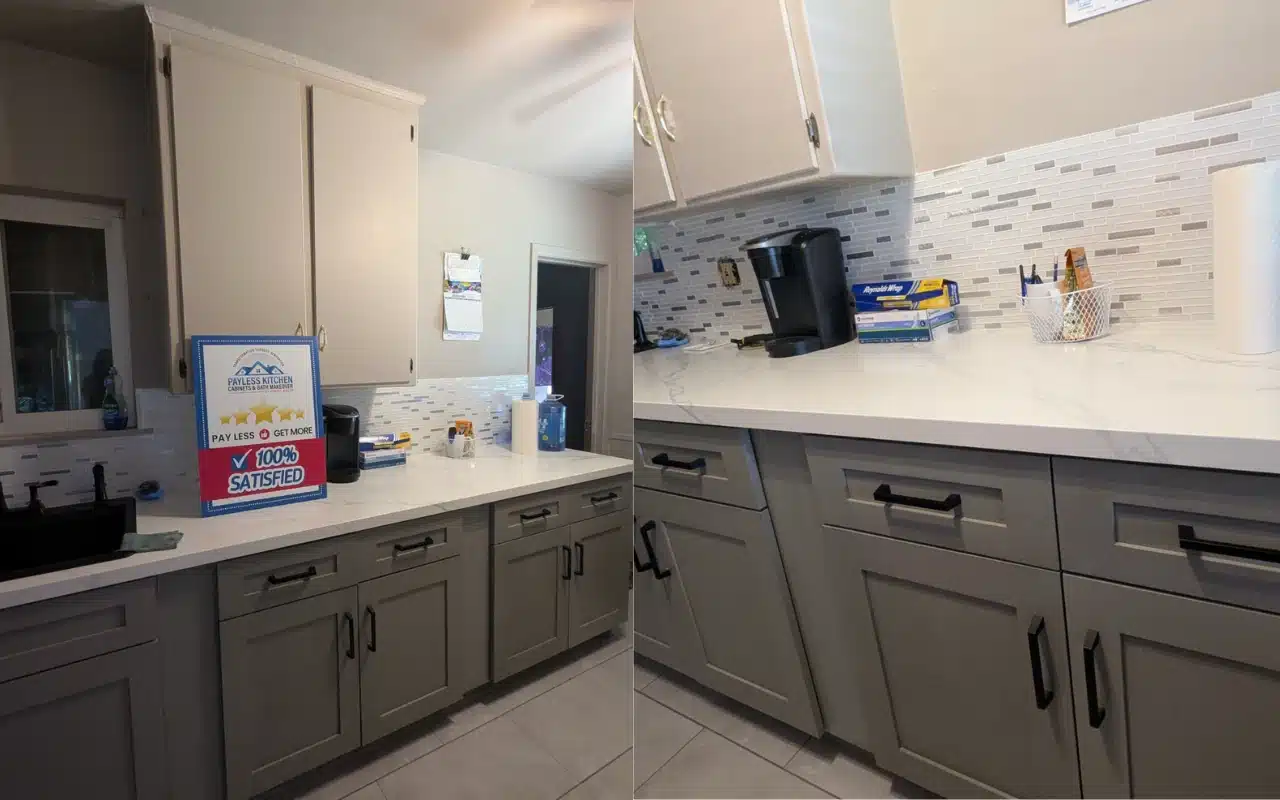
Why Homeowners Trust Payless Kitchen Cabinets
Deciding on the right materials shouldn’t feel like a high-pressure sales pitch. Our family-owned approach focuses on a guided comparison process. We take the time to look at your specific home to see which material fits your architectural style and your daily habits. Our reputation is built on quality workmanship and durable outcomes. With seasonal demand often filling our schedule quickly, early planning is the best way to ensure your project stays on track.
Why Start Your Kitchen Remodel With a Professional Guide?
Before you tear out a single backsplash, it helps to have a knowledgeable team member guide you through the pros and cons of every material. We invite you to schedule a free phone consultation to discuss your vision and help clarify which options provide the best long-term value for your specific home.
Final Thoughts on Your Kitchen Journey
Choosing between laminate vs quartz kitchen countertops is a pivotal step in creating a home that serves you well. While laminate offers an entry-level price point, quartz provides the resilience and timeless beauty that defines modern living. By focusing on durability and lifestyle fit rather than just the lowest bid, you ensure your kitchen remains a source of joy.
Our team is ready to help you navigate these choices with clarity and confidence. We look forward to helping you build a kitchen that stands the test of time.
Would you like to see the durability of these materials in person? Contact us today to schedule your free in-home design consultation.