
The ceiling is often an overlooked part of kitchen design, yet it can have a major impact on how the room looks and feels. The right treatment can add architectural character, improve lighting, and make the kitchen feel more spacious and inviting.
From simple painted ceilings to dramatic beams, tray designs, and statement lighting, there are plenty of kitchen ceiling ideas to suit different layouts and interior styles. The key is choosing an option that works with your kitchen’s size, height, cabinetry, and overall design.
Why the Right Kitchen Ceiling Design Matters
How Ceiling Design Can Change the Look and Feel of a Kitchen
A well-designed ceiling can give a kitchen greater visual depth and make an ordinary space feel more considered. Features such as beams, panels, or recessed sections can draw the eye upward while creating a stronger connection between the ceiling and the rest of the room.
Ceiling treatments can also influence the atmosphere. Light colours and clean lines tend to create an open feeling, while wood, darker colours, and decorative details can make a large kitchen feel warmer and more intimate.
Balancing Style, Function, and Ceiling Height
Before selecting a ceiling treatment, consider how much vertical space you have available. A detailed coffered ceiling may look impressive in a spacious kitchen but could make a low ceiling feel visually crowded.
Function matters too. Kitchens produce heat, steam, and cooking odours, so materials should be durable and easy to maintain. Lighting, ventilation, plumbing, and electrical requirements should also be considered before installation.
Choosing a Ceiling Design That Complements Your Kitchen Layout
The ceiling should support the kitchen layout rather than compete with it. In an open-plan kitchen, for example, a ceiling feature can help visually define the cooking or dining area without requiring a physical wall.
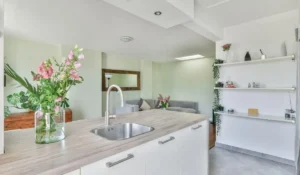
For smaller kitchens, simpler treatments often work best. A clean painted ceiling, subtle panelling, or carefully positioned lighting can add interest without making the room feel cramped.
Popular Kitchen Ceiling Ideas for Different Styles
Modern Kitchen Ceiling Ideas for a Sleek, Clean Look
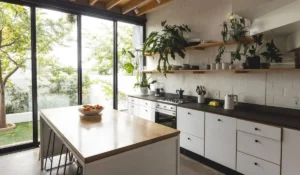
Modern kitchens generally benefit from simple ceiling lines, smooth finishes, and integrated lighting. A crisp white ceiling with recessed LED lights can complement modern flat-panel cabinets, minimalist hardware, and streamlined countertops.
For a stronger contemporary effect, consider a subtle tray ceiling or a ceiling finished in a soft neutral shade. The goal is to create architectural interest while maintaining the clean appearance associated with modern interiors.
Rustic Kitchen Ceilings With Warm, Natural Character
Wood is one of the most effective ways to introduce warmth into a rustic kitchen. Exposed beams, timber planks, or wood-look panels can complement natural cabinets, stone surfaces, and earthy colours.
You do not necessarily need a fully timbered ceiling. Even a few decorative beams or a wood accent section can give the room a more welcoming, handcrafted appearance.
Simple Kitchen Ceiling Designs for a Minimalist Space
If you prefer a minimalist kitchen, keep the ceiling straightforward. A smooth white or light-coloured surface paired with discreet recessed lighting can provide a polished backdrop without distracting from the cabinetry and work surfaces.
Simple designs are also practical because they are usually easier to clean, maintain, and update. This makes them particularly useful in smaller kitchens where excessive detailing can overwhelm the available space.
Traditional and Farmhouse Kitchen Ceiling Designs
Traditional and farmhouse kitchens often suit classic materials and architectural details. Beadboard, shiplap, painted wood, beams, and decorative moulding can reinforce a comfortable, timeless aesthetic.
A white or softly painted panelled ceiling works particularly well with traditional shaker cabinets and natural wood accents. For added warmth, combine the ceiling treatment with pendant lighting over an island or breakfast area.
Contemporary Kitchen Ceiling Ideas for a Stylish Finish
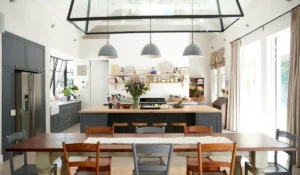
Contemporary kitchens offer more freedom to combine materials, textures, and lighting. You might pair a smooth ceiling with a bold pendant, introduce recessed sections, or use a contrasting finish above the island.
The best contemporary designs usually have a clear visual connection with other kitchen elements. Repeat a cabinet colour, wood tone, or metallic finish on the ceiling or lighting to create a cohesive look.
Kitchen Ceiling Design Ideas to Add Architectural Interest
Tray Ceilings for Depth and Visual Dimension
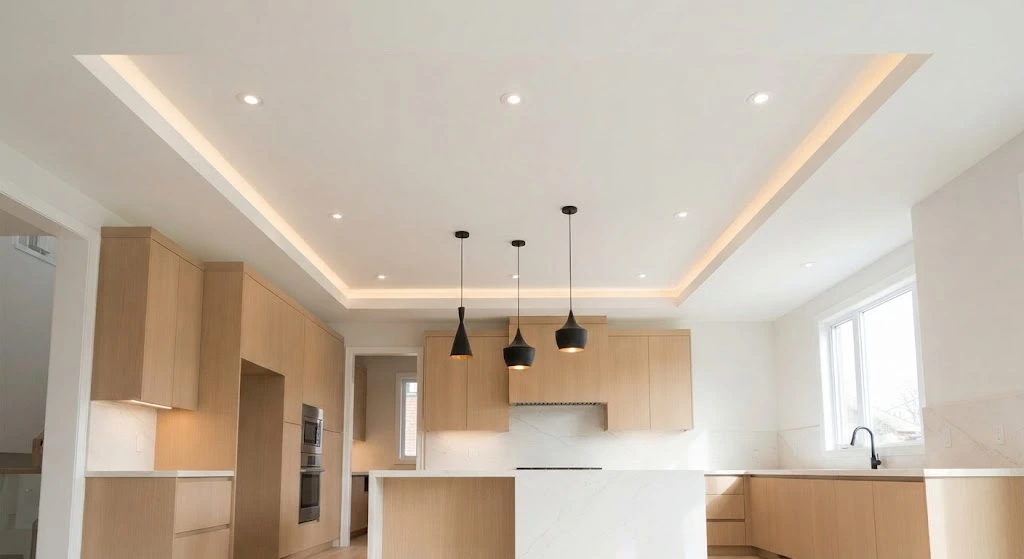
A tray ceiling features a raised central section that creates a layered appearance. It can make a kitchen feel taller and provide a natural location for accent lighting around the recessed or raised area.
Tray ceilings work especially well above kitchen islands or in larger open-plan spaces. LED strip lighting can highlight the change in height and create a soft evening glow.
Coffered Ceilings for a Classic, Elegant Look
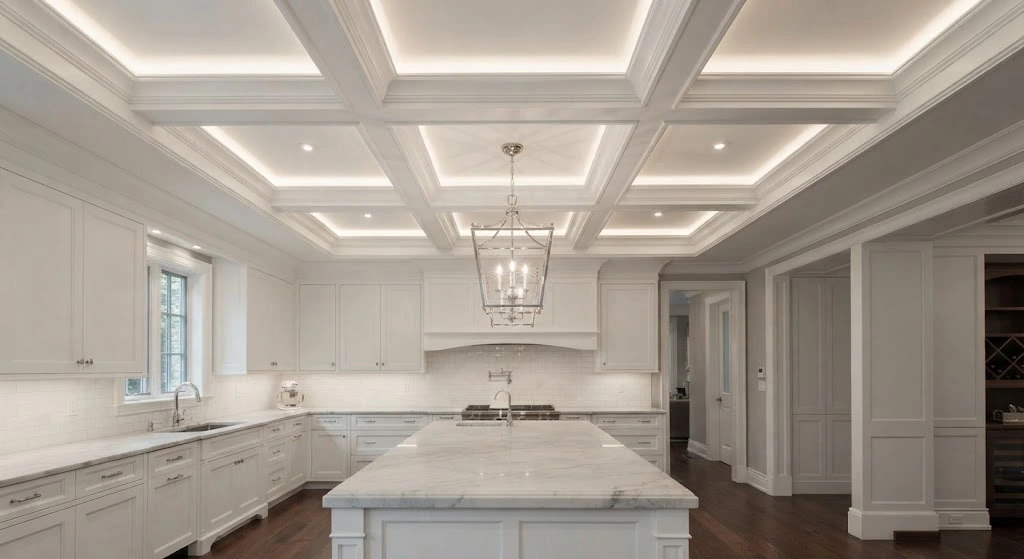
Coffered ceilings use a grid of recessed panels or beams to create a structured, architectural appearance. They can add sophistication to traditional, transitional, and contemporary kitchens.
Because the pattern can become a major focal point, keep the rest of the kitchen relatively balanced. A restrained colour palette and simple lighting can prevent the ceiling from competing with detailed cabinetry or countertops.
Beamed Ceilings for Rustic and Farmhouse Kitchens
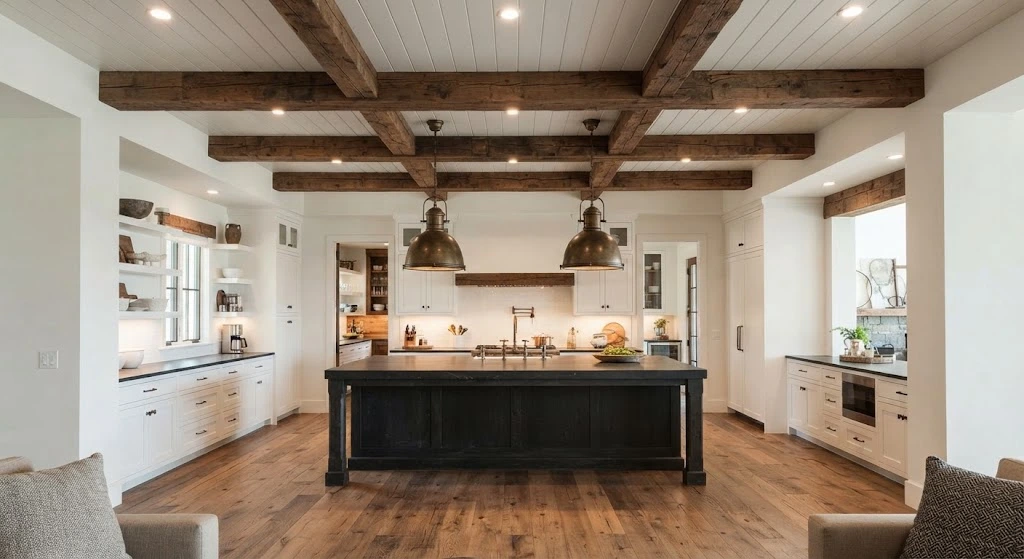
Decorative beams can bring character to kitchens with rustic, farmhouse, or industrial influences. They can also help visually divide an open-plan room into different zones.
If structural beams are not practical, lightweight decorative versions can provide a similar appearance. Choose a wood tone that complements flooring, cabinetry, or furniture rather than introducing an unrelated colour.
Vaulted Ceilings for an Open and Spacious Feel
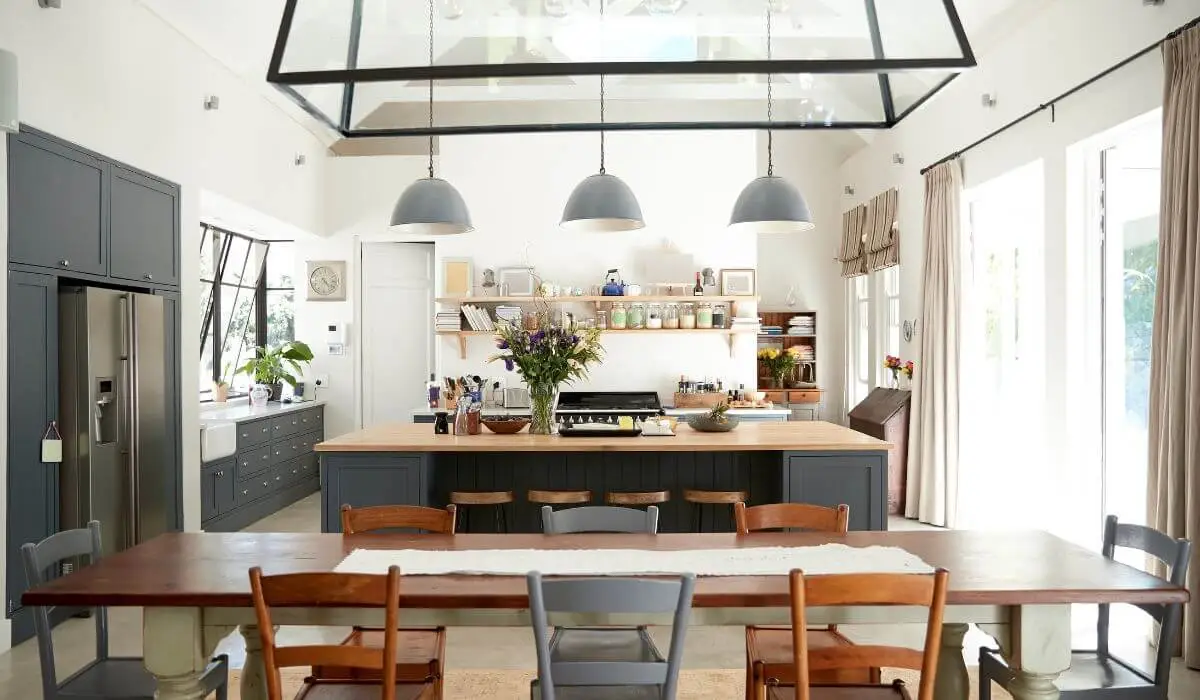
Vaulted ceilings can dramatically increase the sense of space by drawing the eye upward. They are particularly effective in larger kitchens where additional vertical volume can enhance the room’s airy character.
However, a vaulted ceiling needs appropriate lighting and scale. Large pendant fixtures, exposed beams, or statement chandeliers can help fill the additional vertical space without leaving the upper portion of the kitchen feeling empty.
Shiplap and Panelled Ceilings for Texture and Character
Shiplap and panelled ceilings introduce texture without requiring an elaborate architectural structure. They can work particularly well in farmhouse, coastal, transitional, and cottage-style kitchens.
For a subtle appearance, paint the panels the same colour as the surrounding ceiling. A contrasting finish can create more impact, but it should coordinate with the cabinets and walls.
Kitchen Ceiling Colours and Finishes
When to Choose a White Kitchen Ceiling
White remains a popular ceiling colour because it reflects light and creates a clean, open appearance. It is especially useful in kitchens with limited natural light or lower ceilings.
A slightly warm white can work well with cream, beige, or natural wood cabinetry, while a cooler white may complement modern grey or white kitchens. The finish should also be suitable for a kitchen environment and easy to maintain.
Using Bold Colours to Create a Statement Ceiling
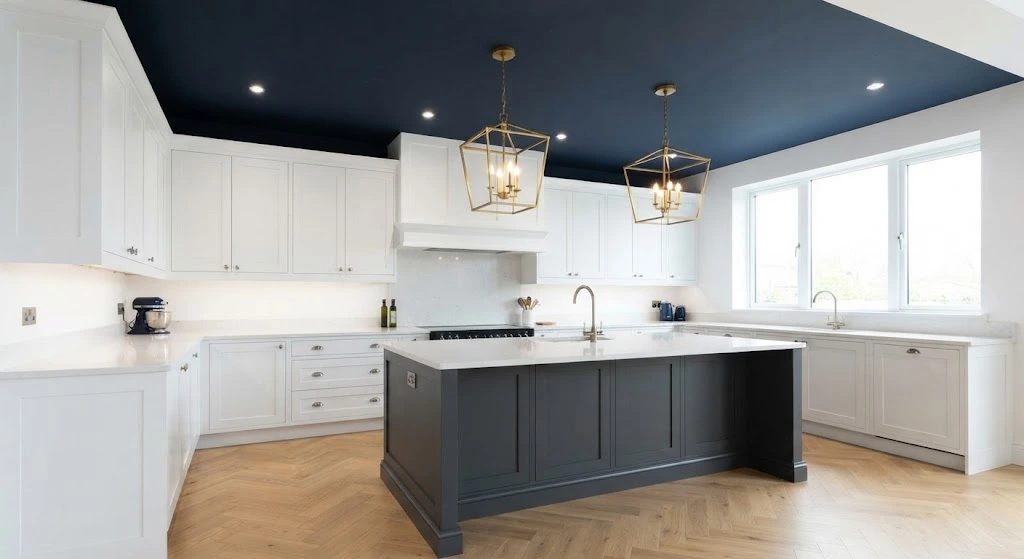
A coloured ceiling can add personality without changing the cabinets or walls. Deep green, navy, muted blue, or warm earthy tones can create a striking effect when used thoughtfully.
Bold colours work best when repeated elsewhere in the room. Consider echoing the ceiling shade through accessories, upholstery, artwork, or smaller decorative details.
Wood, Painted, and Textured Ceiling Finishes
The ceiling finish can be just as important as its colour. Painted drywall provides a clean and versatile appearance, while wood and wood-look materials add warmth and texture.
Textured finishes can conceal minor imperfections and introduce visual interest, but heavily textured surfaces may be more difficult to clean. In a busy kitchen, practical maintenance should always be considered alongside appearance.
How to Match Ceiling Colours With Cabinets, Walls, and Countertops
A successful ceiling colour should feel connected to the rest of the kitchen. It does not have to match everything exactly, but it should complement the undertones and overall colour palette.
For example, a neutral ceiling can balance bold cabinetry, while a wood ceiling can reinforce natural tones in kitchen flooring or countertops. Samples should be viewed under both natural and artificial lighting before making a final decision.
Kitchen Ceiling Lighting Ideas for Style and Function
Recessed Lighting for General Kitchen Illumination
Recessed lights provide clean, unobtrusive illumination and work well with modern kitchen designs. They can provide general lighting across work areas while keeping the ceiling visually simple.
Positioning is important. Lights should illuminate countertops and preparation areas rather than simply being arranged in an evenly spaced grid across the ceiling.
Pendant Lights for Kitchen Islands and Dining Areas
Pendant lights combine practical illumination with decorative appeal. They are particularly effective above kitchen islands, peninsulas, breakfast bars, and dining areas.
Choose fixtures that are appropriately scaled to the kitchen. Multiple smaller pendants can create a balanced look over a long island, while one larger fixture may work better in a compact space.
LED Strip Lighting for Tray and Coffered Ceilings
LED strip lighting can emphasise architectural details such as tray ceilings, recessed sections, and coffered designs. Hidden illumination creates a soft layer of light without making the fixtures themselves the main focus.
Warm or neutral colour temperatures generally create a comfortable kitchen atmosphere. Make sure the lighting system is installed with suitable access for future maintenance.
Layering Ambient, Task, and Accent Lighting
Good kitchen ceiling lighting ideas usually involve more than one type of illumination. Ambient lighting provides general brightness, task lighting helps illuminate preparation areas, and accent lighting highlights architectural or decorative features.
Layering these sources gives you greater control over the room. Bright task lighting can be used while cooking, while softer accent lighting can create a more relaxed atmosphere when entertaining.
Kitchen Ceiling Decor Ideas for Different Ceiling Heights
Low-Ceiling Kitchen Ideas to Make the Room Feel Taller
Low ceilings benefit from light colours, minimal detailing, and lighting that does not visually lower the ceiling. Recessed fixtures and a consistent wall-to-ceiling colour can make the transition feel more seamless.
Avoid oversized beams or heavily layered treatments that reduce the perceived height. Vertical design elements elsewhere in the kitchen can also help draw attention upward.
High-Ceiling Kitchen Designs That Fill Vertical Space
High ceilings provide an opportunity to introduce larger architectural features. Beams, statement lighting, vaulted forms, and dramatic pendant fixtures can help bring visual interest into the upper portion of the room.
Scale is particularly important here. Small fixtures or minimal decoration may disappear in a large space, while appropriately sized features can create a stronger focal point.
Small Kitchen Ceiling Ideas Without Making the Space Feel Busy
In a small kitchen, every visual detail matters. A simple ceiling with a light finish and carefully positioned lighting can make the space feel brighter and more open.
If you want additional character, choose one feature rather than several. A subtle panelled section, statement pendant, or slim ceiling trim can be enough to give the room personality.
Open-Concept Kitchen Ceiling Treatments for Defined Zones
In an open-plan kitchen, the ceiling can help distinguish the kitchen from adjoining living or dining areas. A tray ceiling, contrasting paint, beams, or a different lighting arrangement can create a subtle visual boundary.
This approach maintains the open feeling while giving each area its own identity. Keep the finishes coordinated so the entire space still feels connected.
How to Choose the Best Kitchen Ceiling Design
Consider Your Kitchen Size, Layout, and Ceiling Height
Start by assessing the physical characteristics of your kitchen. Measure the ceiling height, consider the location of windows and doors, and identify areas where lighting, ventilation, or structural features may affect the design.
Match the Ceiling With Your Cabinet and Countertop Style
Your ceiling should complement the materials already present in the kitchen. Shaker cabinets may pair naturally with beams or panels, while sleek slab cabinets may suit a smooth ceiling and integrated lighting.
Choose Durable Materials for Kitchen Conditions
Kitchen ceilings can be exposed to steam, grease, heat, and humidity. Select finishes that can withstand these conditions and are practical to clean and maintain.
Balance Installation Costs With Long-Term Value
Some ceiling treatments require more labour and materials than others. Before committing to an elaborate design, consider installation complexity, lighting requirements, maintenance, and how well the treatment will age with the rest of the kitchen.
Common Kitchen Ceiling Design Mistakes to Avoid
Choosing a Ceiling Treatment That Overwhelms the Kitchen
A ceiling should enhance the kitchen rather than dominate it. If the room already has bold cabinets, patterned countertops, or decorative flooring, a highly detailed ceiling may create too much visual competition.
Using Too Many Colours, Patterns, or Textures
Combining several ceiling treatments can make the kitchen feel disjointed. Choose a primary design direction and use complementary finishes to create a cohesive result.
Poor Lighting Placement and Insufficient Illumination
Even an attractive ceiling can perform poorly if the lighting is badly planned. Consider where people prepare food, wash dishes, eat, and socialise, then position fixtures to support those activities.
Ignoring Ventilation, Moisture, and Maintenance Requirements
Design should never come at the expense of practicality. Make sure the ceiling material can handle the kitchen environment and that ventilation systems, access points, and electrical components can be properly accommodated.
FAQs
1. What is the best ceiling design for a kitchen?
A. The best design depends on the kitchen’s size, ceiling height, layout, and style. Smooth painted ceilings work well for simple spaces, while tray, coffered, vaulted, and beamed ceilings can add architectural interest to larger kitchens.
2. What are the most popular kitchen ceiling ideas?
A. Popular options include painted ceilings, recessed lighting, tray ceilings, coffered designs, exposed or decorative beams, shiplap, and wood panelling. The right choice should complement the cabinets, flooring, countertops, and overall interior style.
3. How can I make a low kitchen ceiling look higher?
A. Use light colours, minimise heavy ceiling details, and choose recessed or low-profile lighting. Keeping the ceiling and upper walls in similar tones can also create a more continuous visual line.
4. What ceiling colour is best for a kitchen?
A. White and other light neutrals are versatile choices because they reflect light and help create an open appearance. However, muted or bold colours can work well when they complement the kitchen’s existing colour scheme.
5. Are coffered and tray ceilings suitable for kitchens?
A. Yes, both can work well in kitchens when the ceiling has sufficient height, and the design is properly scaled. Tray ceilings provide a layered appearance, while coffered ceilings create a more structured and decorative effect.
Conclusion
The right ceiling can transform a kitchen from a purely functional room into a visually cohesive and inviting part of the home. Whether you prefer simple finishes, modern architectural details, rustic beams, or statement lighting, there are kitchen ceiling ideas for almost every style and space.
Focus on the practical factors first, including ceiling height, lighting, ventilation, materials, and maintenance. Then choose a design that complements your cabinetry, countertops, flooring, and overall kitchen layout for a finish that looks stylish and works beautifully every day.