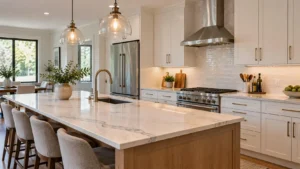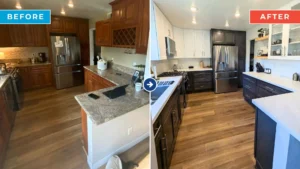

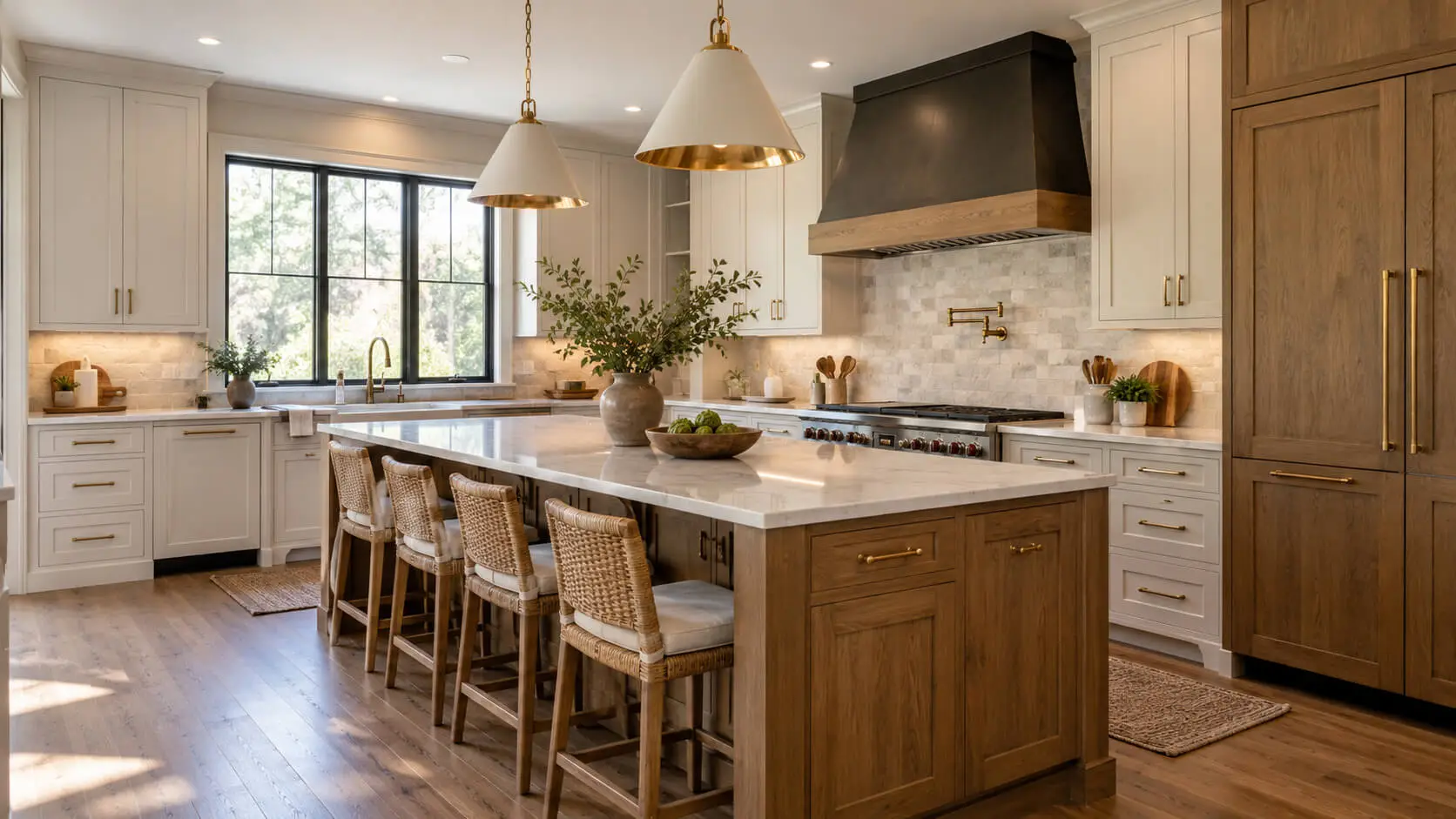
Cabinets set the tone for a kitchen more than almost any other single decision, and once they are installed, the finish is essentially locked in for the next 10 to 20 years. That makes the choice feel heavier than it needs to, because the real question is not which finish is currently popular. It is which one you will still enjoy waking up to after the trend cycle has moved on twice. This article ranks six of the most common kitchen cabinet finishes from the most timeless to the most trending, with an honest read on how each one wears, ages, and suits different households.
How to Think About Timeless Versus Trending in Cabinetry
Timeless does not mean boring, and trending does not mean bad. A finish earns its place on the timeless end of the scale by aging well through multiple design cycles, forgiving small style shifts around it, and pairing easily with counters, hardware, and floors that may change over time. A trending finish makes a stronger statement now, which is part of its appeal, but that same specificity is what tends to date it faster.
The right question is not “which finish is safest.” It is how long you plan to stay in the home, how tolerant you are of a look that reads current but might not read that way in seven years, and how much of your remodel budget the cabinetry represents. If cabinets are the single largest line item, you have less room to swap them out on a whim, which usually argues for a more enduring finish on the main runs and a bolder choice reserved for the island or a smaller accent.
The Six Cabinet Finishes Ranked
The six finishes below are ordered from the most timeless to the most current. Each one has genuine strengths, and none of them is a wrong answer for the right kitchen.
Classic White Painted Cabinets
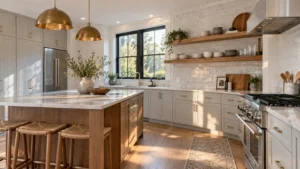
Warm white and creamy white painted cabinetry in a shaker or slim shaker door has held the top of the design lists for years, and it still earns its place at the timeless end of the scale. It reads clean, keeps a small kitchen feeling open, and pairs with nearly every countertop, backsplash, and floor material without a fight. Warm-toned whites have quietly replaced the stark, cool whites that dominated the last decade, which is worth knowing when picking a shade.
The trade-off is upkeep. White paint shows fingerprints, splatter, and cooking marks faster than a wood tone, and dark stains near the trash pull or around the range hood need attention. Around the sink, painted finishes can wear over time if water sits on the door faces. A satin or low-sheen paint helps hide small imperfections and takes cleaning better than a flat finish.
Natural Stained Wood in White Oak or Maple
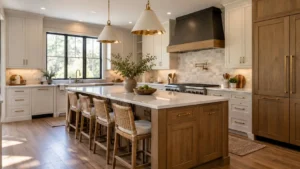
Natural wood cabinetry in white oak or a light-stained maple has become the strongest challenger to painted white, and it is arguably the most timeless finish you can put in a kitchen right now. Wood grain adds warmth and texture that paint cannot replicate, and it ages more gracefully because natural material never really goes out of fashion the way a color can. Design coverage in 2026 has leaned heavily into this direction, with white oak in a natural or lightly stained finish appearing across traditional, transitional, and contemporary kitchens alike.
Stained wood also tends to touch up more easily than paint. Small dings blend into the grain rather than showing as a bright chip against a solid color, which matters over a decade of daily use. The main considerations are matching grain across multiple doors and choosing a stain tone that flatters your natural lighting rather than fighting it.
Warm Neutral Painted Cabinets in Mushroom, Taupe, or Cream
Warm neutrals like mushroom, greige, soft taupe, and putty have moved into the space that stark white and cool gray used to occupy. These colors carry more depth than a pure white without committing to a strong hue, which is why designers keep recommending them as a safer alternative for homeowners who want personality without a bold statement. They also pair well with brass or bronze hardware and with both light and dark counter surfaces.
The category sits between timeless and current. These tones will likely age better than the cool grays that defined kitchens for a while, but they are more specific than a warm white and will feel more of their moment in a decade. If you love the softness they offer, that trade is usually worth it.
Rich Dark Wood in Walnut or Smoked Oak
Rich dark wood cabinetry in walnut, smoked oak, or a deep-stained rift-cut oak has swung back into strong favor after years of light and blonde wood dominating the market. Done well, it feels grounded and quietly premium, especially on an island or a pantry wall where it can carry the room. The natural grain also means dark wood does not read as heavy or dated the way a solid dark paint tends to.
The main considerations are light and scale. Dark wood absorbs light, so kitchens with limited windows can start to feel closed in if the finish covers every cabinet. It also asks for a countertop and backsplash that will not compete with the grain, which usually means quieter surfaces rather than heavily veined stone.
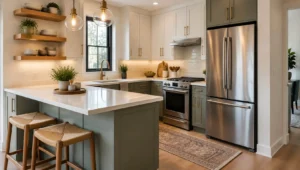
Moody Painted Colors in Deep Green, Navy, or Deep Red
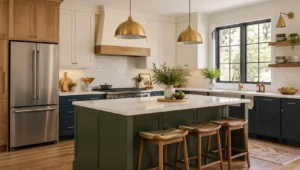
Deep green, deep navy, forest, teal, and even oxblood red have moved into the trending category with real momentum. On the right kitchen, a moody painted color adds character that no neutral can match, and it photographs beautifully with brass hardware and warm wood accents. Used on an island alone, this look has a good chance of aging gracefully because it reads as an intentional feature rather than a color commitment across the whole room.
Used across every cabinet, it becomes a bigger bet. Some deep tones will hold up, others will feel firmly of their moment in five to seven years, and the risk is higher because painted color is harder to change than a stain. If this is the direction you want, a two-tone layout that keeps the perimeter quieter is usually the smarter play.
Fluted and Texture-Forward Cabinet Fronts
Fluted, reeded, and grooved cabinet fronts sit at the most trending end of the scale. The look adds real texture and depth, which many kitchens have been missing after a decade of flat shaker doors, and it works especially well on an island, a range hood surround, or a coffee bar cabinet. Applied in restraint, it reads as a design detail rather than a trend.
Used across every cabinet, texture-forward fronts are harder to walk back. They tie the kitchen to a specific moment more firmly than paint or stain choices, and the grooves themselves collect dust and cooking residue that need regular cleaning. If you love the look, using it as an accent rather than a whole-kitchen commitment is usually the safer approach.
How Sheen Changes the Feel and Upkeep of Any Finish
Sheen matters almost as much as color. A matte finish absorbs light and hides small imperfections, which is why it has taken over from the high-gloss look that defined kitchens a few years ago. It reads calm and current, but it shows fingerprints and cleaning marks more than a satin, and heavy scrubbing can burnish flat paint into unwanted shiny spots.
Satin is the practical middle ground for most kitchens. It gives just enough sheen to wipe down easily, resists fingerprints better than matte, and still avoids the plastic look of a full gloss. Semi-gloss and gloss are largely out of favor on cabinet fronts because they magnify every dent, drip, and installation seam, though they still have a place on trim in some traditional designs.
Painted Versus Stained and Which Ages Better
Both painted and stained cabinets can last for decades, but they age differently. Painted cabinets are more likely to show chips and hairline cracks at door joints over time, especially on solid wood doors that expand and contract with humidity changes. Touch-ups are also more visible because matching the exact color and sheen is difficult, even with the manufacturer’s touch-up kit. On the plus side, paint hides less expensive wood species and gives access to a much wider color range.
Stained cabinets tend to wear more gracefully because the color sits in the wood rather than on top of it. Dings, dents, and small scratches blend into the grain instead of jumping out as bright marks. Stain also gives you the character of the wood itself, which is a large part of why natural wood finishes are trending upward while painted finishes have plateaued. The trade-off is fewer color options, higher wood-quality requirements, and less flexibility if you want a strong color statement.
Here is a quick side-by-side to make the comparison easier to scan:
| Consideration | Painted Cabinets | Stained Cabinets |
| Color range | Very wide | More limited |
| Touch-up visibility | More visible | Blends easily |
| Aging over time | Can show hairline cracks | Wears gracefully |
| Wood quality needed | Lower species acceptable | Higher-grade wood needed |
| Best for | Bold color statements, hiding grain | Showcasing wood character |
The takeaway is not that one is better than the other, but that they suit different priorities. If a specific color is central to your vision, paint is the only real path. If durability and gentle aging matter more, stained wood usually wins.
Mixing Finishes on the Perimeter and the Island
The safest way to bring a trending look into a kitchen without over-committing is to split the finish between the perimeter cabinetry and the island. A quiet, timeless finish on the main runs (warm white, natural white oak, or a warm neutral) sets a calm base that will age well. The island can then carry the bolder move, whether that is a deep green paint, a walnut wood tone, or a fluted front.
The rule of thumb designers keep coming back to is that the perimeter should not fight the island for attention. If the island is the statement, the perimeter needs to step back. If the perimeter is the star, the island can echo or complement it in a quieter way. Getting this balance right is what usually separates a kitchen that photographs well from one that also lives well.
How Cabinet Finish Choice Affects Resale and Buyer Appeal
Cabinets are one of the first things a future buyer reacts to, and finish choice plays a real role in that reaction. Neutral painted finishes and natural wood tones tend to appeal to the widest buyer pool because they read as move-in ready and easy to work with. Bold painted colors, texture-forward fronts, and highly specific finishes narrow that pool, which does not automatically hurt value but does affect how quickly the home is likely to sell.
For homeowners staying put for a decade or more, resale should probably weigh less than daily satisfaction. What signals quality to buyers is a well-built kitchen with thoughtful cabinetry, durable hardware, and a finish that looks intentional against the rest of the room. A moody green kitchen that is coherent from top to bottom will often show better than a beige kitchen that never quite came together.
Matching the Finish to Your Kitchen and Lifestyle
The right finish depends on how much natural light the room gets, how heavily you cook, who else uses the space, and how long you plan to live with the decision. Small kitchens with limited windows lean toward lighter finishes that keep the room feeling open. Larger kitchens with strong daylight can carry darker wood or moody paint without feeling closed in. Households with young children and heavy cooking will notice paint marks and grease on lighter finishes faster than a wood grain will show them.
Budget also shapes the choice. Custom paint colors and premium wood species like walnut or rift-cut white oak cost more than standard offerings, and highly textured door fronts add fabrication complexity that raises the number further. Deciding early which finish tier you can commit to, and where you might scale back to hit the total, prevents the sticker shock that comes at the quoting stage.
Common Mistakes Homeowners Make When Choosing a Cabinet Finish
A few missteps show up in almost every regret story, and being aware of them ahead of time is usually enough to avoid them.
- Judging a finish from a small sample under showroom lighting rather than in your own kitchen at different times of day
- Choosing a very trend-specific color across every cabinet in a room, then feeling stuck with it in five years
- Picking a high-gloss or bright-white finish for a heavy-cook household without accounting for cleaning frequency
- Underestimating how much natural light or lack of it changes the read of a dark wood or moody paint
- Matching the cabinet finish too closely to the countertop or flooring, so nothing reads as distinct
- Skipping a full-sized door sample when custom paint colors or specific wood species are involved
Frequently Asked Questions
1. What is the most timeless kitchen cabinet finish?
A. Warm white painted cabinetry and natural stained white oak are the two finishes with the strongest long-term track record right now. Both pair with a wide range of counters, hardware, and floors and tend to age gracefully across shifting design cycles. Which one wins for a specific kitchen usually depends on lighting, cooking habits, and whether you prefer the character of wood grain or the calm of a solid color.
2. Are white kitchen cabinets going out of style?
A. Not exactly, but the shade has shifted. Stark, cool whites paired with chrome and cool gray are appearing less often, while warmer whites and creamy off-whites are what designers are actually specifying. A well-chosen warm white on a shaker or slim shaker door is still one of the safest picks a homeowner can make.
3. Do painted cabinets last as long as stained cabinets
A. Both can last for decades with quality construction and proper installation, but they age differently. Painted cabinets are more likely to develop hairline cracks at door joints and show touch-ups more visibly, while stained wood tends to blend small dings and dents into the grain. Neither is objectively better, but stained finishes usually wear more gracefully over the long run.
4. Is a matte or satin finish better for kitchen cabinets
A. Satin is the more practical everyday choice because it wipes down more easily, resists fingerprints better than matte, and still avoids the harsh look of a full gloss. Matte reads slightly more current and hides installation imperfections well, but it can burnish under heavy scrubbing and shows cleaning marks faster. Households with heavy cooking or young children usually do better with satin.
5. Which cabinet finish is best for resale value
A. Neutral painted finishes and natural wood tones tend to appeal to the widest buyer pool because they read as easy to live with and easy to change. Bold painted colors and highly specific finishes can still sell well, but they narrow the audience. What matters most to buyers is that the finish looks intentional and pairs well with the rest of the kitchen, not that it follows a specific trend.
Choosing a Cabinet Finish You Will Still Love in Ten Years
The right cabinet finish is the one that fits how your kitchen actually gets used, how much natural light the room has, and how much appetite you have for a statement that reads current now but may not later. Warm white paint and natural white oak are the safest long-term picks. Warm neutrals give you a little more personality without a big commitment. Rich dark wood, moody painted colors, and fluted fronts each bring real character, and each is smartest used as an accent rather than a whole-kitchen commitment.
Since cabinetry is one of the largest and least flexible parts of a remodel, this is the decision that most benefits from ordering full-sized door samples, viewing them in your own kitchen at different times of day, and working through the choice with an experienced kitchen designer or remodeler who can walk you through how the finish will pair with your counters, hardware, and lighting before anything gets ordered.