

Choosing the right surface for your kitchen starts with a simple question: what is the best wood for kitchen countertops? Wood brings warmth, texture, and natural character that stone and laminate often cannot match. It also works with many styles, from modern Los Angeles homes to cozy bungalows in Pasadena. This guide compares popular species, explains how to care for them, and helps you decide with confidence.
Why Wood Countertops Work Well in Southern California Kitchens
Wood countertops give a kitchen a welcoming feel and pair well with white, painted, or stained cabinets. Their natural grain means no two surfaces look exactly alike. Many homeowners in California like the way wood softens open-concept spaces that flow into living areas. With proper sealing and routine care, a well-chosen wood surface can stay attractive for years.
Types of Wood for Kitchen Countertops
There are many types of wood for kitchen countertops, but the best choices are dense, tight-grained hardwoods. These species resist dents and knife marks better than softer woods. Each one also has a distinct color, grain pattern, and maintenance need. The sections below cover the most common options so you can compare them clearly.
Maple Wood Countertops
Maple wood countertops are a favorite because of their light, creamy color and fine, even grain. Maple is hard and durable, which makes it a dependable choice for busy kitchens. Its subtle look suits modern, Scandinavian, and farmhouse designs. It is also one of the most commonly used woods for butcher block, which makes it easy to find.
Walnut Kitchen Countertops
Walnut kitchen countertops offer a rich, dark brown tone that looks elegant next to white or light gray cabinets. The grain often shows deep variation, adding drama to the room. Walnut is a strong hardwood, though it is generally a little softer than maple. Its dark color gives the kitchen a bold focal point, especially on an island.
Oak and Cherry Options
Oak is a classic choice with a pronounced grain and a warm, traditional look. White oak is often preferred for kitchens because it handles moisture better than red oak. Cherry starts as a soft pinkish tone and deepens gradually over time with exposure to light. Both species can work well when sealed correctly, though they show different visual character.
What to Compare in Hardwood Kitchen Countertops
When comparing hardwood kitchen countertops, look beyond color alone. Hardness, grain, stability, and finish all affect how the surface performs over time. Consider how you cook, how much moisture the area sees, and how much upkeep you are comfortable with. These factors can help you narrow your choices:
- Durability against dents and scratches
- Grain pattern and color match with your cabinets
- Resistance to moisture near the sink
- Maintenance level that fits your routine
Best Wood for Butcher Block Countertops
If you want the best wood for butcher block countertops, hard maple is the most popular answer. Its tight grain resists deep cuts and has long been a classic material for cutting surfaces. Walnut and oak also work well when you want a different color or grain. Always confirm that the finish is food-safe if you plan to cut directly on the surface.
Edge Grain, End Grain, and Face Grain
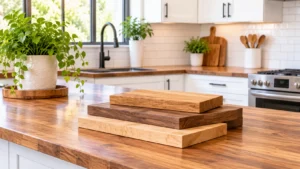
Butcher block comes in different constructions, and each one changes the look and feel. Edge grain shows long strips of wood and is a common, practical choice for kitchen counters. End grain displays a checkerboard pattern and is gentler on knife edges, though it is typically a more labor-intensive build. Face grain shows wide boards and offers a sleek, continuous look.
Sealing and Caring for Wood Countertops
Proper sealing is what protects wood from water, stains, and warping. Areas around the sink and dishwasher need extra attention because moisture exposure is higher. Wipe up spills promptly and avoid leaving standing water on the surface. Use trivets for hot pots, since heat can scorch or damage the finish.
Choosing a Finish That Fits Your Habits
Your finish should match how you use the countertop. Food-safe mineral oil is a common choice for surfaces where you cut and prep food, and it needs periodic reapplication. Sealers such as polyurethane or hardwax oil create a more protective layer but are better suited to non-cutting areas. Follow the manufacturer’s instructions, and test a small spot before finishing the full surface.
Comparing Popular Woods at a Glance
A quick comparison can make it easier to see how the popular options differ. The table below summarizes general characteristics rather than exact performance, since results vary by product and finish. Use it as a starting point, then request samples to see each wood in your own lighting. Natural variation means your final surface may look slightly different from a sample.
| Wood | Look | Best For |
| Maple | Light, even grain | Butcher block and bright, modern kitchens |
| Walnut | Rich, dark brown | Islands and statement countertops |
| White Oak | Warm, visible grain | Traditional and farmhouse kitchens |
| Cherry | Reddish tone that deepens with age | Classic, warm designs |
Tips for Choosing the Right Wood for Your Kitchen
Start by matching the wood to your cabinets, flooring, and lighting. If your kitchen gets strong sunlight, remember that cherry can darken over time. Think about how much maintenance fits your routine, and ask a professional about the best installation for your layout. Finally, budget for sealing supplies so your countertops stay protected.
Frequently Asked Questions
What is the best wood for kitchen countertops overall?
Maple is often considered the best all-around choice because it is hard, durable, and widely available. Walnut is a strong alternative if you prefer a darker, more dramatic look. White oak is also popular for its warm tone and moisture performance. The right choice depends on your style, budget, and how much upkeep you want.
Are wood countertops hygienic?
Wood can be a sanitary kitchen surface when it is properly sealed and cleaned. Wipe it with mild soap and warm water, then dry it promptly. Avoid soaking the surface, and re-oil or reseal as needed. It is still wise to use separate cutting boards for raw meat.
Can wood countertops be used around the sink?
Yes, but they need careful sealing and diligent care. Moisture is the main enemy, so wipe up splashes and keep the area dry. Make sure the edges and the cutout around the sink are sealed during installation. Some homeowners choose a more water-resistant finish for this section.
How do I remove scratches from wood countertops?
Light scratches can often be sanded out gently with fine-grit sandpaper along the grain. Clean away the dust, then reapply oil or sealer to match the rest of the surface. Deeper marks may need professional refinishing. Always follow the care guidelines for your specific finish.
Is butcher block a good choice for a busy family kitchen?
It can be, as long as you are comfortable with some regular care. Wood can show dents, stains, and wear, but many surfaces can be refreshed through light sanding and re-oiling. That repairability is one reason many homeowners appreciate it. If you prefer a no-maintenance surface, you may want to compare other materials first.
Final Thoughts
The best countertop wood balances beauty, durability, and the level of care you are willing to provide. Maple offers a bright, versatile look, walnut brings richness, and oak and cherry add classic charm. Sealing and regular upkeep matter just as much as the species you choose. To plan a kitchen that fits your home, explore the cabinet and kitchen options at Payless Kitchen Cabinets and see what works for your Los Angeles space.