
A kitchen sink cabinet has to do more than match the doors beside it. It must accommodate the sink, leave room for plumbing, and provide storage you can reach without moving everything out of the way.
That is why choosing one by appearance alone can lead to frustration. A deeper sink might leave less room for supplies, while an organizer that fits the cabinet opening could collide with the drainpipe inside.
Whether you are replacing a damaged unit or planning a kitchen remodel, Payless Kitchen Cabinets can help you explore cabinet and sink options for your Los Angeles home. Start with fit and construction, then choose the finish that brings the space together.
Choose a Kitchen Sink Cabinet Around the Sink First
A kitchen sink base cabinet differs from a standard storage cabinet because the basin and plumbing occupy much of its upper interior. The door arrangement, internal space, and any support requirements must work with the selected sink.
Review the exact sink model before ordering cabinetry. Its specification sheet should identify the minimum cabinet size, while installation instructions explain mounting and support requirements.
An undermount sink, top-mount sink, and apron-front sink can require different arrangements. An apron-front model, for example, may need a cabinet designed or modified for its exposed front and specified supports.
Compare kitchen sink options alongside cabinetry rather than making these decisions separately. The installer should confirm that the chosen sink, cabinet, and countertop form a compatible combination.
Check Kitchen Sink Cabinet Dimensions Beyond Width
Kitchen sink cabinet dimensions should account for both the space available in the room and the usable area inside the cabinet. An outside measurement alone does not establish whether a sink or organizer will fit.
Ask your installer to confirm:
- The cabinet’s overall width, depth, and height.
- Clear interior space after accounting for sides, framing, and supports.
- Sink bowl depth and the space below it.
- Drain, supply line, and shutoff valve locations.
- Space for a disposal or filtration equipment, if included.
- Door openings and clearance beside adjacent appliances.
A sink advertised by its overall width may require a wider cabinet. Use the manufacturer’s stated minimum rather than assuming matching measurements mean compatibility.
Replacing the sink with a deeper bowl can also change the available space underneath. Check that before choosing storage accessories.
Compare the Best Material for Kitchen Sink Cabinet Construction
The best material for kitchen sink cabinet construction depends on the complete product: the cabinet box, surface finish, exposed edges, joints, and suitability for the intended installation.
Plywood, particleboard, and MDF appear in different parts of cabinet construction. A solid wood door does not necessarily mean the cabinet box is also solid wood, so ask for specifications that identify each component.
Instead of relying on a broad material label, ask the supplier:
- What are the cabinet sides and bottom made from?
- How are exposed edges and plumbing cutouts finished?
- What cleaning and moisture-care instructions apply?
- What does the warranty cover?
- Can damaged components be repaired or replaced?
No ordinary wood-based cabinet should be treated as a substitute for leak-free plumbing. Address water exposure promptly and keep the interior accessible for inspection.
A well-chosen kitchen sink cabinet should have clear product information as well as an attractive finish.
Plan Under Sink Cabinet Storage Ideas Around the Pipes
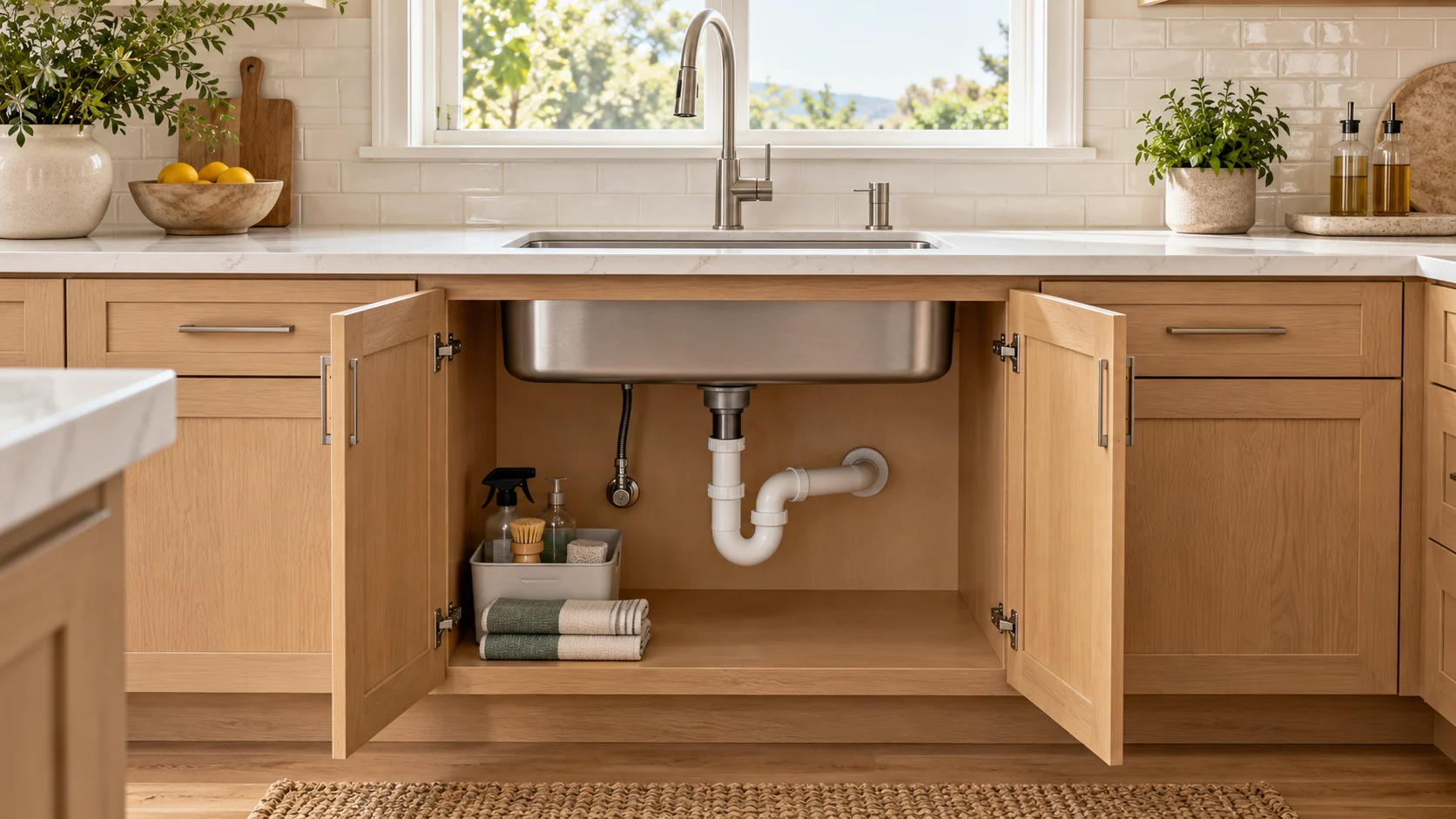
Useful under sink cabinet storage ideas begin with the space left after the plumbing is installed. Take measurements around pipes, valves, and equipment before ordering baskets or sliding organizers.
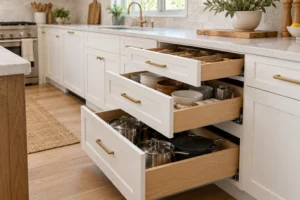
Removable bins can keep supplies grouped while allowing quick access underneath. A shallow tray may suit sponges and cloths, while a pull-out unit can make items easier to reach when the cabinet layout permits it.
Consider pull-out shelf installation only after confirming compatibility with the sink and plumbing. An organizer that works in a standard base cabinet may not suit the area beneath a deep basin.
Keep shutoff valves reachable and avoid packing supplies tightly around connections. Choose storage that can be removed easily if the plumbing needs attention.
If young children use the home, store cleaning products securely and follow their labels rather than relying on an ordinary cabinet door to restrict access.
Recognize When Kitchen Sink Cabinet Replacement Makes Sense
Kitchen sink cabinet replacement is worth assessing when the box has become soft, swollen, distorted, or unable to hold hardware securely. Repeated exposure to water may affect more than the visible surface.
Start by identifying and resolving the source of any leak. Installing a replacement without correcting that problem risks damaging the new unit.
Cosmetic wear is a different issue. If the cabinet remains sound and the layout works, updating the visible finish or doors may be sufficient. However, new doors will not restore a deteriorated cabinet bottom or damaged structure.
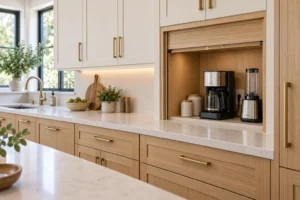
Explore kitchen cabinet replacement with the surrounding kitchen in mind. Matching the height, door style, finish, and adjoining units matters if you plan to replace only the sink cabinet.
Payless Kitchen Cabinets offers replacement services that can be discussed alongside the condition and arrangement of your existing cabinetry.
Coordinate the Countertop Before Removing the Cabinet
A kitchen sink cabinet sits beneath a heavily used part of the countertop. Replacing it may involve disconnecting plumbing, handling the sink, and planning how the surrounding surface will be supported.
Do not assume the existing countertop can always remain undisturbed. Material, seams, mounting details, and access influence the work required.
If the countertop is also due for replacement, compare countertop options before finalizing the sink and cabinet. Confirm the sink cutout, mounting arrangement, faucet placement, and finished cabinet layout together.
This coordination can help avoid buying a cabinet that conflicts with an existing opening or choosing a sink that requires unexpected changes.
Compare the Complete Installed Cost
The cabinet price is only one part of the project. Removal, plumbing disconnection and reconnection, sink handling, countertop work, installation, and repairs to surrounding areas may also affect the estimate.
Ask for a written scope that states what remains, what is replaced, and who completes each part of the work. Clarify whether hardware, interior accessories, disposal, and finishing are included.
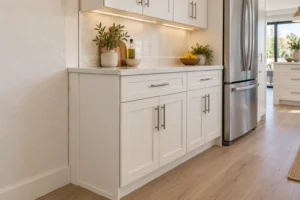
For a partial kitchen update, confirm how the new cabinet will meet adjacent cabinetry. A close color match may still show differences in door profile or finish, so review samples before committing.
Spend on a compatible, sound installation before adding optional organizers. Storage accessories can be selected once the available interior space is clear.
Finish With a Cabinet That Works Every Day
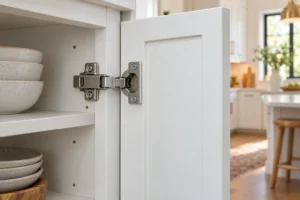
Before signing off on the installation, check that doors operate freely and nearby dishwasher or cabinet openings do not interfere. Ask the installer to demonstrate access to shutoff valves and confirm that plumbing connections have been checked for leaks.
Review the care instructions and keep the cabinet interior easy to inspect. A removable protective tray may help contain minor drips, but it should not hide a leak or delay repairs.
The right kitchen sink cabinet brings together a suitable basin, accessible plumbing, practical storage, and a finish that belongs in your kitchen.
Contact Payless Kitchen Cabinets to choose a kitchen sink cabinet that fits your sink, storage needs, and remodeling plans.
Frequently Asked Questions
How do I choose the right kitchen sink cabinet size?
Start with the sink manufacturer’s minimum cabinet requirement, then confirm the cabinet’s interior dimensions, mounting details, and plumbing clearance. Overall sink width alone is not enough to establish compatibility.
Can any base cabinet be used beneath a kitchen sink?
Not automatically. The cabinet must accommodate the basin, plumbing, and specified supports. Standard drawers or shelves may interfere, and certain sink styles need a purpose-designed arrangement.
Can I replace only the kitchen sink cabinet?
It may be possible, but the installer needs to assess adjoining cabinets, countertop support, sink mounting, and plumbing access. Replacing a single cabinet is not always a simple slide-out and slide-in job.
What are practical under sink cabinet storage ideas?
Removable bins, shallow trays, and compatible pull-out organizers can help. Measure around the plumbing first and leave valves and connections accessible.
Does a moisture-resistant cabinet eliminate the risk of water damage?
No. Moisture resistance depends on the product and does not mean the cabinet can tolerate an ongoing leak. Follow the manufacturer’s care instructions, check for drips, and resolve water exposure promptly.