
Open kitchen shelving has spent the last decade on nearly every design account, remodeling magazine, and Pinterest board that touched a kitchen. It looks great in photos, but plenty of homeowners who took the plunge have quietly gone back to closed cabinetry within a year or two. If you are planning a remodel and trying to decide whether to swap out uppers for exposed shelves, the real question is not whether the trend is fashionable. It is whether the look is worth the daily upkeep, the loss of storage, and the discipline it demands. This article walks through the honest pros and cons so you can decide with your eyes open.
Why Open Kitchen Shelving Became Popular in the First Place
The appeal took off for a good reason. Removing bulky upper cabinets opens up sight lines, lets natural light travel across the room, and makes a small kitchen feel noticeably larger than it actually is. It also gives homeowners a chance to show personality in a space that traditionally hides everything behind matching cabinet doors.
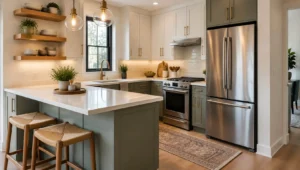
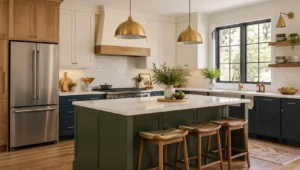
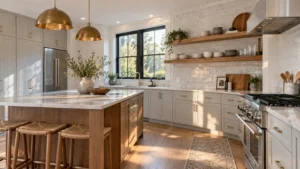
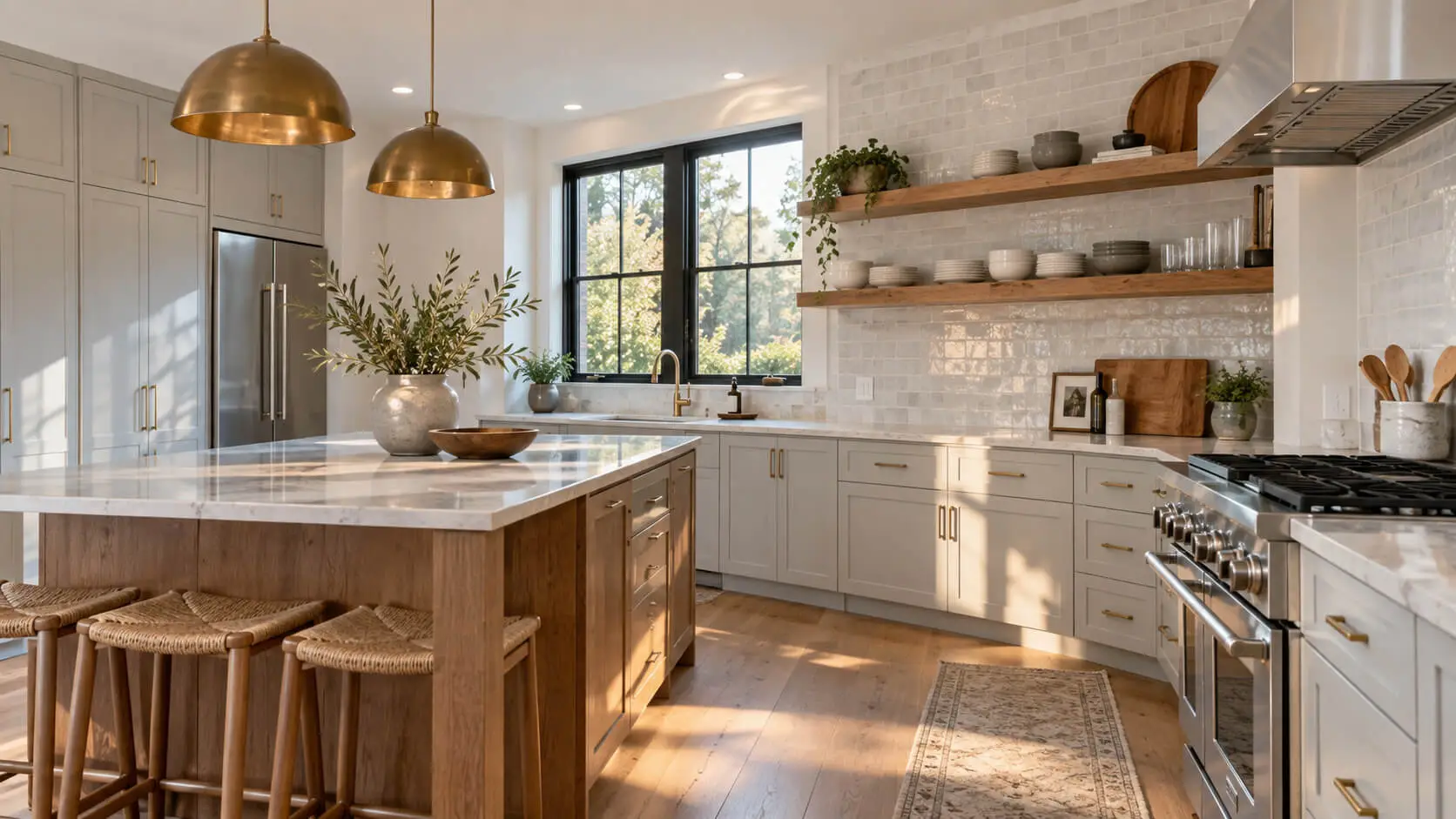
The trend also spread because it photographs unusually well. Neatly stacked ceramics, a row of matching glassware, a bit of greenery, and a warm wood shelf against a painted wall almost always makes a magazine-ready image. That visual payoff is real, but it has more to do with careful styling than with everyday use, which is where the disconnect between inspiration photos and real life begins.
The Honest Advantages of Open Shelving in a Kitchen
Set aside the aesthetics for a moment and open shelving still has genuine practical upsides. Everyday dishes, glasses, and bowls are easier to grab because there is no door in the way, which speeds up the flow of setting a table or unloading the dishwasher. Shelves also cost less to build and install than full upper cabinetry, which can free up budget for cabinet quality below, better counter surfaces, or improved lighting.
Open display shelving also gives shorter homeowners easier access to items that often get lost on the top shelf of a tall cabinet. The view stays clear, so nothing hides in the back. And for kitchens with an interesting backsplash, a great window, or a good ceiling height, removing the visual weight of upper cabinetry can make the whole room feel calmer.
The Real Downsides Homeowners Notice After a Year
The honeymoon period tends to end around the same time the first stubborn film shows up on a favorite bowl. Three issues come up over and over in real kitchens, and they are worth taking seriously before committing.
Dust, Grease, and Everyday Cleaning
Anything sitting on an open shelf collects dust, and in a kitchen it collects grease and cooking residue on top of that. Even dishes you use every day pick up a sticky film that plain water will not remove, which means regular wipe-downs of both the shelves and everything on them. Homeowners who cook often, use high-heat methods, or have weaker range hoods notice this fastest.
The math is simple. A closed cabinet protects its contents for weeks between deep cleans. Open shelving expects that attention closer to weekly, sometimes more, depending on how the kitchen is used.
Loss of Usable Storage
An open shelf holds less than the same footprint of a closed cabinet, and it holds it less flexibly. Shelves are usually shallower, they cannot hold anything that is unattractive without ruining the look, and stacking gets awkward once you start hiding pots, mixing bowls, and tall storage containers up there. In a kitchen that is already short on cabinetry, this trade is a real cost, not a design detail.
The workaround is usually to move that storage somewhere else. A larger pantry, deeper drawers below, or a taller island can absorb what the uppers used to hold, but each of those requires space and budget that not every remodel has.
The Discipline of Keeping It Looking Curated
Open shelving only looks like the inspiration photos when it is styled with restraint. That means matching or coordinated dishware, no random mugs from a friend’s wedding, no cereal boxes, no plastic containers, and no stack of paperwork that migrated up from the counter. Households where more than one person uses the kitchen tend to find that consistency hard to maintain.
If you enjoy styling a shelf and quietly editing it every few weeks, this suits you. If the sight of a mismatched glass on a curated shelf would bother you every morning, that is worth knowing about yourself before installation day.
Where Open Shelving Works Best and Where It Often Fails
Open shelving works best in kitchens that already have enough closed storage elsewhere. A well-planned pantry, a full run of base cabinets with pull-outs, or an island with deep drawers can absorb the storage load and leave the exposed shelves free to hold the pretty, useful things you reach for daily. It also does well in kitchens where cooking is more casual than heavy, since less grease means less residue.
The setup tends to fail in the opposite situation. Small kitchens with no pantry, heavy cooking households, families with young children, and homes with weaker ventilation are the ones most likely to regret it. Open shelving above or right next to the stove is the highest-risk placement of all, no matter how good the range hood is.
Practical Design Details That Make or Break Open Shelving
Whether open shelving works or turns into a source of regret often comes down to a handful of choices most homeowners underestimate. Getting these right during the planning stage is much cheaper than fixing them after installation.
Placement, Ventilation, and Distance From the Stove
Shelves placed above or immediately beside the range collect grease residue at a rate that makes weekly cleaning feel like a losing battle, even with a strong hood pulling air upward. A safer placement is on a wall away from the cooking zone, ideally near the sink, a coffee station, or a window run where airflow is cleaner. If your range hood is undersized or vents recirculated air rather than exhausting outside, that changes the math further and usually argues against open shelving anywhere in the cooking zone.
Shelf Material, Depth, and Bracket Support
Solid hardwood, thick plywood with a finished veneer, and metal shelves each carry different weight limits and age differently under kitchen conditions. Depth matters just as much. A shelf that is too shallow will not hold a dinner plate, and one that is too deep starts to feel heavy on the wall. Floating shelves need blocking or steel rod supports installed inside the wall before the drywall is closed up, which is why this decision belongs in the planning stage rather than after the paint is dry. Bracket-supported shelves are easier to add later but read differently in the room.
What to Display and What to Keep Behind Doors
The rule most designers land on is simple. Put your everyday dishware, glassware, and pieces you genuinely like looking at on the open shelves. Keep small appliances, plastic containers, mismatched storage, and anything you have to remind yourself to hide behind closed cabinetry. A single dedicated drawer or lower cabinet for “ugly essentials” is what usually keeps an open-shelf kitchen looking calm rather than cluttered.
Hybrid Storage and Glass-Front Cabinets as the Middle Ground
The direction most designers are pushing in 2026 is not all open or all closed, but a considered mix. A hybrid kitchen keeps closed upper cabinetry where storage needs to disappear, uses one or two open shelves as a visual break, and often adds a section of glass-front cabinets to display a curated set of ceramics or glassware without exposing them to the full dust load.
Glass-front cabinets have quietly become the go-to alternative for homeowners who want the display feel without the constant upkeep. They show off what is inside, add rhythm to a long cabinetry run, and still close, which handles both the dust and the grease problem in one move. For most kitchens, a hybrid layout gives you the best of both looks without asking the household to live like a design magazine.
Open Shelving in Small Kitchens and Older Home Layouts
Small kitchens are the trickiest case because they benefit most from the visual openness and lose the most in usable storage. In a tight galley or a compact L-shaped layout, replacing all the uppers with open shelves can make the room feel bigger, but it can also leave the household with nowhere to put things. The compromise that usually works is a single wall of open shelving paired with tall closed cabinetry on an adjacent wall, or a floor-to-ceiling pantry that absorbs the storage the uppers used to carry.
Older homes bring their own quirks. Walls may not be plumb, framing may not sit where you expect, and existing tile or plaster backsplashes affect how shelves mount. Any remodel touching this kind of space benefits from a site visit before ordering shelves, because the difference between a clean install and a wavy, uneven finish usually comes down to what happens inside the wall.
How Open Shelving Affects Resale and Buyer Perception
Resale is where opinions split sharply. Some buyers see open shelving as fresh and personal, while others see it as impractical and a hassle they will need to reverse. If you are planning to sell within a few years, all-open kitchens are the riskier choice because they narrow your buyer pool. A hybrid layout with a small run of open shelves or a section of glass-front cabinetry tends to age better and appeal to more people.
For homeowners staying put, resale matters less than daily satisfaction. What signals quality to a future buyer is a well-built kitchen with thoughtful storage, durable finishes, and a layout that works. Open shelving on its own does not add or subtract from that impression as much as many homeowners assume.
Who Open Kitchen Shelving Genuinely Suits
Open shelving suits homeowners who cook lightly to moderately, keep a tidy kitchen by nature, own dishware they actually enjoy displaying, and have enough closed storage elsewhere to absorb the mismatched items. It also suits homeowners who see the shelf as a design element they want to style, not just a place to stash cereal.
It does not suit heavy cooks, households with limited storage, families where the kitchen sees constant activity, or anyone who would rather not think about their counters looking a certain way every morning. There is no wrong answer here. The mistake is choosing based on inspiration photos rather than on how the household actually lives.
Common Mistakes Homeowners Make With Open Shelving
A handful of missteps come up in almost every regret story. Being aware of them ahead of time is usually enough to avoid them.
- Placing shelves directly above or beside the range without accounting for grease and steam
- Skipping in-wall blocking during the framing stage, then trying to add floating shelves later
- Choosing shelves that are too shallow to hold everyday dinner plates
- Removing all upper cabinets in a kitchen that has no pantry or replacement storage
- Underestimating how much editing and re-styling the shelves need to keep the calm look
- Displaying items purely for looks that never get used, taking up space that could hold real dishware
Frequently Asked Questions
1. Is open kitchen shelving out of style in 2026
A. Not exactly, but the all-or-nothing version has cooled off. Designers are leaning toward hybrid layouts that mix closed cabinetry, a section of glass-front cabinets, and one or two accent open shelves rather than stripping the walls of uppers entirely. The look is still around, just used more selectively.
2. Do open kitchen shelves really collect that much dust
A. Yes, more than most homeowners expect. Everything on display, not just the shelf itself, picks up dust and cooking residue and needs regular wiping. Kitchens with heavy cooking or weaker ventilation see it faster, while shelves placed away from the stove in cleaner-airflow zones fare noticeably better.
3. How deep should open kitchen shelves be
A. Around 10 to 12 inches usually works well because it comfortably holds standard dinner plates, mixing bowls, and glassware without feeling overbuilt on the wall. Shallower shelves in the 6 to 8 inch range suit smaller items like cups, spice jars, and cookbooks. The right depth depends on what you actually plan to store, which is worth mapping out before ordering.
4. Is open shelving a good idea near the stove
A. It is the highest-risk placement in the kitchen. Grease, steam, and heat carry upward and settle on anything exposed, so shelves in that zone show buildup quickly even with a strong range hood. A closed cabinet or a glass-front cabinet is usually a smarter choice above or beside a cooking area.
5. What are the best alternatives if I love the look but not the upkeep
A. Glass-front cabinets are the most direct alternative because they show off what is inside while protecting it from dust and grease. A hybrid approach that keeps most upper cabinets closed and adds a single accent open shelf near the sink or a window gives you the airy feel without the full cleaning burden. Deep drawers, a proper pantry, and thoughtful interior organization behind closed doors handle the storage side.
Deciding Whether Open Shelving Belongs in Your Remodel
Open kitchen shelving still makes sense in 2026, just not in every kitchen and rarely as a full replacement for closed cabinetry. If you cook lightly, keep a tidy space by nature, and have real storage elsewhere, a well-placed run of exposed shelves can genuinely add character to the room. If you cook heavily, need every inch of storage, or would rather not think about styling your counters, closed cabinetry or a glass-front hybrid will serve you better long term.
The right answer depends on how your household actually uses the kitchen, how the space is laid out, and what you are willing to maintain. An experienced kitchen designer or remodeler can walk you through placement, ventilation, and shelf construction with your specific layout in front of them, which is usually the fastest way to move from Pinterest boards to a decision you will still be happy with in five years.