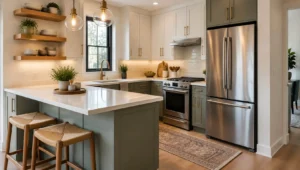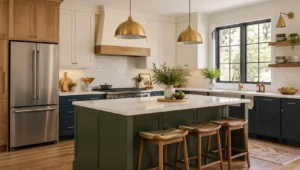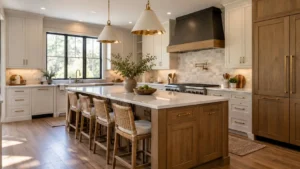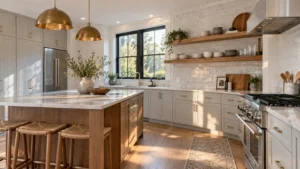

Kitchen lighting does more than brighten a room. The right fixtures, placement, and controls can make cabinetry feel more intentional, highlight architectural details, and give an ordinary kitchen the polished appearance of a professionally designed space.
If your kitchen still looks builder-grade despite having attractive cabinets and finishes, lighting may be the missing piece. These nine lighting upgrades can add depth, functionality, and personality without requiring a complete kitchen renovation.
Why Lighting Upgrades Make Such a Difference in Kitchen Design
Lighting is one of the easiest ways to change how a kitchen looks and feels. A well-planned lighting scheme can highlight countertops, draw attention to an island, make cabinetry appear more sophisticated, and create a warmer atmosphere for everyday living.
Unlike a single ceiling fixture that simply illuminates the room, thoughtfully selected kitchen lighting works with the rest of the design. It creates layers, directs attention, and gives each area of the kitchen a specific purpose.
How Lighting Can Make a Kitchen Feel More Custom
Custom-looking kitchens rarely rely on one type of fixture. Instead, they combine functional and decorative lighting to create visual depth and make important design elements stand out.
Even relatively simple upgrades can have a significant impact, including:
- Adding distinctive pendant lights over an island
- Installing concealed under-cabinet lighting
- Highlighting glass-front cabinets or open shelving
- Adding decorative sconces to appropriate wall areas
- Using dimmers to create different moods
The goal is not to add as many fixtures as possible. It is to make every light feel intentional and connected to the overall kitchen design.
The Difference Between Builder-Grade and Layered Kitchen Lighting
Builder-grade kitchens often use a basic arrangement of recessed ceiling lights or one central fixture. While this provides general illumination, it can leave countertops, cabinetry, and architectural features looking flat.
Layered lighting uses multiple sources for different purposes. Ambient lighting illuminates the room, task lighting supports food preparation, accent lighting highlights features, and decorative fixtures add personality.
How to Combine Ambient, Task, and Accent Lighting
A successful lighting plan starts by assigning each fixture a role. Ambient lighting provides overall brightness, task lighting focuses on work surfaces, and accent lighting adds depth or highlights specific features.
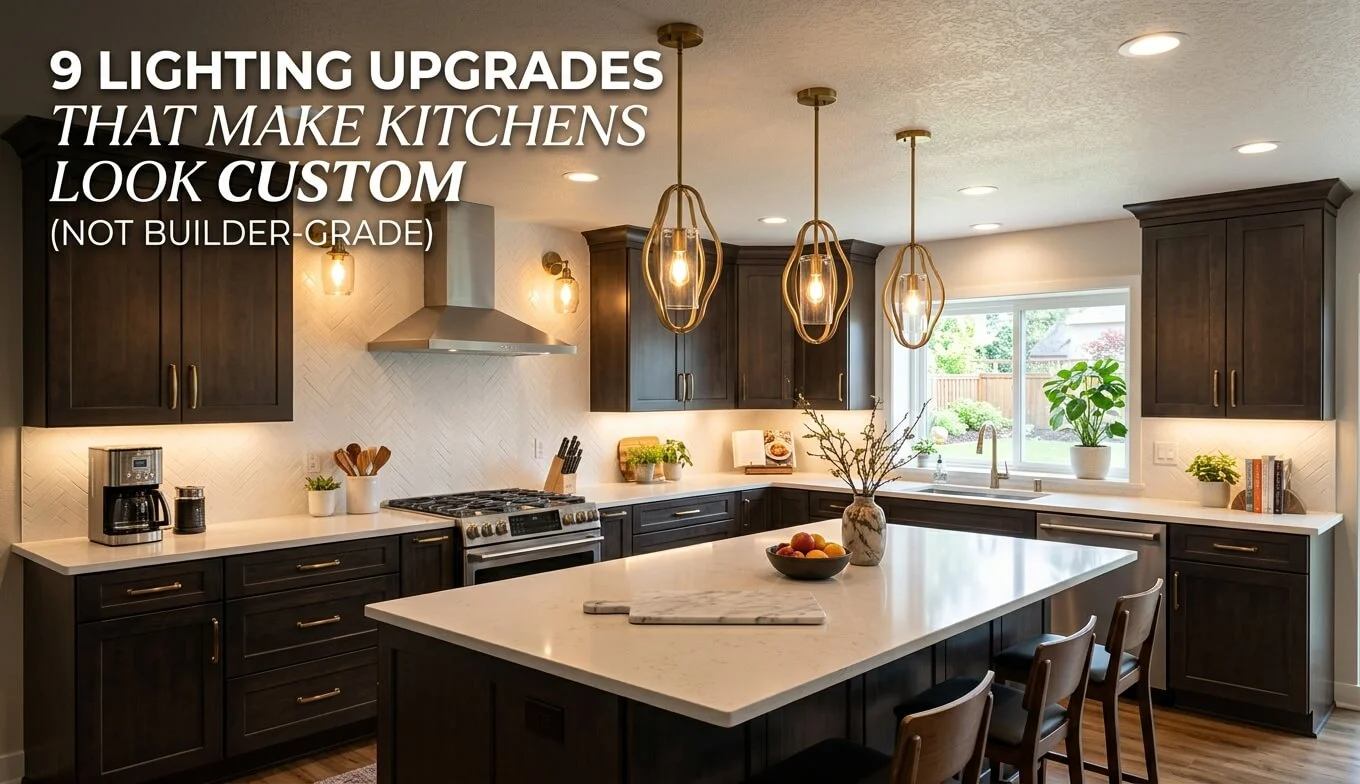
For example, recessed kitchen lighting can provide general illumination, under-cabinet lights can brighten countertops, and pendant lights can become a focal point above the island. Combining these layers makes the room more functional while giving it a more customized appearance.
9 Lighting Upgrades That Make Kitchens Look Custom
You do not necessarily need new cabinets or expensive architectural changes to make your kitchen feel more upscale. The following lighting upgrades can make a noticeable visual difference while improving everyday functionality.
1. Add Statement Pendant Lights Over the Island
Kitchen islands naturally attract attention, making them an ideal location for decorative lighting. Replacing basic fixtures with distinctive pendant lights can immediately make the kitchen feel more intentional and designer-inspired.
Choose fixtures that complement your cabinetry, countertops, and hardware without matching everything too literally. Consider the following when selecting pendant lights for kitchen islands:
- Choose shapes or materials that add visual interest
- Match the fixture scale to the size of the island
- Leave enough space between multiple pendants
- Select a finish that complements existing hardware
- Use dimmable fixtures when possible
The right pendant does more than provide task lighting. It becomes a visual focal point that helps define the island as the centerpiece of the kitchen.
2. Install Under Cabinet Lighting for a Built-In Look
Under-cabinet lighting is one of the most practical ways to make a kitchen feel more finished. By illuminating the countertop directly beneath wall cabinets, it eliminates dark work areas and creates a subtle glow after sunset.
LED strips and low-profile fixtures are particularly useful because they can provide even illumination without becoming visually distracting. Warm or warm-neutral light can also make wood cabinetry, stone countertops, and other finishes feel more inviting.
For the most polished appearance, conceal the light source as much as possible rather than using bulky fixtures that are visible from normal viewing angles.
3. Upgrade Basic Recessed Lights to a Better Layout
Recessed lighting is not inherently builder-grade. The problem is often poor placement rather than the fixture itself. A kitchen with recessed lights arranged in a simple grid may technically be bright but still lack the focused illumination that a custom-designed space provides.
Instead, position fixtures according to the kitchen’s functional zones. Countertops, sinks, walkways, and islands may each require different lighting considerations. Adjustable recessed fixtures can also help direct light toward specific surfaces or architectural details.
4. Layer Kitchen Ceiling Lighting Instead of Using One Fixture
Kitchen ceiling lighting becomes much more effective when several fixture types work together. Rather than expecting one central fixture to illuminate the entire room, combine different sources to create layers of brightness.
Depending on the kitchen’s size and layout, you might combine:
- Recessed lights for general illumination
- A decorative fixture over a dining or breakfast area
- Pendant lights over the island
- Flush-mount fixtures in areas with lower ceilings
- Accent lighting for architectural or display features
Adding dimmers to these layers gives you greater control. Bright lighting can support meal preparation, while lower levels can create a more relaxed atmosphere when the kitchen becomes a gathering space.
5. Add Accent Lighting Inside Cabinets and Shelving
Cabinet and shelf lighting can add depth that conventional ceiling fixtures cannot. It is particularly effective for glass-front cabinets, open shelving, or areas where decorative dishes, glassware, artwork, or other objects are displayed.
Subtle illumination inside these areas creates visual interest without overwhelming the room. It can also make cabinetry appear more substantial and carefully designed.
Consider accent lighting for:
- Glass-front upper cabinets
- Open shelving
- Built-in display niches
- Decorative backsplash areas
- Pantry or beverage stations
The key is subtlety. Accent lighting should enhance the kitchen rather than compete with the primary sources of illumination.
6. Install Toe-Kick Lighting for a Subtle Custom Detail
Toe-kick lighting is a small upgrade with a surprisingly sophisticated effect. Concealed beneath base cabinets, these lights create a soft glow along the floor and can make cabinetry appear as though it is floating.
This type of lighting is especially useful at night when full kitchen illumination is unnecessary. A low-level glow can provide enough visibility for getting a drink or moving through the kitchen without turning on bright overhead fixtures.
Because the lighting source is hidden, the effect feels integrated rather than added on.
7. Replace Builder-Grade Fixtures With Coordinated Finishes
Sometimes the simplest way to upgrade kitchen lighting is to replace outdated or generic fixtures. A basic fixture can make an otherwise beautiful kitchen feel unfinished, while a carefully selected replacement can reinforce the room’s design direction.
Pay attention to how lighting finishes interact with cabinet hardware, faucets, appliances, and other metal elements. You do not have to use exactly the same finish everywhere, but the combination should feel deliberate.
For example, a kitchen might successfully combine:
- Aged brass pendant lights with complementary cabinet hardware
- Matte black sconces with dark window frames
- Brushed metal fixtures alongside stainless-steel appliances
- Mixed metals used consistently across different areas
Avoid choosing every fixture from the same collection simply for the sake of matching. Coordinated does not have to mean identical.
8. Add Decorative Wall Lighting Where It Makes Sense
Wall lighting can bring personality to parts of the kitchen that are often overlooked. Sconces can work well near sinks, breakfast areas, coffee stations, or open sections of wall where overhead lighting alone feels insufficient.
Choose a fixture that reflects the kitchen’s overall design style while considering how far it projects from the wall. In compact spaces, slimmer fixtures can provide the decorative effect without interfering with circulation.
Decorative wall lighting is particularly valuable because it contributes both illumination and visual character. That combination can make a kitchen feel more like a deliberately designed living space rather than a standard builder package.
9. Add Dimmers and Separate Lighting Controls
Even expensive kitchen lighting can feel ordinary if every fixture turns on and off at the same intensity. Dimmers and independent controls allow you to adapt the lighting to different activities throughout the day.
Create separate controls for major lighting layers so you can adjust them independently. Useful settings might include:
- Bright task lighting for cooking and food preparation
- Moderate ambient lighting for everyday use
- Lower accent lighting for evening gatherings
- Soft toe-kick lighting for nighttime movement
- Decorative lighting for entertaining
This flexibility is one of the simplest ways to make a lighting system feel more sophisticated and custom.
How to Layer Kitchen Lighting for a Custom Look
Layering is what ties individual lighting upgrades together. Instead of viewing each fixture as a separate element, think about how different sources interact to illuminate the kitchen and create contrast.
A well-layered plan should provide enough light for practical tasks while also allowing you to lower or redirect certain sources when you want a softer atmosphere.
Ambient Lighting for Overall Illumination
Ambient lighting provides the general brightness needed to move comfortably around the kitchen. Recessed fixtures, flush mounts, and appropriately positioned ceiling fixtures can serve this role.
The goal is consistent illumination without creating excessive glare or bright spots. Your kitchen should feel evenly lit without every surface receiving the same amount of light.
Task Lighting for Counters and Work Zones
Task lighting focuses on areas where specific activities take place. Countertops, islands, sinks, and food preparation areas benefit from direct illumination.
Under-cabinet fixtures are particularly effective because they place light exactly where it is needed while reducing shadows created by overhead sources.
Accent Lighting for Depth and Visual Interest
Accent lighting adds dimension by drawing attention to selected features. Cabinet interiors, shelving, artwork, architectural details, and decorative displays can all benefit from carefully positioned accent lights.
Because accent lighting is not required for basic visibility, it can remain relatively subtle. Its purpose is to create contrast and make the kitchen visually interesting.
Decorative Lighting for Personality
Decorative fixtures bring character to the space. Pendant lights, chandeliers, sconces, and other statement pieces can become part of the kitchen’s overall design rather than simply serving a functional purpose.
When selecting decorative fixtures, consider proportion, finish, shape, and material alongside the existing kitchen finishes.
Kitchen Lighting Fixtures That Make the Biggest Visual Impact
Some fixtures have a stronger effect on the kitchen’s appearance than others. The best choice depends on the layout, ceiling height, cabinetry, and overall design style.
| Lighting fixture | Best use | Design impact |
| Pendant lights | Kitchen islands | Creates a strong focal point |
| Recessed lighting | General illumination | Provides clean, consistent coverage |
| Under-cabinet lighting | Countertops | Adds functionality and a built-in feel |
| Decorative sconces | Walls and sink areas | Adds personality and visual detail |
| Cabinet lighting | Displays and shelving | Creates depth and highlights features |
| Modern chandeliers | Large kitchens or dining areas | Makes a dramatic statement |
The most effective kitchen lighting fixtures usually work together rather than being selected independently. Think about the complete lighting composition before choosing individual pieces.
Common Kitchen Lighting Mistakes That Keep a Kitchen Looking Builder-Grade
Even attractive fixtures can look out of place when the overall lighting plan is poorly executed. Avoiding a few common mistakes can make your upgrades look considerably more intentional.
Watch out for these issues:
- Using only recessed ceiling lights
- Choosing fixtures that are too small for the room
- Ignoring kitchen work zones when positioning lights
- Mixing too many unrelated fixture styles
- Using overly cool or harsh light
- Forgetting dimmers and independent controls
- Installing visible under-cabinet fixtures without considering concealment
- Creating overly bright areas while leaving other zones dark
A custom-looking kitchen is not necessarily the brightest kitchen. It is one where lighting is balanced, purposeful, and connected to the way the space is actually used.
Frequently Asked Questions About Kitchen Lighting Upgrades
1. What lighting upgrades make a kitchen look more expensive?
Statement pendants, concealed under-cabinet lighting, decorative sconces, cabinet accent lighting, and dimmable layered lighting can all create a more upscale appearance. The biggest improvement usually comes from combining several layers instead of relying on one fixture type.
2. How can I make my kitchen lighting look custom?
Start by considering the kitchen’s zones and then combine ambient, task, accent, and decorative lighting. Choose fixtures with appropriate scale and coordinate their finishes with the kitchen’s hardware and other design elements.
3. Is under cabinet lighting worth adding to a kitchen?
Yes. Under-cabinet lighting improves countertop visibility while adding a subtle, finished appearance. LED strips or slim fixtures can provide effective illumination without taking attention away from the cabinetry.
4. How many pendant lights should I put over a kitchen island?
The number depends on the island’s length, the size of the pendants, and the desired visual balance. Two or three appropriately scaled pendants are common for larger islands, while a single larger statement fixture may work better for a smaller island.
5. Are recessed lights still a good choice for modern kitchens?
Yes. Recessed lighting can work very well in modern kitchens when it is thoughtfully positioned around functional zones. The key is to use recessed fixtures as part of a layered lighting plan rather than relying on them as the kitchen’s only source of illumination.
Conclusion
Lighting can completely change the way a kitchen looks without requiring a full remodel. Statement pendants, under-cabinet lighting, improved recessed layouts, cabinet accents, toe-kick lights, decorative fixtures, and better controls can all help replace a builder-grade appearance with something more intentional.
The biggest takeaway is to think beyond individual fixtures. Combine ambient, task, accent, and decorative lighting so each layer serves a purpose. When kitchen lighting is planned around both function and design, even a relatively standard kitchen can feel more polished, personalized, and custom.