

The kitchen sink is one of the most frequently used features in any home. From washing dishes to preparing meals, it plays a major role in daily kitchen activities. With many types of kitchen sinks available, choosing the right option can improve functionality, complement your kitchen design, and make everyday tasks easier. Understanding the different sink styles and materials can help you make a more informed decision during a kitchen remodel or upgrade.
Why Choosing the Right Kitchen Sink Matters
Impact on Daily Kitchen Functionality
A kitchen sink should support your cooking and cleaning habits. The size, depth, and bowl configuration affect how efficiently you can wash dishes, rinse produce, and handle large cookware.
The right sink can make routine tasks easier by providing:
- Enough space for washing pots and pans
- Better organization during meal preparation
- Improved workflow between cooking and cleanup
Influence on Kitchen Design and Appearance
The sink is often a visual focal point in the kitchen. Different kitchen sink styles can dramatically influence the overall appearance of the space.
For example:
- Farmhouse sinks create a classic and welcoming look
- Undermount kitchen sinks provide a seamless appearance
- Workstation sinks offer a sleek, modern design
Choosing a sink that complements your cabinets, countertops, and fixtures helps create a cohesive kitchen design.
Long-Term Maintenance and Durability Considerations
Not all sinks require the same level of maintenance. Some materials resist stains and scratches better than others. Considering durability and cleaning requirements before purchasing can help prevent future frustrations and repair costs.
Common Types of Kitchen Sinks
There are several popular types of kitchen sinks available, each offering unique benefits.
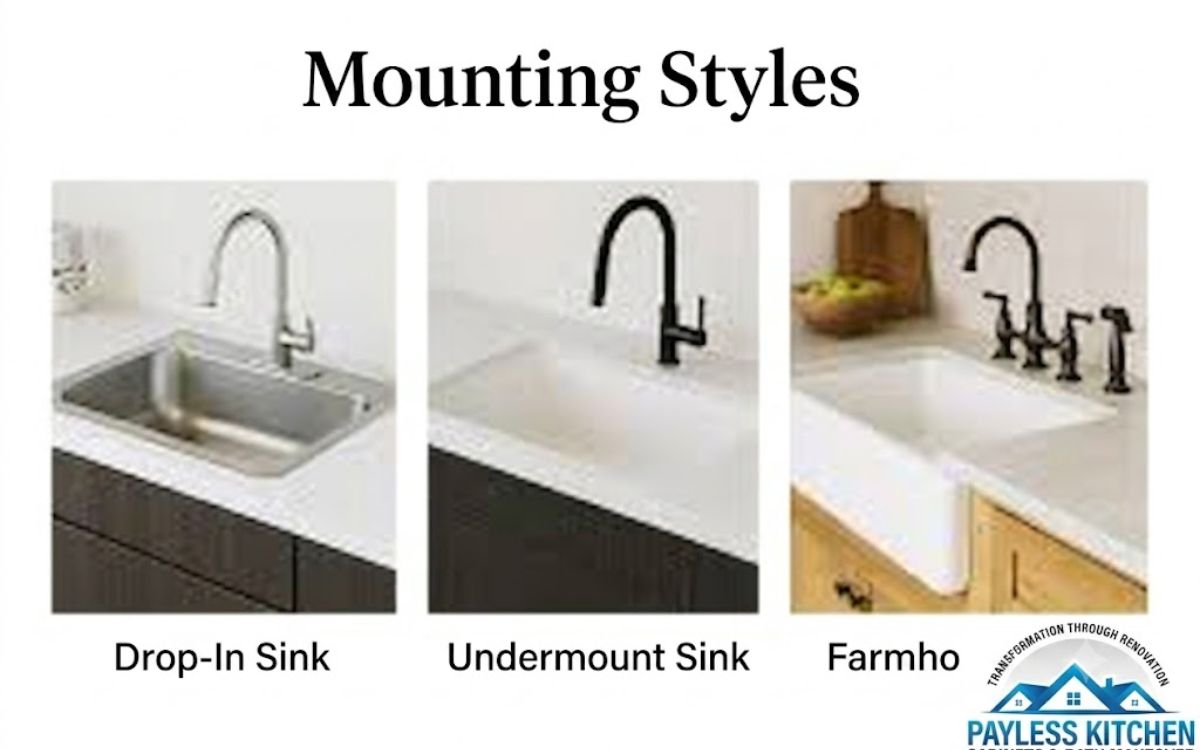
Undermount Kitchen Sinks
Undermount kitchen sinks are installed beneath the countertop rather than on top of it. This design creates a smooth transition between the counter and sink.
Benefits include:
- Easy countertop cleaning
- Modern appearance
- No exposed sink rim
They are commonly paired with stone or solid-surface countertops and are popular in contemporary kitchen remodels.
Drop-In Kitchen Sinks
Drop-in kitchen sinks, also called top-mount sinks, sit directly into a countertop cutout with a visible rim around the edges.
Advantages include:
- Simpler installation
- Lower installation costs
- Compatibility with many countertop materials
These sinks remain a practical choice for many homeowners due to their versatility.
Farmhouse Kitchen Sinks
Farmhouse kitchen sinks feature an exposed front panel, often called an apron front. They are known for their deep basins and distinctive appearance.
Farmhouse sinks offer:
- Large capacity for oversized cookware
- Traditional and transitional style appeal
- Comfortable access due to the forward placement
They are especially popular in kitchens that emphasize both function and character.
Single Bowl Kitchen Sinks
Single bowl kitchen sinks contain one large basin without dividers. This design provides maximum usable space.
Single bowl sinks are ideal for:
- Washing large pots and baking sheets
- Smaller kitchens with limited counter space
- Homeowners who prefer a simple layout
Double Bowl Kitchen Sinks
Double bowl kitchen sinks divide the basin into two sections. Some models feature equal-sized bowls, while others have one larger and one smaller compartment.
Benefits include:
- Separation of washing and rinsing tasks
- Better organization during food preparation
- Greater flexibility for multitasking
Many homeowners appreciate the convenience of having separate work areas.
Integrated and Workstation Sink Designs
Integrated sinks are built directly into the countertop material, creating a seamless appearance. Workstation sinks include accessories such as cutting boards, drying racks, and colanders.
These modern kitchen sink designs help maximize workspace and improve efficiency, especially in busy kitchens.
Popular Kitchen Sink Materials
The material you choose affects appearance, durability, maintenance, and cost.
Stainless Steel Sinks
Stainless steel kitchen sinks remain one of the most popular choices because they are durable, affordable, and versatile.
Key advantages include:
- Resistance to heat and corrosion
- Easy maintenance
- Compatibility with many kitchen styles
They are available in various thicknesses and finishes to suit different budgets.
Granite Composite Sinks
Granite composite sinks combine stone particles with resin to create a strong and attractive surface.
Benefits include:
- Scratch resistance
- Heat resistance
- Wide range of color options
These sinks offer a premium appearance while remaining highly functional.
Fireclay Sinks
Fireclay sinks are made by molding clay and firing it at extremely high temperatures. They are commonly used in farmhouse-style kitchens.
Homeowners often choose fireclay for:
- Smooth, glossy finish
- Excellent stain resistance
- Timeless appearance
Cast Iron and Enameled Sinks
Cast iron sinks feature a heavy iron core coated with enamel. They are known for durability and traditional charm.
Advantages include:
- Long lifespan
- Attractive finish options
- Strong resistance to wear
However, they tend to be heavier than other sink materials and may require additional support.
How to Choose the Best Kitchen Sink for Your Home
Selecting the best kitchen sink involves evaluating several practical and design-related factors.
Evaluating Kitchen Size and Layout
The available space in your kitchen should influence sink size and configuration.
Consider:
- Cabinet dimensions
- Countertop space
- Traffic flow within the kitchen
Large sinks work well in spacious kitchens, while compact designs may be more suitable for smaller layouts.
Matching Sink Style With Cooking and Cleaning Habits
Your daily routine plays a major role in sink selection.
For example:
- Frequent cooks may prefer deep single bowl sinks
- Busy households may benefit from double bowl designs
- Home chefs may appreciate workstation sink features
Choosing a sink that supports your lifestyle improves long-term satisfaction.
Considering Countertop Compatibility
Certain sink installation types work better with specific countertop materials.
- Undermount sinks are commonly paired with stone countertops
- Drop-in sinks can work with most countertop materials
- Farmhouse sinks may require cabinet modifications
Understanding compatibility helps avoid installation challenges.
Balancing Budget, Durability, and Appearance
Every kitchen remodel involves balancing priorities. Some sinks offer premium aesthetics, while others focus on affordability or durability.
When comparing options, consider:
- Initial purchase price
- Maintenance requirements
- Expected lifespan
- Overall visual appeal
A well-balanced choice often provides the best long-term value.
Benefits of Selecting the Right Kitchen Sink
Choosing the right kitchen sink offers several advantages:
- Improves kitchen functionality
- Supports efficient meal preparation
- Enhances overall kitchen appearance
- Reduces maintenance concerns
- Increases comfort during daily use
- Adds value to kitchen remodeling projects
A carefully selected sink contributes to both performance and aesthetics.
Planning Tips Before Installing a New Kitchen Sink
Before purchasing a new sink, take time to plan properly.
Helpful preparation steps include:
- Measure cabinet and countertop dimensions accurately
- Confirm plumbing locations and requirements
- Consider faucet compatibility
- Review installation requirements for your chosen sink type
- Account for future maintenance and cleaning needs
Proper planning helps prevent costly adjustments during installation.
Common Mistakes to Avoid When Choosing a Kitchen Sink
Avoiding common mistakes can save time, money, and frustration.
Some of the most frequent errors include:
- Choosing a sink based only on appearance
- Ignoring cabinet size limitations
- Overlooking countertop compatibility
- Selecting a sink that is too small for household needs
- Failing to consider cleaning and maintenance requirements
- Underestimating installation complexity
Taking a practical approach leads to better long-term results.
FAQs
1. What is the most popular type of kitchen sink?
Undermount kitchen sinks are among the most popular options because they provide a clean appearance, easy maintenance, and compatibility with many modern kitchen designs.
2. Which kitchen sink is easiest to clean?
Undermount and stainless steel sinks are often considered the easiest to clean because they have smooth surfaces and fewer areas where debris can accumulate.
3. Are farmhouse sinks practical for everyday use?
Yes. Farmhouse kitchen sinks are highly practical due to their deep basins and spacious design, making them ideal for handling large cookware and daily kitchen tasks.
4. Is a single-bowl or a double-bowl sink better?
The best option depends on your needs. Single bowl sinks provide more space for large items, while double bowl sinks offer greater flexibility for multitasking.
5. What kitchen sink material lasts the longest?
Stainless steel, granite composite, fireclay, and cast iron sinks are all durable options. Longevity often depends on proper care, maintenance, and installation quality.
Conclusion
Understanding the different types of kitchen sinks makes it easier to choose a model that fits your kitchen, lifestyle, and budget. From undermount and farmhouse sinks to modern workstation designs, each option offers unique benefits. By considering sink style, material, functionality, and installation requirements, homeowners can make a choice that supports both daily convenience and long-term value. For larger kitchen remodeling projects, professional guidance can help ensure your new sink integrates seamlessly with the overall design.