
Choosing the right surface for your kitchen or bathroom remodel often comes down to two remarkably popular yet widely confused materials: quartzite and quartz. While their names sound almost identical, these surfaces are fundamentally different in how they are made, how they perform under daily stress, and how much care they require over time. Understanding these distinctions is crucial to selecting a counter that aligns with your lifestyle, aesthetic goals, and long-term budget.
Whether you are dreaming of a luxurious kitchen island or seeking a durable, low-maintenance surface for a busy family hub, evaluating quartzite vs quartz countertops side by side will clarify your choices. In this comprehensive guide, we will break down their origins, durability metrics, cost structures, and maintenance demands so you can confidently invest in the ideal material while managing your overall kitchen remodeling budget.
What Is the Difference Between Quartzite and Quartz Countertops?
The primary distinction between quartzite and quartz lies in their origin: one is entirely forged by nature, while the other is crafted through precision engineering. Homeowners often mistake them for variations of the same product due to their similar naming, but their structural composition could not be more different. Recognizing how each slab is produced helps set accurate expectations for performance and care.
What Is Natural Quartzite?
Natural quartzite is a 100% metamorphic rock formed deep within the earth. It begins as sandstone, which undergoes intense heat and pressurization over millions of years, fusing individual quartz grains into an exceptionally dense rock. Quarried directly from the earth in solid blocks and sliced into slabs, each piece of quartzite boasts unique veining and subtle mineral shifts that cannot be replicated.
Because it originates entirely in nature, no two quartzite slabs are identical. Homeowners who select quartzite are drawn to its authentic stone aesthetic, which frequently mirrors the elegance of high-end marble while offering far greater strength and resilience against everyday kitchen wear.
What Is Engineered Quartz?
Engineered quartz, often simply referred to as quartz, is a man-made composite material designed specifically for interior surfaces. It is manufactured by combining roughly 90% to 93% crushed natural quartz crystals with 7% to 10% polymer resins and color pigments. This mixture is compacted under intense pressure and cured to create a solid, completely non-porous slab.
By controlling the manufacturing process, engineered quartz manufacturers can produce consistent patterns, custom colors, and highly uniform finishes. When considering engineered quartz vs natural stone, engineered surfaces offer predictable aesthetics without the natural fissures or subtle tone variations inherent to quarried rock.
Engineered Quartz vs Natural Stone: Key Differences
Comparing an engineered product to a natural earth-mined stone highlights key trade-offs in aesthetics and structural properties. Quartzite brings authentic organic variation, depth, and extreme natural hardness to a space, but as a porous rock, it requires sealing. Engineered quartz eliminates the need for sealing entirely through resin binding, offering uniform design options at the cost of sensitivity to high temperatures.
| Feature | Natural Quartzite | Engineered Quartz |
| Material Origin | 100% Natural Metamorphic Rock | 90-93% Quartz + 7-10% Resin/Pigments |
| Porosity | Naturally Porous (Requires Sealing) | Non-Porous (Never Requires Sealing) |
| Heat Resistance | Exceptional (Naturally Flame Resistant) | Moderate (Resins Can Discolor Above 300°F) |
| Pattern Uniformity | Unique, Natural Mineral Patterns | Uniform, Repeatable Manufactured Patterns |
Hardness and Durability Comparison
Kitchen surfaces endure heavy daily use, from heavy cast-iron cookware to accidental knife slips and hot serving dishes. Selecting durable kitchen counters means evaluating how each material handles structural strain, scratching, and thermal shock over years of food preparation.
Quartz vs Quartzite Hardness on the Mohs Scale
When testing quartz vs quartzite hardness, both materials score exceptionally high on the Mohs Hardness Scale, which rates mineral scratch resistance from 1 (talc) to 10 (diamond). Engineered quartz typically rates around a 7, making it harder than granite and highly resistant to scuffs from cutlery or metal tools.
Quartzite, however, scores an impressive 7 to 8 on the Mohs scale, making it one of the hardest natural stone options available for residential spaces. This extreme density allows quartzite to resist scratches even under heavy kitchen activity, making it virtually impervious to routine abrasions.
Heat Resistance and Thermal Shock Performance
Heat resistance represents one of the most distinct performance differences between these two surfaces. Because natural quartzite was formed under intense subterranean heat, it easily withstands hot pots, boiling pans, and baking sheets placed directly on its surface without scorching, melting, or cracking from thermal shock.
In contrast, engineered quartz contains polymer resins that act as a binding agent. These resins are vulnerable to thermal damage and can yellow, burn, or develop white heat rings if exposed to temperatures exceeding 300°F. Placing hot trivets or pads under cookware is essential when working with engineered quartz to preserve its finish.
Scratch, Chip, and Impact Resistance for Durable Kitchen Counters
Both materials handle daily impacts well, but their edges require careful consideration. Engineered quartz gains flexibility from its resin binders, giving it solid impact resistance against minor bumps from heavy pots along counter edges. However, dropping heavy objects on hard corners can still cause chipping.
Quartzite’s high density gives it superb surface scratch resistance, but its natural crystalline structure makes it slightly more brittle along un-beveled edges. Opting for rounded or eased edge profiles during fabrication helps protect both materials from chips during busy meal prep sessions.
Quartzite vs Quartz Cost Breakdown
Budget plays a significant role in any kitchen renovation project. Evaluating quartzite vs quartz cost requires looking beyond the initial material price tag to account for slab rarity, fabrication complexity, and long-term maintenance costs over the life of your counters.
Material Price Ranges per Square Foot
On average, engineered quartz ranges between $50 and $120 per square foot for materials, depending on brand, color, and pattern complexity. Standard entry-level quartz colors sit on the lower end of this spectrum, making it an accessible choice for budget-conscious homeowners.
Natural quartzite generally commands higher material prices, running from $70 to $200+ per square foot. Rare quartzite slabs featuring vivid blues, greens, or intricate translucent veining can climb even higher, reflecting the scarcity of specific quarry yields and the costs of global shipping.
Slab Fabrication and Installation Costs
Fabrication costs are notably higher for quartzite than for engineered quartz. Because quartzite is so dense, cutting and shaping it requires specialized diamond-tipped blades, slower cutting speeds, and frequent blade replacements, which increases labor fees.
Engineered quartz, with its uniform structure and resin binding, is more predictable to cut, shape, and seam. Installers can work faster with lower tool wear, helping keep overall installation labor costs manageable compared to complex natural stone fabrications.
Long-Term Value and ROI for Your Home
Both options offer excellent return on investment by elevating kitchen appeal and buyer interest. Natural quartzite is often viewed as a premium, luxury upgrade comparable to high-end marble or rare granite, making it a strong selling point in upper-tier real estate markets.
Engineered quartz delivers long-term financial value through lower ongoing maintenance demands. Because it never needs professional resealing or specialized stone cleaners, homeowners save on long-term upkeep costs while enjoying a pristine surface that maintains its resale value.
Daily Care and Slab Maintenance
Understanding ongoing slab maintenance helps ensure your investment stays immaculate for decades. While one material offers hands-off convenience, the other rewards simple periodic care with unmatched natural beauty.
Porosity and Sealing Requirements for Quartzite
Quartzite is a porous natural stone, meaning unsealed surfaces can absorb liquids, oils, and deep-staining pigments. To prevent permanent discoloration, quartzite must be treated with a high-quality impregnating stone sealer upon installation and re-sealed periodically, typically every 1 to 2 years depending on use.
Testing your quartzite’s seal is simple: drop a few drops of water onto the surface and wait 15 minutes. If the water beads up cleanly, the seal is intact; if it darkens the stone beneath, it is time to apply a fresh coat of sealer.
Daily Cleaning Routines for Non-Porous Quartz
Engineered quartz is completely non-porous, making it naturally impervious to liquid absorption, mold growth, and bacteria. Daily maintenance requires nothing more than wiping the surface with a soft microfiber cloth, warm water, and a mild dish soap.
Because quartz contains resin binders, harsh chemical cleansers should be avoided. Abrasive scouring pads, bleach, oven cleaners, and high-pH chemicals can dull the surface finish and degrade the resin matrix over time.
Preventing Stains and Etching
Natural quartzite handles acidic items like lemons, tomatoes, and wine far better than marble, but unsealed slabs remain susceptible to oil-based stains. Promptly wiping down spills prevents liquids from settling into microscopic pores.
Engineered quartz easily resists acidic household spills without etching or staining. However, exposure to intense UV sunlight over extended periods can cause the resin binders in quartz to fade or turn yellow, making it better suited for indoor installations rather than outdoor kitchens.
Aesthetic Differences and Visual Appeal
The visual impact of your countertops defines the aesthetic tone of your entire kitchen. Deciding between a natural stone surface and an engineered surface comes down to whether you value authentic organic variation or consistent, controllable pattern design.
Natural Veining vs Manufactured Consistency
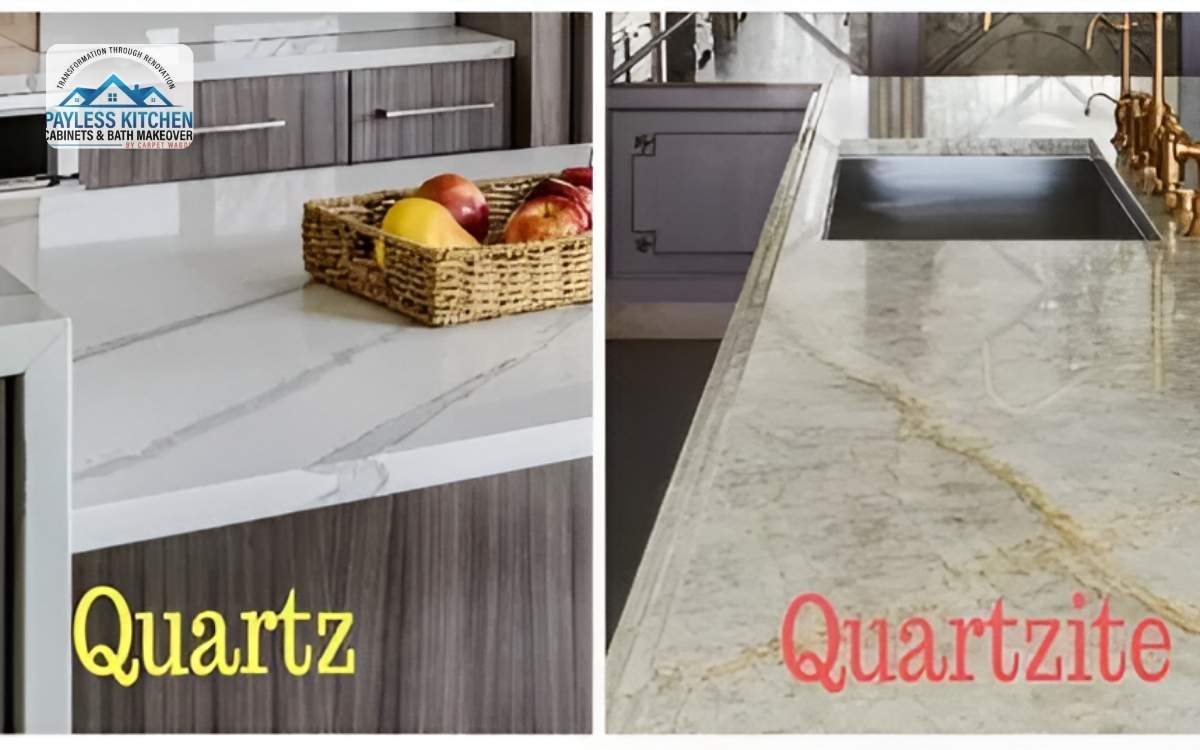
Quartzite is celebrated for its sweeping, organic veining and visual depth. Mineral impurities present during its formation create rich, flowing lines and crystalline translucency that give each slab a dramatic, one-of-a-kind appearance.
Engineered quartz excels at providing visual predictability. Manufacturers can replicate the look of classic white marble, granite, or concrete with precise pattern distribution, ensuring that separate slabs match seamlessly across large kitchen islands or extended L-shaped kitchen layouts.
Color Options and Surface Finishes
Because quartzite is shaped by nature, its color palette is predominantly grounded in soft whites, grays, creams, and muted earth tones, though rare deposits offer exotic blues and greens. Common finishes include polished (glossy), honed (matte), or leathered (textured).
Engineered quartz offers a virtually unlimited color spectrum, from crisp, solid whites and jet blacks to bold contemporary shades. It is widely available in polished, suede, and matte finishes, giving homeowners complete creative freedom when matching cabinetry and hardware.
How to Choose the Best Stone Surface for Your Home
Choosing between these two superior materials depends on your household habits, aesthetic preferences, and budget priorities. Placing your functional demands side by side with material strengths makes the decision straightforward.
When to Choose Quartzite Countertops
Quartzite is the ideal choice if you:
- Love the authentic look and depth of natural stone with marble-like veining.
- Want maximum heat resistance for heavy cooking and hot cookware.
- Do not mind simple periodic sealing every couple of years.
- Seek a unique, one-of-a-kind focal point for a luxury kitchen design.
When to Choose Quartz Countertops
Engineered quartz is the better option if you:
- Prefer a low-maintenance, non-porous surface that never requires sealing.
- Value uniform color and pattern consistency across all countertop slabs.
- Need a family-friendly material that resists acidic stains and food spills easily.
- Want a versatile surface with a wide range of custom color and finish choices.
Common Mistakes to Avoid When Buying Quartzite or Quartz
Navigating the showroom floor requires a clear eye, as several common pitfalls can lead to unexpected costs or performance issues down the road.
- Confusing Hard Quartzite with Soft Marble or Dolomite: Some stone suppliers mislabel soft marble or dolomitic limestone as quartzite. Always perform a glass scratch test or acid test on a sample piece before purchasing natural stone.
- Placing Hot Cookware Directly on Quartz: Assuming engineered quartz is completely heatproof often leads to scorched resin rings. Always use trivets or hot pads under pans, crockpots, and toaster ovens.
- Skipping Slab Inspection in Person: Natural quartzite varies significantly from slab to slab. Selecting your specific slab in person at the stone yard ensures you receive the exact veining and color balance you expect.
- Using Harsh Chemical Cleaners: Using bleach, oven cleaners, or abrasive powders on engineered quartz or quartzite can permanently ruin polished finishes and break down protective sealers.
FAQs
1. What is the main difference between quartzite and quartz?
A. Quartzite is a 100% natural metamorphic stone quarried from the earth that requires periodic sealing. Quartz is an engineered composite material made from crushed quartz crystals and resin binders, making it completely non-porous and maintenance-free.
2. Is quartzite more expensive than quartz?
A. Generally, yes. Natural quartzite typically costs $70 to $200+ per square foot installed due to material rarity and complex fabrication requirements, whereas engineered quartz generally ranges between $50 and $120 per square foot.
3. Which is harder, quartz or quartzite?
A. Quartzite is slightly harder, scoring between 7 and 8 on the Mohs Hardness Scale, while engineered quartz rates at approximately 7. Both offer exceptional scratch resistance for daily kitchen use.
4. Do quartz countertops require sealing?
A. No, engineered quartz countertops are manufactured with resin binders that create a completely non-porous surface. They never require sealers, wax, or special stone treatments.
5. How do you maintain a quartzite slab?
A. Clean quartzite daily using a mild dish soap, warm water, and a soft cloth. To prevent deep staining, wipe up spills promptly and apply a penetrating stone sealer every 1 to 2 years.
Conclusion
Both quartzite and engineered quartz stand out as premium, highly durable choices for modern kitchen and bathroom surfaces. If your priority is authentic natural beauty, unique veining, and unmatched heat resistance, quartzite provides an elevated, timeless elegance that rewards basic periodic sealing. On the other hand, if you prioritize low-maintenance convenience, stain resistance, and uniform design consistency, engineered quartz offers an exceptionally practical, stylish solution for high-traffic homes. By weighing your daily kitchen habits, maintenance preferences, and budget alongside your overall kitchen design ideas, you can confidently choose the perfect stone surface to elevate your home for years to come.