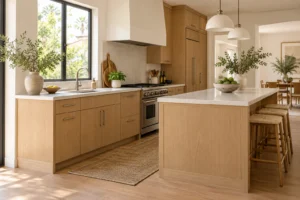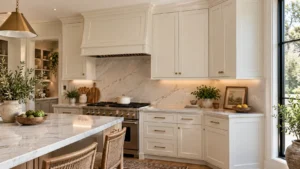

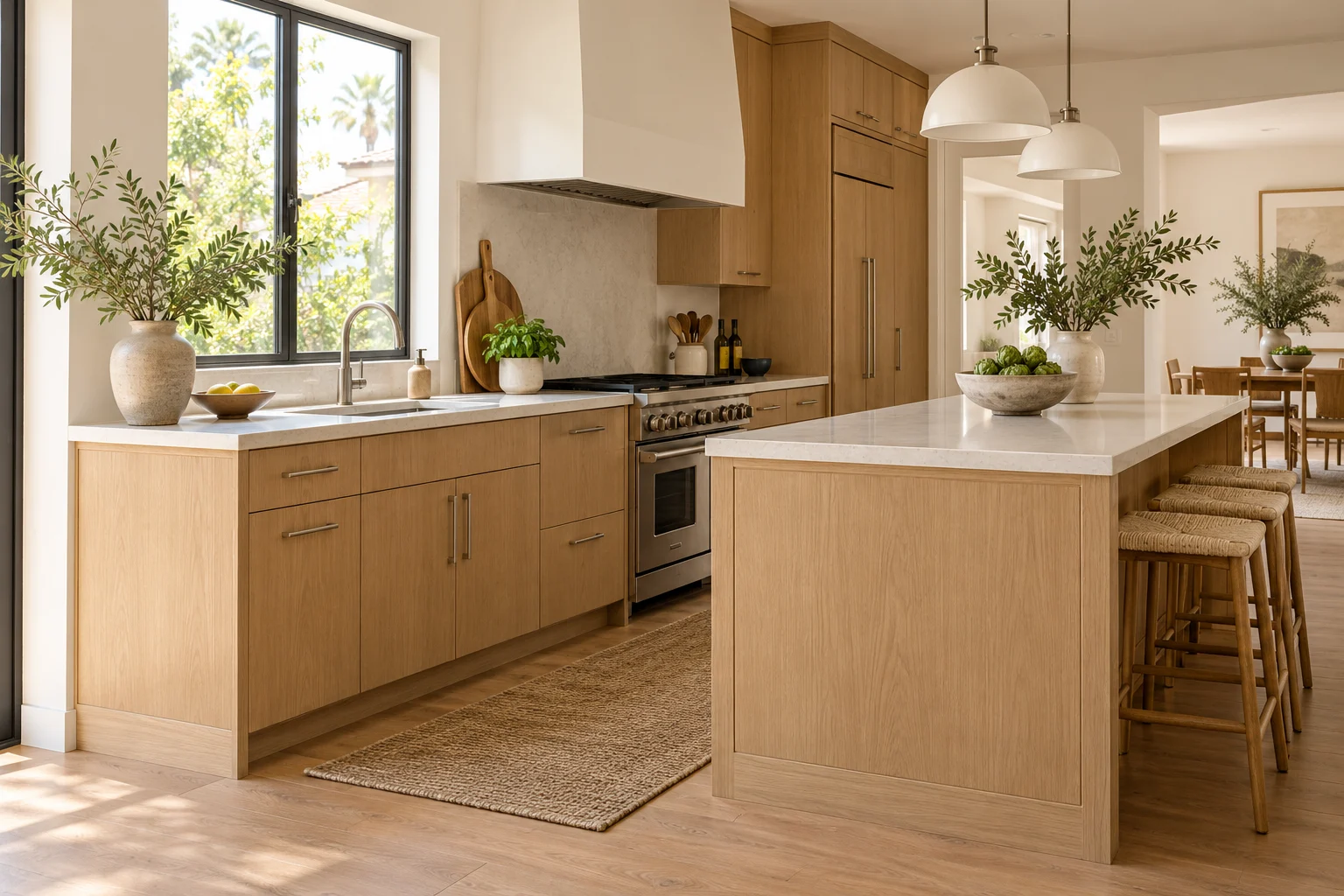
Kitchen cabinet side panels can change how finished a cabinet run looks. The sides of cabinets are easy to overlook when choosing doors and hardware, but exposed ends can remain visible beside a refrigerator, at the end of a cabinet row, or along a kitchen island.
The right panel can make that exposed surface look intentional and coordinate it with the rest of the cabinetry. Before choosing one, consider where it will go, what style suits the kitchen, and how its finish will look beside the cabinet doors and countertop.
What Kitchen Cabinet Side Panels Do
A kitchen cabinet side panel covers or finishes a cabinet’s exposed outer side. It may be called an end panel, cover panel, or finished end panel, depending on the product and manufacturer.
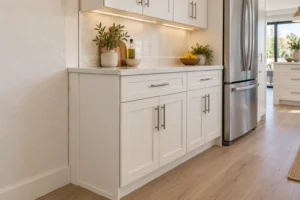
Panels are commonly used where a cabinet side faces the room instead of being hidden against a wall or next to another cabinet. You might see one at the end of a base cabinet run, beside a refrigerator enclosure, or on the visible side of an island.
An end panel is different from a filler strip. A filler closes a narrow gap between a cabinet and a wall or another fixed surface. A side panel covers a larger cabinet face and is selected to complement the cabinetry.
Explore Kitchen Cabinet End Panel Styles
Kitchen cabinet end panels come in several styles. The best choice depends on the cabinet doors and the overall design you want.
- Flat panels have a simple, smooth appearance that suits contemporary and minimalist kitchens.
- Shaker-style panels add a framed detail and can coordinate with Shaker cabinet doors.
- Beadboard panels create a lined texture that may work in cottage or farmhouse-inspired designs.
- Decorative panels can include additional detailing for a more furniture-like appearance.
A plain panel can keep a kitchen visually calm, while a detailed panel can bring more attention to an island or an exposed cabinet end. Look at the whole kitchen before deciding whether you want that surface to blend in or stand out.
For related cabinet options and design support, explore Payless Kitchen Cabinets’ cabinet installation services.
Consider Kitchen Island End Panels Separately
Kitchen island end panels often have more visual impact than panels on a perimeter cabinet run. An island’s sides may be visible from several parts of the kitchen, especially if the island faces the dining or living area.
A flat panel can give the island a clean look. A Shaker or decorative panel can add detail, while a contrasting finish can make the island stand out from the surrounding cabinets. If you choose a different color or material, repeat it elsewhere in the kitchen so the island feels connected to the room.
Also consider how the island is used. Stools, footrests, and seating overhangs affect which areas remain visible and how the finished panel should be planned.
Compare Cabinet Side Panel Materials and Finishes
Cabinet side panels are available in different materials and surface finishes. The material should suit the cabinet system and the location of the panel.
When reviewing an option, ask whether it is designed to match your cabinets and whether the color or finish is consistent with the doors. Even products described with the same color name can look different under kitchen lighting or beside a countertop.
Pay extra attention to panels near sinks or areas exposed to regular splashes. Follow the manufacturer’s guidance for cleaning and care, and do not assume that a moisture-resistant finish is waterproof.
If you are comparing colors, textures, or countertops, the kitchen visualizer can help you explore combinations before settling on a design. Check samples in the kitchen’s lighting when possible.
Measure Exposed Cabinet Sides Before Ordering
Measurements help ensure a panel covers the intended surface without interfering with nearby features. Measure the cabinet side from the points specified by the product manufacturer, and check how it meets the floor, toe kick, countertop, and adjacent cabinetry.
Include details such as:
- The height and depth of the cabinet side.
- The position of the toe kick and countertop overhang.
- Nearby walls, appliances, and doorways.
- Whether cabinet doors or drawers extend past the cabinet box.
- Any visible seams or gaps that need to be covered.
Confirm the panel’s dimensions and installation requirements with the cabinet supplier or installer before ordering. Payless Kitchen Cabinets’ products and services page provides an overview of its kitchen remodeling products.
Match Side Panels With the Rest of the Kitchen
Matching kitchen cabinet side panels to the doors usually creates a unified appearance. For a more customized design, you could use a contrasting island panel while keeping the perimeter cabinetry consistent.
Compare the panel with the cabinet doors, hardware, countertop, flooring, and backsplash. A small sample may look different across a large vertical surface, so look at it in the kitchen and at different times of day.
Aim for a deliberate relationship between finishes. The panel can match the doors exactly, repeat a tone from the countertop, or add contrast that is already used elsewhere in the kitchen.
Make a Shortlist Before Choosing
Before selecting decorative kitchen cabinet side panels, note which cabinet ends are visible and decide whether each should blend in or act as a feature. Then compare styles, check finish compatibility, and confirm measurements and installation details.
A focused plan helps you select finished end panels that suit the cabinets and the room as a whole. To discuss options for your kitchen, contact Payless Kitchen Cabinets.
Frequently Asked Questions
Are kitchen cabinet side panels the same as end panels?
The terms are often used for panels that finish an exposed cabinet side. Names and product details can vary by manufacturer, so confirm the intended use before ordering.
Do kitchen island cabinets need side panels?
If an island’s cabinet ends are visible, finished panels can give them a more complete appearance. The style depends on the island design and how it relates to the surrounding cabinetry.
Should side panels match cabinet doors?
They can match for a consistent look. A contrasting panel can also work when its color or material is repeated elsewhere in the kitchen.
How do I measure a cabinet side panel?
Measure the area the panel needs to cover and account for the toe kick, countertop, adjacent walls, and cabinet-door projections. Confirm the measurement method with the product supplier or installer.