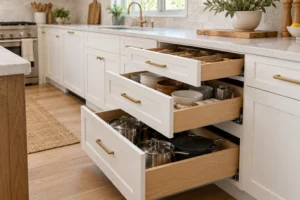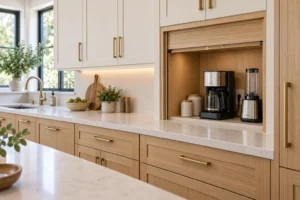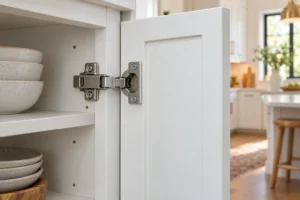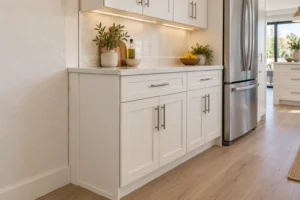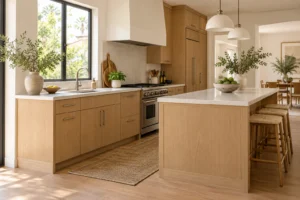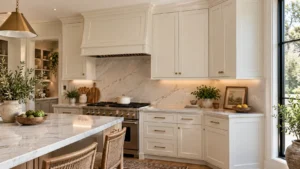

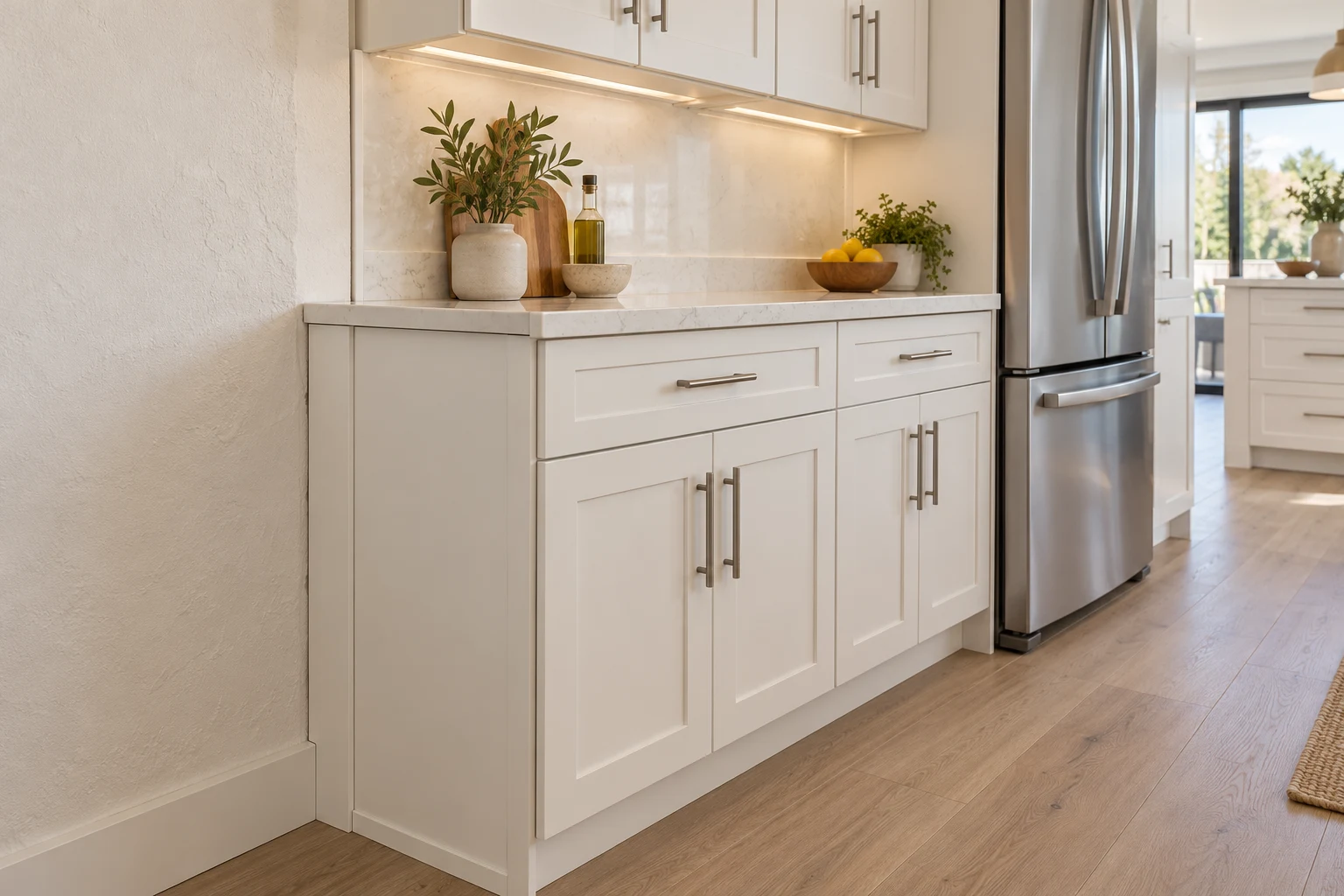
A kitchen cabinet run may look complete in a floor plan but still leave awkward gaps once it meets a wall, corner, or appliance. Kitchen cabinet filler strips are narrow pieces that close those spaces and help cabinetry fit the room.
They also give doors and drawers room to open when a cabinet sits close to a wall or another obstruction. Planning them early can help prevent tight clearances and unfinished-looking gaps. Here is what to consider when deciding where filler strips belong in a kitchen.
What Kitchen Cabinet Filler Strips Are Used For
A filler strip is a narrow cabinet piece placed between a cabinet and a nearby surface or fixture. It fills a planned gap while keeping the cabinet doors, drawers, and hardware usable.
The gap may be necessary because walls are not perfectly straight, cabinets come in set widths, or the layout needs clearance for a door or handle. A filler strip can make the transition look intentional, but don’t use it to hide a measurement mistake or ignore an appliance’s required clearance.
The size and location depend on the cabinet plan and the specific kitchen. There is no single filler width that works for every space.
Where Cabinet Filler Strips May Be Needed
Filler strips are commonly considered where cabinetry meets a wall, especially when a nearby cabinet door or drawer would otherwise hit the wall or its trim.
They may also be planned:
- Beside a tall cabinet or pantry near a wall.
- At a corner where a door needs room to open.
- Between cabinets and an appliance, when the design and appliance specifications call for it.
- Where a cabinet run needs a narrow transition to fit the available wall length.
Check how the cabinet will work with nearby doors, drawers, handles, windows, and appliances. A filler strip should solve a specific fit or clearance issue, rather than simply being added wherever a gap appears.
Filler Strips and Cabinet End Panels Have Different Jobs
Filler strips and end panels are easy to confuse because both appear at cabinet edges. A filler strip closes a narrow gap between cabinetry and a nearby surface. An end panel finishes the larger exposed side of a cabinet.
Filler strips are also different from decorative trim. Trim can cover or accent a small joint, while a filler is planned as part of the cabinet layout. Product names can vary, so confirm the piece’s purpose and finish with the cabinet supplier.
Measure the Gap and Check the Door Swing
Before choosing a filler strip, measure the available space at more than one point. An older wall may angle inward or outward, so the gap at the top can differ from the gap at the bottom. Note the cabinet position, wall trim, countertop edge, and nearby appliance opening.
Then check the movement around the gap. Open the cabinet door and drawers fully and see whether handles or fronts could strike the wall. Near an appliance, follow the appliance manufacturer’s clearance requirements; a filler strip does not replace those specifications.
Payless Kitchen Cabinets’ guide to measuring kitchen cabinets explains the dimensions and layout details to record before planning cabinet work. For a room with irregular walls or several tight clearances, have the finished measurements reviewed before ordering.
Match the Filler Strip to the Cabinets
A filler strip usually looks most cohesive when its material and finish coordinate with the adjacent cabinets. Compare the color, sheen, and wood grain under the kitchen’s lighting. A small finish sample can help you spot differences before installation.
The strip may be visible when doors are closed, so consider how its edge will look beside the cabinet front. Confirm that the chosen piece belongs to the cabinet system and can be finished as intended. In areas exposed to regular splashes, follow the product’s cleaning and care instructions.
Plan Filler Strips Before Cabinet Installation
Decide where fillers are needed while the cabinet layout is being finalized. This gives the designer or installer a chance to account for the space alongside cabinet widths, appliance openings, walls, and door swings.
Avoid ordering cabinets based only on the total length of a wall. The usable layout also depends on corners, obstructions, and the clearance each cabinet needs to operate. Payless Kitchen Cabinets describes its cabinet installation services for homeowners planning cabinetry for their kitchen layout.
Common Filler Strip Planning Mistakes
A filler strip cannot correct every layout issue. Watch for these common mistakes:
- Assuming the wall is straight without checking it.
- Measuring the gap at only one point.
- Forgetting the reach of cabinet handles or drawer fronts.
- Treating an appliance’s required clearance as optional.
- Choosing a finish without comparing it beside the cabinets.
- Using a filler strip to conceal a larger planning or installation problem.
If a gap looks unusually large, ask why it exists before selecting a wider filler. The layout may need to be reviewed.
Get the Cabinet Fit Planned Properly
Kitchen cabinet filler strips are small pieces, but their placement can affect how a whole cabinet run looks and functions. Measure the space, check clearances, and confirm the finish and product details before ordering.
For help planning cabinetry around your kitchen’s walls and appliances, contact Payless Kitchen Cabinets to discuss your project.
Frequently Asked Questions
Are kitchen cabinet filler strips necessary?
They are useful when the layout needs a narrow gap for a wall, corner, door swing, handle, or appliance-related fit. Whether one is needed depends on the actual measurements and cabinet plan.
Do filler strips go between cabinets?
They can be used between cabinetry and a nearby surface when the plan calls for a gap. The exact placement and purpose should be confirmed with the cabinet supplier or installer.
Can I use a filler strip to cover any cabinet gap?
No. A filler strip is intended for a planned narrow gap. A large or unexpected gap may point to a measurement or layout issue that should be reviewed.
Are filler strips the same as cabinet end panels?
No. A filler strip closes a narrow gap; an end panel covers a larger exposed cabinet side.