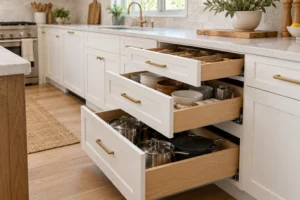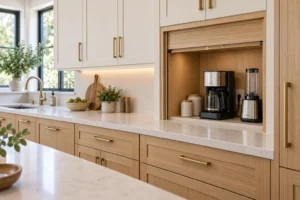

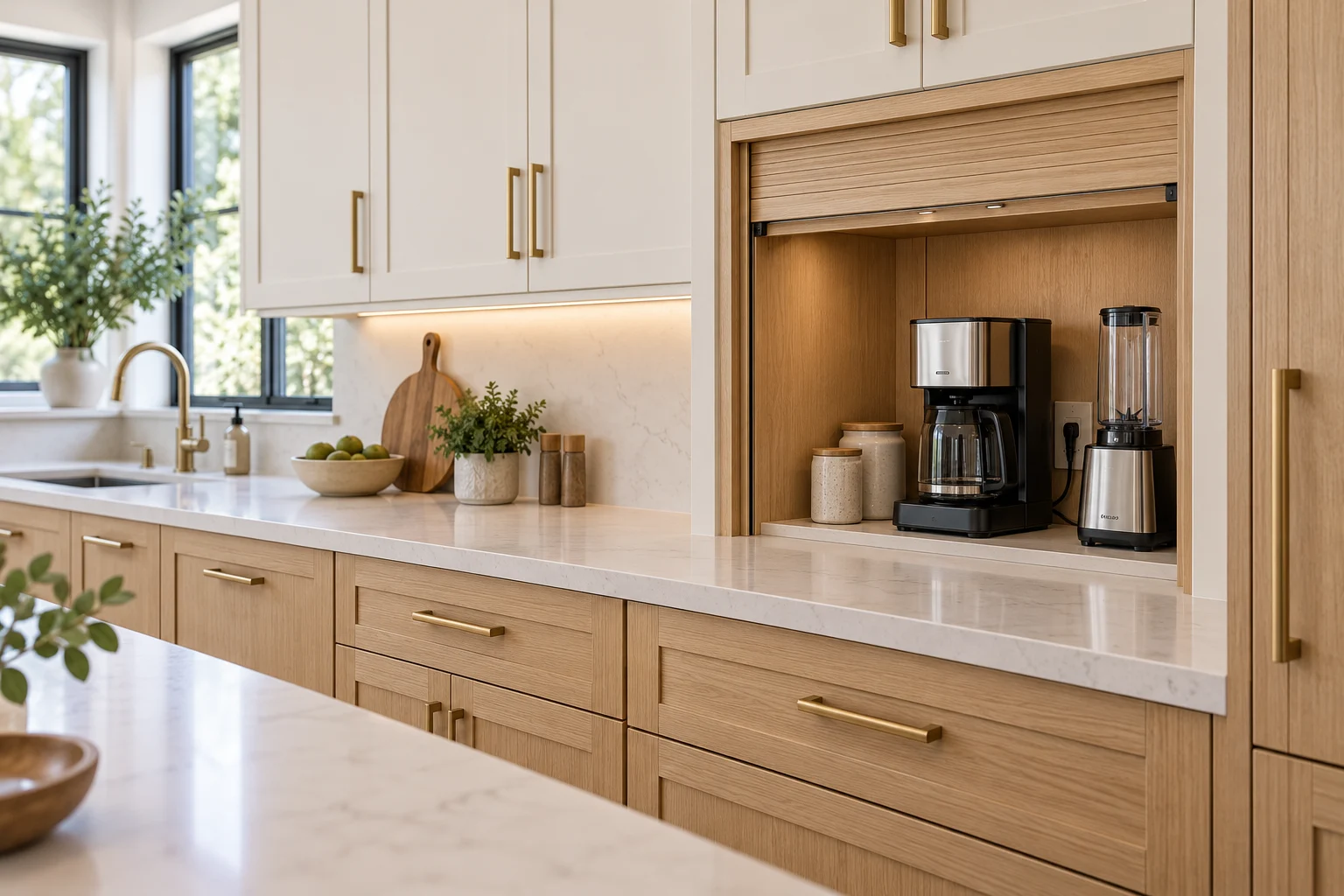
Kitchen appliance garage ideas can help clear countertop clutter while keeping everyday appliances close at hand. A built-in niche can give a toaster, coffee maker, or blender a dedicated spot behind a cabinet door.
The most useful design considers more than appearance. Appliance size, outlet location, counter access, door movement, and manufacturer clearance requirements all affect whether the niche will work in daily use.
What Is a Kitchen Appliance Garage?
A kitchen appliance garage is a cabinet or built-in counter niche designed to store small appliances. Unlike a pantry shelf, it can keep frequently used appliances on a work surface, ready to use, while a door hides them when they are not needed.
A built-in appliance garage for a kitchen may be incorporated into an upper cabinet run, a tall cabinet, or a dedicated counter section. The right location depends on the kitchen layout and the appliances you plan to store.
Choose an Appliance Garage Door Style
Appliance garage cabinet door ideas range from simple hinged fronts to doors that move out of the way. Consider how much clearance each option needs.
- Lift-up doors move upward and can keep the opening clear while you access appliances. Check that the door has room to open fully.
- Roll-up or tambour doors slide into a compact position above or inside the niche, which can suit a tight counter area.
- Pocket doors slide into the cabinet sides. They can keep the door out of the way, but require cabinet space for the door panels.
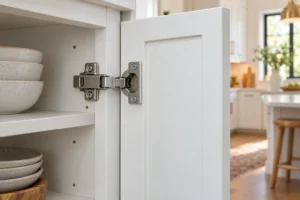
- Hinged doors are straightforward, but need enough room to swing without obstructing nearby counters or walkways.
Choose the mechanism based on the available space and how often you will use the appliances. A door that looks streamlined in a photo may become inconvenient if it blocks the workspace when open.
Decide Where to Place an Appliance Garage
Think about where you use each appliance before deciding where to place an appliance garage in the kitchen. A coffee maker may make sense near mugs and a water source. A blender might be more useful near the prep area.
An appliance garage for a toaster and coffee maker needs enough counter space for both appliances to be accessed comfortably. Avoid putting the niche where an open door blocks a main walkway, sink, or cooking surface. Also consider splashes, heat sources, and whether cords can reach outlets without crossing work areas.
If the space is limited, a countertop appliance storage cabinet may be more practical when it serves one appliance at a time rather than trying to fit every small appliance in one niche.
Measure the Appliances and Plan Clearance
Measure the appliances you want to store, including their height with lids, handles, or attachments in place. Check the niche’s usable width, depth, and height, and allow for plugs and cords.
Appliance garage dimensions and clearance also depend on how the appliances operate. Follow each manufacturer’s instructions for placement and ventilation. For example, countertop ovens may require clearance around the sides, back, and top; do not assume one appliance’s requirements apply to another. Keep the door open while operating an appliance unless its instructions and the cabinet design specifically allow enclosed use.
If the design requires a new outlet or electrical work, include that in the plan before cabinetry is installed. For broader layout considerations, see this guide to choosing custom kitchen cabinets.
Coordinate the Niche With Your Cabinets
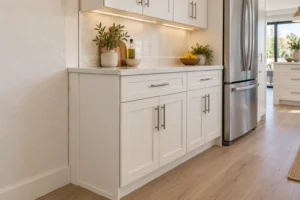
A kitchen cabinet appliance garage design usually looks most cohesive when its doors, finish, and hardware relate to the surrounding cabinetry. You can match the cabinet fronts for a discreet appearance or use a contrasting material to define a coffee station.
Think about the inside of the niche, too. Choose surfaces that are easy to wipe down, keep outlets accessible, and avoid crowding the counter. If more than one person uses the kitchen, make sure the niche can be opened and accessed without interrupting the main prep area.
For more ways to assign storage by use, see Payless Kitchen Cabinets’ guide to organizing kitchen cabinets.
Avoid Common Appliance Garage Planning Mistakes
A few details can make the difference between convenient hidden small appliance storage ideas and a niche that goes unused:
- Measuring cabinet space without measuring the actual appliances.
- Forgetting room for cords, plugs, and doors.
- Choosing a location far from the tasks where appliances are used.
- Hiding appliances without planning for the clearance and ventilation they need.
- Placing the niche where open doors interrupt a walkway or work surface.
- Designing for appliances you rarely use while leaving everyday items on the counter.
List the appliances you use regularly and test the proposed arrangement on paper before finalizing the cabinet plan.
Make the Appliance Garage Part of the Kitchen Plan
A well-planned appliance garage keeps useful appliances accessible and helps the kitchen feel less cluttered. Start with the appliances you use most, measure them carefully, and choose a door style and location that fit the way you move through the kitchen.
Payless Kitchen Cabinets offers kitchen cabinet installation services for homeowners planning cabinetry around their layouts. To discuss your project, contact Payless Kitchen Cabinets.
Frequently Asked Questions
What appliances can go in a kitchen appliance garage?
Coffee makers, blenders, and other small appliances may fit, depending on the niche dimensions and manufacturer instructions. Check each appliance’s size and operating requirements before planning the cabinet.
Can I use a toaster oven inside an appliance garage?
Only if the appliance instructions and the cabinet design allow it. Countertop ovens can require open space for heat and ventilation, so check the specific model’s manual and keep the cabinet door open unless enclosed operation is explicitly permitted.
Which appliance garage door is best for a small kitchen?
Roll-up or pocket doors may keep the opening clear, while hinged doors need swing space. Compare the cabinet dimensions and nearby work areas before choosing a mechanism.
Should an appliance garage have an outlet inside?
An accessible outlet can make the niche more practical, but its placement and installation should be planned to suit the appliances and applicable electrical requirements. Arrange any new electrical work before cabinetry installation.