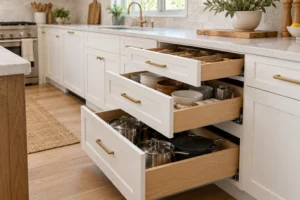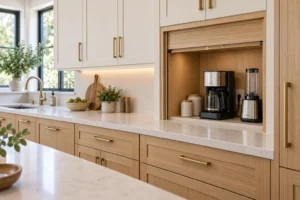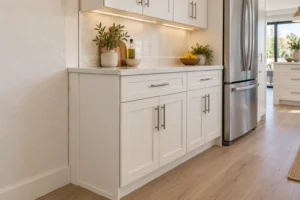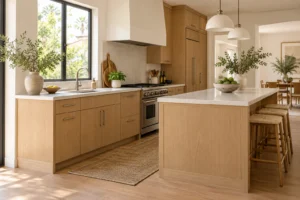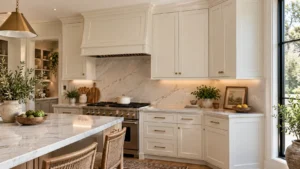

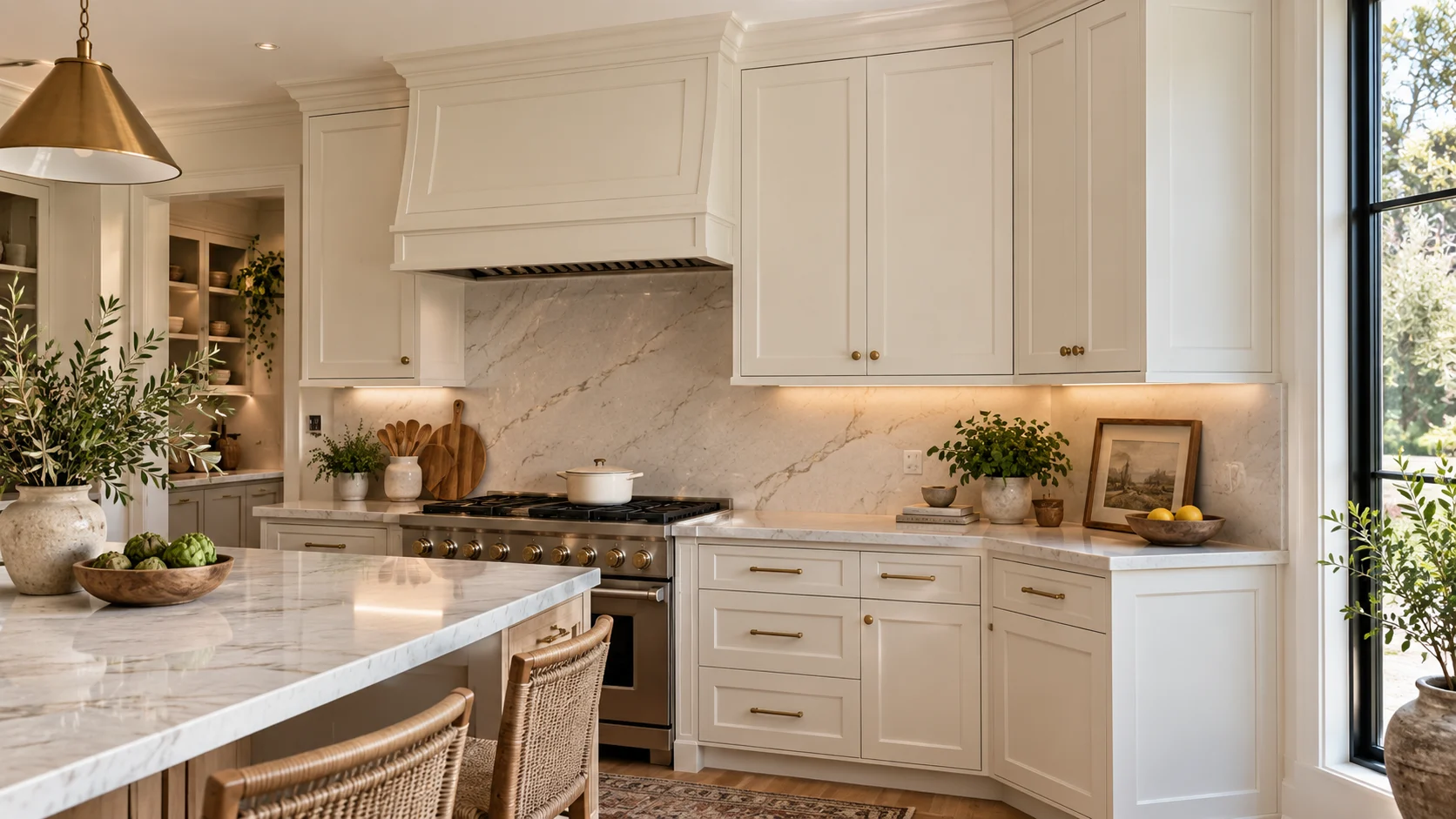
Kitchen cabinet molding ideas can help give cabinetry a finished appearance, soften the transition to the ceiling, or add detail to a plain cabinet run. The right trim depends on your cabinet style, ceiling height, and the look you want. A simple profile may suit a clean, modern kitchen, while layered trim can complement a more traditional design.
First decide where molding will go. Crown molding finishes the top of upper cabinets, light rail trims their lower edge, and base molding tidies the transition near the floor.
Kitchen Cabinet Molding Ideas by Profile and Placement
Kitchen cabinet molding styles serve different purposes. Compare kitchen cabinet molding profiles by shape, scale, and placement before choosing a sample.
Crown molding at the top
Crown molding for kitchen cabinets sits along the top edge of upper cabinets. It can bridge a small space between the cabinet and ceiling or create a decorative cap. For kitchen cabinet crown molding ideas, compare the profile height with the cabinet face and ceiling gap. This kitchen cabinet top molding can stay simple or use a taller, layered profile for rooms with higher ceilings.
Size crown molding to the cabinets and room. An oversized profile can crowd a standard-height kitchen, while a small strip may disappear on tall cabinetry. Check ceiling corners, adjacent walls, and soffits before choosing.
Light rail beneath upper cabinets
Light rail molding attaches to the lower front edge of wall cabinets. It gives under-cabinet lighting a more concealed appearance and creates a consistent finished line across the run. Check the rail from standing height and below, and make sure it does not interfere with countertop tasks.
Base molding and toe-kick trim
Base molding can finish the bottom of a cabinet run, while toe-kick trim covers the recessed area where feet sit. Choose a profile that coordinates with nearby trim but leaves toe space practical and easy to clean.
Scribe molding and fillers
Scribe molding is a narrow finishing strip used to close small gaps where cabinetry meets an uneven wall or ceiling. Fillers cover spaces between cabinet boxes, walls, or appliances. They can improve the finished appearance, but they should be planned as part of installation rather than used to disguise significant measurement or fitting problems.
Match Cabinet Trim to the Kitchen’s Style
Decorative molding for kitchen cabinets looks most cohesive when it supports the cabinet door and the rest of the room. Shaker doors pair easily with a straightforward crown profile. Raised-panel doors can suit more detailed molding, while flat-front cabinets often look cleaner with minimal trim.
Cabinet trim styles for kitchens can also echo a profile used elsewhere in the home, such as door casing, window trim, or baseboards. They need not match exactly; similar shapes and proportions can connect nearby rooms.
Painted molding can blend into cabinets, while a contrasting finish highlights the trim. Limit competing finishes so the cabinetry remains the focus.
Plan Molding Around Cabinet Height and Ceiling Lines
The right kitchen cabinet molding design starts with accurate measurements. Record the cabinet height, ceiling height, depth of the top gap, and any changes in ceiling level. Check for vents, lights, and other obstacles that may affect the trim.
For cabinets that stop below the ceiling, crown molding can make the top transition feel intentional. If the gap is large, a stacked combination of trim and a matching filler may be more balanced than one oversized profile. Cabinets that reach the ceiling may need only a small finishing detail, depending on the design.
Plan inside and outside corners, angled walls, and long runs carefully. Ask how seams will be joined, especially with a strong grain or complex profile.
Choose Kitchen Cabinet Finishing Trim During the Remodel Plan
Select molding alongside cabinets, hardware, ceiling details, and lighting. For new cabinetry, include trim in the layout and installation specifications. Review Payless Kitchen Cabinets’ cabinet installation service when planning.
If your cabinet boxes are suitable for an appearance update, discuss whether cabinet refacing can accommodate the molding you have in mind. Existing cabinet construction and clearances may affect which profiles can be added.
Compare a physical sample beside the cabinet finish under your kitchen lighting. Confirm whether the estimate includes corners, finishing, and fillers.
Complete the Look With a Thoughtful Trim Choice
Well-chosen molding brings cabinet edges and transitions together without overwhelming the kitchen. Start with the areas that need finishing, then choose profiles that suit the cabinet style, ceiling, and other trim in the room.
Payless Kitchen Cabinets can help Los Angeles homeowners discuss cabinet installation and refacing options as part of a kitchen update. Contact the team to review your cabinet plans and explore a trim approach that fits the space.
Frequently Asked Questions
Does every kitchen cabinet need crown molding?
No. Crown molding is optional. Some kitchens look better with a clean cabinet-to-ceiling line, while others benefit from trim that closes a gap or adds a decorative finish.
What is the difference between crown molding and light rail?
Crown molding finishes the top edge of upper cabinets. Light rail is installed along the bottom edge of wall cabinets and can help conceal under-cabinet lighting.
Can molding be added to existing kitchen cabinets?
Often, but the cabinet condition, height, construction, and available clearance affect what can be installed. Have the existing cabinets assessed before choosing a profile.
Should cabinet molding match the cabinets?
It can match for a seamless appearance, or use a complementary finish to create contrast. Consider the cabinet doors, other room trim, and overall color palette together.