
Standard kitchen drawer sizes can be confusing because a cabinet’s listed width does not tell you the usable size of the drawer inside it. The drawer front, drawer box, cabinet opening, and hardware all have different measurements.
There is no single drawer size that fits every kitchen cabinet system. The right dimensions depend on the cabinet, the slide hardware, and what you plan to store. These guidelines can help you compare options and measure more accurately before ordering.
Standard Kitchen Drawer Dimensions Explained
When comparing kitchen cabinet drawer dimensions, identify which part the measurement describes:
- Drawer front: The visible panel attached to the front of the drawer box.
- Drawer box: The storage compartment that slides in and out.
- Cabinet opening: The space inside the cabinet where the drawer and slides fit.
- Usable interior: The space inside the box after accounting for its sides and bottom.
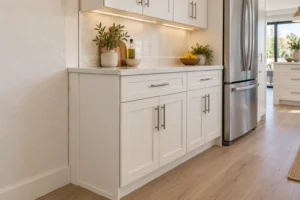
A cabinet’s outside width and the drawer front’s width are not the same as the drawer box’s usable width. Hardware also needs clearance, and the amount depends on the slide system. Check the cabinet or slide manufacturer’s specifications before ordering a replacement box.
Common Drawer Heights and What They Store
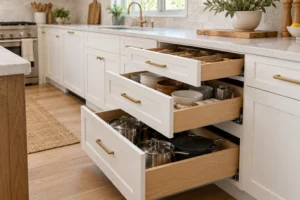
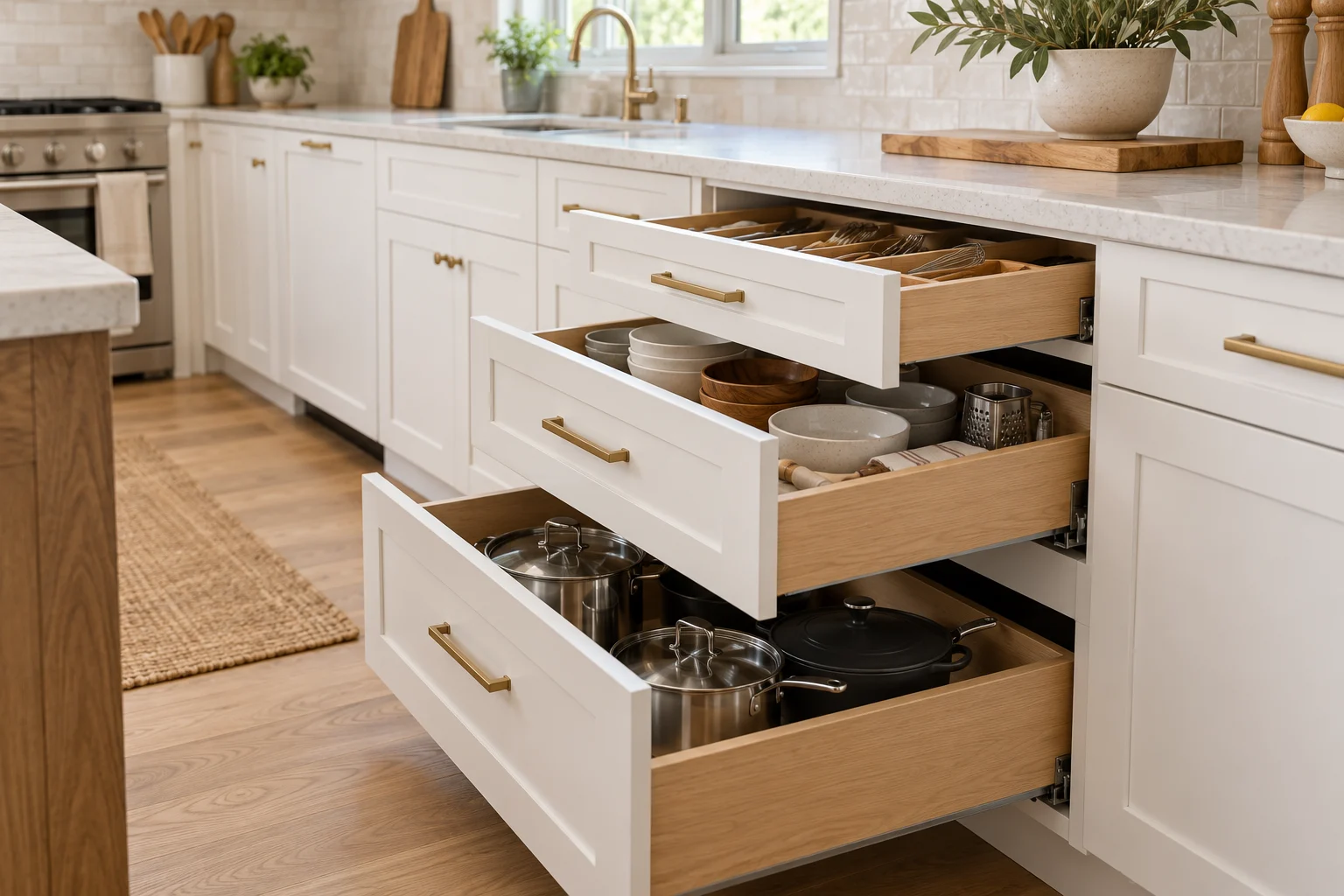
Base cabinet drawer sizes often combine a shallow top drawer with one or more deeper drawers below. This arrangement can keep small items accessible while providing room for cookware.
| Drawer type | Common use | What to measure |
| Shallow top drawer | Cutlery, flat utensils, small tools | Interior height and organizer depth |
| Medium drawer | Cooking utensils, bowls, containers | Interior height, width, and slide clearance |
| Deep bottom drawer | Pots, pans, and heavier cookware | Interior height, box depth, and load requirements |
A cutlery drawer size for a kitchen should leave enough height for the insert and utensils without restricting the drawer’s movement. For pot and pan drawer dimensions, consider the largest cookware you want to store, including lids and handles.
Check Drawer Width and Depth
A standard kitchen drawer width varies with the cabinet design. The drawer box is usually narrower than the cabinet opening so the slides can fit and move correctly. The exact clearance depends on the hardware, so do not calculate drawer width from the cabinet’s outside measurement alone.
Kitchen drawer depth measurements also vary. A base cabinet may be described by its overall depth, but the drawer box needs room for the back of the cabinet and the slide hardware. Measure the available interior depth and follow the slide manufacturer’s required clearances.
For upper kitchen cabinet drawer sizes, check the cabinet’s interior depth and the items you want to keep there. Shallow drawers may suit small tools, while larger drawers need enough clearance to open without interfering with nearby doors or fixtures.
How to Measure Kitchen Drawers
If you are replacing a drawer or choosing an organizer, measure the drawer itself and the cabinet opening separately.
- Measure the drawer front. Record its width and height, especially if you need a matching replacement front.
- Measure the drawer box. Record the outside width, height, and depth of the box.
- Measure the cabinet opening. Check the clear width between the cabinet sides and note any frame or obstruction.
- Check the slides. Identify whether they are side-mounted or undermounted and confirm their required clearances.
- Measure usable space. Measure inside the drawer box to find the space available for cookware or organizers.
- Check for interference. Open nearby doors and drawers to confirm everything can move freely.
If you are asking how to measure kitchen drawers for an organizer, use the drawer’s interior measurements rather than its front dimensions. Payless Kitchen Cabinets’ guide to measuring kitchen cabinets covers the broader measurements to record when planning cabinetry.
Avoid These Drawer Sizing Mistakes
A few common errors can lead to drawers that do not fit or work as expected:
- Ordering a drawer box based on the cabinet’s nominal width.
- Confusing the drawer front size with the box size.
- Forgetting the space required by slides.
- Measuring only one point when the cabinet sides are uneven.
- Choosing depth based on cookware alone without checking the cabinet interior.
- Selecting an organizer before measuring the drawer’s usable space.
When planning new cabinetry, review drawer dimensions with the cabinet and hardware specifications together. The kitchen cabinet installation guide can help with broader installation planning.
Choose Drawer Sizes Around Your Kitchen Routine
The most useful drawer layout puts everyday items where they are easy to reach and gives bulky cookware enough room. Before choosing widths and heights, list what each drawer will hold. Measure the largest items and include dividers or organizers in your plan.
For help with drawer inserts, explore Payless Kitchen Cabinets’ drawer organizer installation service. If you are planning cabinetry for your kitchen, contact Payless Kitchen Cabinets to discuss your layout and measurements.
Frequently Asked Questions
Are kitchen drawer sizes standard?
Cabinet systems offer common sizes, but drawer dimensions vary by manufacturer, cabinet construction, and slide hardware. Confirm the exact product specifications before ordering.
Is drawer box size the same as cabinet opening size?
No. The drawer box needs clearance for its slides and cabinet construction, so it is usually smaller than the opening. The required difference depends on the hardware.
How deep are kitchen drawers?
There is no single depth for every drawer. Measure the cabinet’s usable interior depth and check the slide requirements to determine what drawer box will fit.
How do I choose a drawer height for pots and pans?
Measure the tallest pot or pan you plan to store, including its lid or handle if it will remain attached. Then check the drawer’s usable interior height, not just the drawer front.