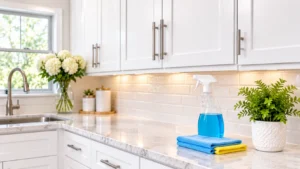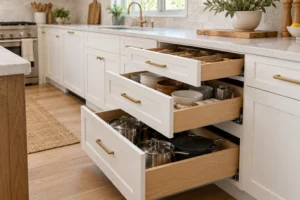


Learning how to clean kitchen cabinets is one of the simplest ways to refresh your kitchen without a remodel. Cabinets collect fingerprints, splatters, and cooking residue every day, even in the tidiest Los Angeles homes. Left alone, that buildup can dull the finish and make the whole room feel tired. This guide explains easy methods, safe products, and practical habits that keep your cabinets looking new.
Why Regular Cabinet Cleaning Matters
Kitchen cabinets are among the most touched surfaces in your home. Steam and airborne grease settle on doors and drawer fronts, and sticky films attract more dust over time. Regular cleaning protects the finish and prevents stains from setting in. It also helps your cabinets last longer, whether you cook daily or only on weekends.
What You Need Before You Start
Gathering the right supplies first makes the job faster and protects your finish. Choose gentle tools, since harsh scrubbing can scratch painted and laminate surfaces. Always test any cleaner on a hidden spot, such as the inside of a door, before using it widely. Here is a simple checklist to keep nearby:
- Soft microfiber cloths
- Mild dish soap and warm water
- White vinegar and baking soda
- A soft-bristled toothbrush
- A dry towel for drying
The Best Way to Clean Kitchen Cabinets Step by Step
The best way to clean kitchen cabinets is to work gently and in stages. Start with dry dust removal, move to a mild soap solution, and finish by drying every surface. This order prevents you from smearing dirt into the finish. The same basic method works on most painted, laminate, and sealed surfaces.
Dust and Wipe First
Begin by wiping each door, drawer front, and the top edges with a dry microfiber cloth. Dust mixes with grease and turns into a sticky layer if you add water too early. Pay attention to corners, grooves, and the tops of upper cabinets, where debris collects. Removing loose dirt first lets your cleaner focus on actual stains.
Wash With Mild Soap
Mix a few drops of mild dish soap into a bowl of warm water. Dampen a soft cloth, wring it out well, and wipe the cabinets in the direction of the grain or panel lines. Work in small sections so moisture never sits on the surface. Use a soft toothbrush for hardware, trim, and detailed edges.
Rinse and Dry Thoroughly
After washing, wipe each section with a clean cloth dampened with plain water to remove soap residue. Dry the surface right away with a soft towel. Leftover moisture can cause streaks, swelling, or finish damage, especially around hinges and seams. Take a moment to dry handles and knobs, too.
How to Clean Kitchen Cabinets Naturally
Many homeowners prefer natural solutions, especially in kitchens where food is prepared. If you want to know how to clean kitchen cabinets naturally, pantry staples like vinegar and baking soda work well for light to moderate buildup. They avoid strong fumes and are easy to find. Still, natural does not mean risk-free, so test a small area first.
Vinegar and Water Solution
Combine equal parts white vinegar and warm water in a spray bottle. Lightly mist a cloth rather than the cabinet, then wipe the surface gently. Vinegar can cut through light grease and fingerprints without leaving a heavy residue. Avoid using it often on natural wood, since its acidity may dull some finishes.
Baking Soda Paste for Tough Spots
For dried-on spots, mix baking soda with a little water to form a soft paste. Apply it with a damp cloth or soft toothbrush and rub in light circles. Let it sit briefly, then wipe it away and rinse with a clean damp cloth. Skip this method on glossy or delicate finishes, because even mild abrasives can leave marks.
How to Remove Grease From Kitchen Cabinets
Knowing how to remove grease from kitchen cabinets starts with choosing the right cleaner. Dish soap is designed to break down oils, which makes it a dependable first option. Warm water helps loosen the film, but avoid soaking the surface. Patience works better than force, so repeat the process instead of scrubbing hard.
Cleaning Greasy Cabinets Near the Stove
Cabinets near the stove and range hood often need extra attention. If you are wondering how to clean greasy kitchen cabinets that feel tacky, try a slightly stronger soap solution and let it sit for a minute. Wipe in gentle strokes, then rinse and dry completely. For stubborn spots, follow with the baking soda paste and repeat the process rather than scraping.
How to Clean Wood Kitchen Cabinets Safely
Knowing how to clean wood kitchen cabinets takes a lighter touch, because moisture and harsh chemicals can harm the finish. Use a barely damp cloth with a drop of mild soap, then dry immediately. Avoid soaking, steam cleaners, and abrasive scrubbers. Cabinets in coastal areas such as Long Beach may face more humidity, so quick drying is especially useful.
Protecting the Wood Finish
Once the cabinets are clean, consider a wood-safe polish or conditioner recommended for your finish. Apply it sparingly with a soft cloth and buff gently. This step restores a soft sheen and helps resist new fingerprints. Check your manufacturer’s care instructions first, since finishes vary.
A Simple Cleaning Routine for Busy Homes
Small habits make the biggest difference over time. Wiping high-touch areas regularly and cleaning spills quickly keeps buildup from forming. A little consistency also saves you from tougher scrubbing later. Try these habits to stay ahead of the mess:
- Wipe handles and door fronts every week
- Clean splatters near the stove right away
- Run the range hood while cooking
- Dry wet cabinet surfaces immediately
Frequently Asked Questions
How often should I clean my kitchen cabinets?
A light wipe-down every week or two keeps dust and fingerprints under control. Areas near the stove may need attention more often because grease builds up faster there. A deeper cleaning every few months helps maintain the finish. Adjust the schedule based on how often you cook.
Is vinegar safe for all cabinets?
Diluted vinegar works for many painted and laminate cabinets, but it is not ideal for every finish. Natural wood and delicate coatings may react to acidity over time. Always test a hidden spot first. When in doubt, mild dish soap and water is the safer choice.
What is the best way to clean kitchen cabinets without damaging paint?
Use a soft microfiber cloth, mild soap, and warm water, and avoid soaking the surface. Skip abrasive pads and strong chemical cleaners that can strip or dull paint. Dry the cabinets right away after washing. Gentle, consistent cleaning protects the paint longer than occasional heavy scrubbing.
Can I use baking soda on greasy cabinets?
Yes, a baking soda paste can help lift stubborn grease from many surfaces. Apply it gently with a soft cloth or toothbrush instead of scrubbing hard. Rinse well and dry the area afterward. Avoid it on high-gloss or delicate finishes, where it may leave tiny scratches.
When should I consider replacing cabinets instead of cleaning them?
If cabinets have peeling finishes, warped doors, or damage that cleaning cannot fix, replacement may be worth considering. Outdated layouts and worn hinges can also make a kitchen frustrating to use. Cleaning improves the look of sound cabinets, but it cannot repair structural wear. A cabinet specialist can help you compare your options.
Final Thoughts
Keeping cabinets clean comes down to gentle tools, mild cleaners, and steady habits. Start with dry dusting, wash with soapy water, and dry thoroughly, adjusting for grease or wood finishes as needed. Natural options like vinegar and baking soda can help when used carefully. If your cabinets are beyond cleaning, explore the options at Payless Kitchen Cabinets to find a fresh start for your Los Angeles kitchen.