
Cabinets carry most of the visual weight in a kitchen, so the wrong color pairing can make an otherwise well-built space feel a decade older than it actually is. Some combinations that looked fresh in the 2010s have quietly slipped into that “instantly reads as older” category, and homeowners planning a remodel or debating whether to refresh what they have deserve a straight read on which pairings are aging poorly and what has replaced them. This article walks through six specific cabinet color combos designers are moving away from in 2026, why each one feels dated now, and the updated version worth considering instead.
Why Cabinet Color Combinations Age Faster Than the Cabinets Themselves
Cabinets themselves can hold up for decades. What ages faster is the color story they sit inside, because a cabinet color rarely stands alone. It reads against the countertop, the backsplash, the hardware, the flooring, and the appliances, and any of those elements can pull the whole kitchen into a specific moment in time.
Design cycles for kitchens tend to run in roughly seven to ten year waves, and the tell is almost always the pairing rather than the individual color. A warm white cabinet reads fine on its own. Pair it with cool gray quartz, chrome pulls, and a stark subway backsplash and it reads as a 2016 kitchen almost immediately. This is why understanding cabinet color combinations matters more than chasing any one hue.
The Six Dated Cabinet Color Combos and What to Do Instead
Each of the combos below had a strong run and is genuinely well built when it works. The issue is that the specific pairing has slipped out of favor, and the updated versions look meaningfully different.
Stark White Cabinets With Cool Gray Counters and Chrome Hardware
The stark all-white kitchen with cool gray quartz and chrome hardware defined a full decade of remodels, and designers have been steadily walking away from it. The problem is not the color white. It is the coolness of the whole palette, which reads clinical rather than calm in most home lighting, and increasingly signals a specific mid-2010s remodel to anyone who has been paying attention.
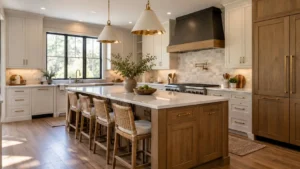
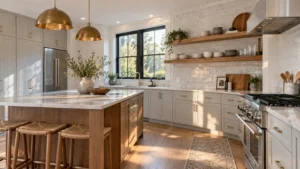
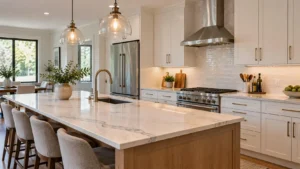
The updated version keeps the light and open feeling but warms every element. Warm or creamy white cabinetry, a warmer stone or quartz with subtle veining, brass or bronze hardware, and a backsplash with a bit of natural texture add depth without changing the footprint. If your current kitchen sits in this cool-white category, this is one of the easier updates to make because the cabinet color itself may only need a tone shift rather than a full replacement.
White Uppers With Dark Espresso Lower Cabinets
The early 2010s two-tone kitchen (bright white uppers, dark espresso lowers) was in every builder-grade remodel for years, and it now reads as one of the most instantly dateable combos in a kitchen. The contrast is too high, the espresso tone leans cool and heavy, and the pairing tends to be paired with dark speckled granite that ages the whole room further.
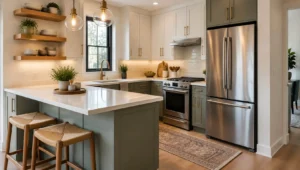
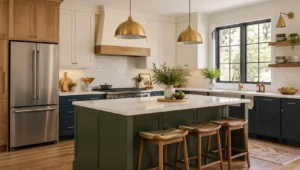
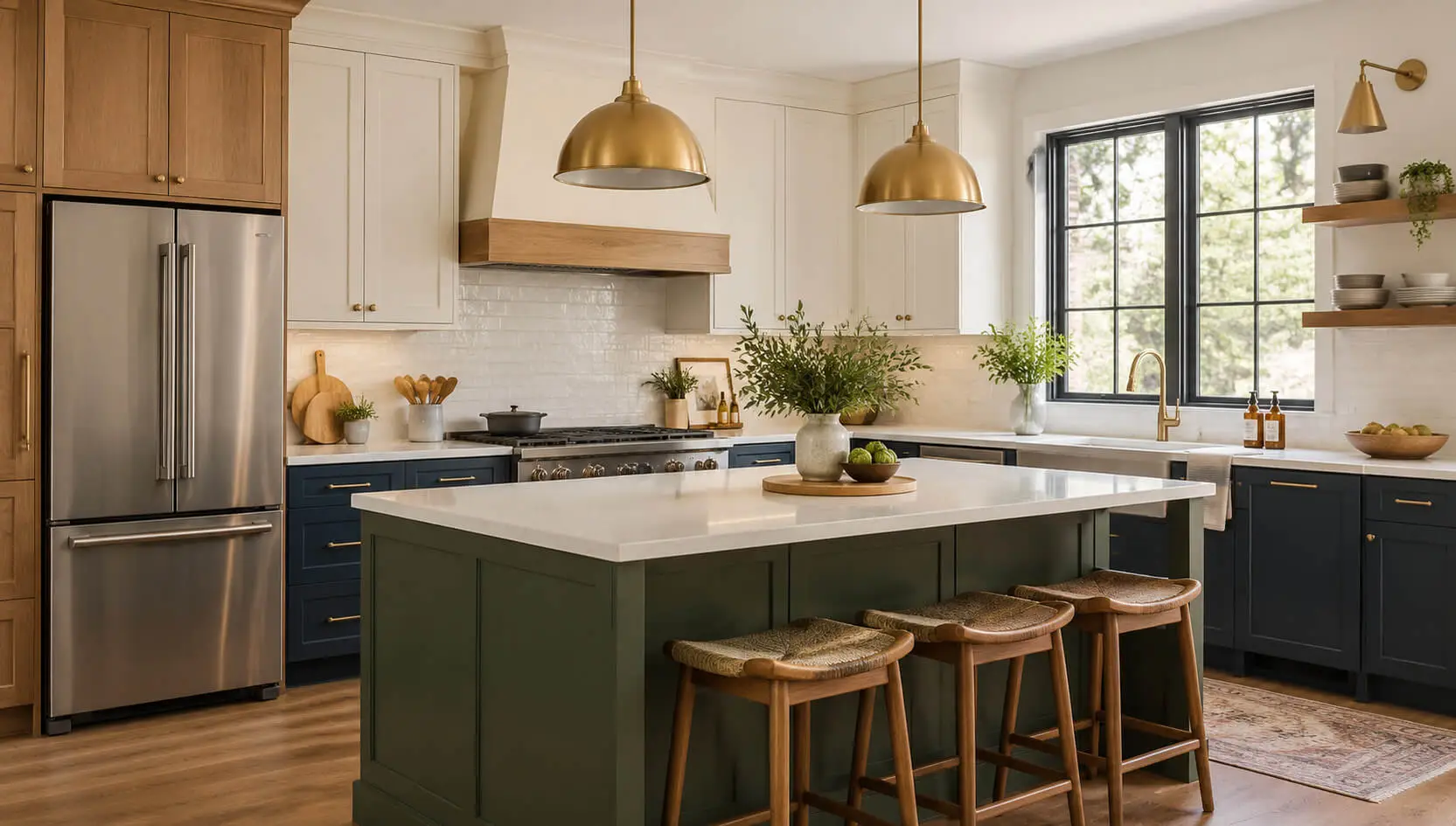
Two-tone kitchens themselves are still very much current. The updated version replaces the espresso with a warm mid-tone wood (natural white oak, walnut, or a rift-cut oak), or with a moody green or navy paint. The upper cabinetry moves to a warm white or a soft warm neutral rather than a stark builder white. The contrast stays, but the temperature and undertones change completely.
Honey Oak Cabinets With Dark Green or Burgundy Backsplashes
Honey oak and golden oak cabinetry are common in homes built between the mid-1990s and early 2000s, and they were often paired with dark green, burgundy, or hunter-toned backsplashes and dark speckled granite. Each element pushes the other into a specific era, and the yellow-orange undertone in the oak has become the visual shortcut for a dated kitchen.
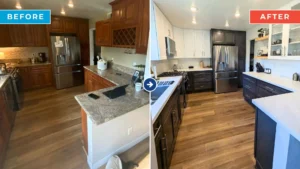
The updated version rarely means ripping out oak. Refinishing or restaining the cabinets in a natural, blonde, or lightly whitewashed tone (or repainting in a warm neutral), swapping the backsplash for a simpler warm-toned tile, and updating hardware and lighting can move the kitchen forward without a full remodel. Modern white oak in a natural finish is genuinely one of the most current cabinet looks right now, which shows that the wood species is not the problem, the honey-toned finish and dated pairings are.
Cool Gray Cabinets With Stainless Steel and Cool White Backsplash
Cool gray cabinetry paired with stainless appliances, a cool white subway backsplash, and chrome hardware defined a shorter but very identifiable stretch between roughly 2015 and 2019. It looked crisp in showrooms but drains warmth out of most home kitchens, and design coverage has moved noticeably away from it. Cool gray cabinets are one of the finishes most flagged as feeling stuck in a past cycle right now.
The updated version swaps the cool undertones for warm ones across the board. Warm greige, mushroom, or a soft taupe replaces the cool gray. A warmer stone or a quartz with slight veining replaces the flat gray counter. Warmer hardware finishes (brass, bronze, aged nickel) replace the chrome. The cabinets themselves can often be repainted rather than replaced.
All-Black Cabinets With Matte Black Hardware and Black Stainless Appliances
The all-black kitchen with matte black hardware and black stainless appliances was a strong statement between about 2019 and 2022. Designers are now flagging it as one of the finishes losing momentum in 2026. The issue is not black cabinetry itself. It is the fully monochromatic execution, which reads heavy, hides the character of the room, and locks the kitchen into a very specific moment.
Black cabinetry still works when it is used with contrast. A black or near-black island paired with warm white or natural wood perimeter cabinetry, brass hardware, and a lighter counter looks current and grounded. Homeowners drawn to darker, moodier kitchens are also moving toward deep greens, inky blues, and softer blacks with visible undertone, all of which age better than a flat true black.
Cherry or Red-Toned Wood Cabinets With Beige Tile and Busy Granite
Cherry cabinetry and other red-toned wood tones were staples in kitchens built in the late 1990s and early 2000s, usually paired with beige travertine or tile flooring, busy speckled granite, and cream or beige walls. The combination pushes almost every element into the same warm-red-beige territory, which reads flat and heavy in current design terms.
Updating this look benefits from breaking the color story rather than doubling down on it. Refinishing or repainting the cabinets in a warm white, sage, or muted green, replacing the busy granite with a quieter counter surface, and swapping heavy tile for a cleaner flooring choice pulls the room forward. Cherry cabinets themselves are quality construction in many older homes, so refacing or repainting is often a better move than tearing them out.
How Warm and Cool Undertones Decide Whether a Combo Reads Current or Dated
The single strongest predictor of whether a cabinet color combination reads current or dated is undertone consistency. Kitchens that feel timeless usually keep everything in the same temperature family. A warm white cabinet paired with a warm-toned stone counter, brass hardware, and a warm wood floor reads settled. Mix warm cabinets with cool gray counters and chrome pulls, and the whole room fights itself.
The design shift over the past few years has moved almost entirely toward warmer undertones. Cool grays, blue-whites, and cool blacks are being replaced with warm neutrals, natural wood tones, and moody colors that still have warmth in them (deep green with olive undertones rather than a cool forest, warm navy rather than icy blue). Checking that every finish in the room shares the same undertone family is the fastest way to tell whether a combo will age well.
How Countertops, Backsplash, and Hardware Pull Cabinets Into a Specific Era
Cabinet color is only one part of the equation. The counter surface, backsplash, and hardware often do more to date a kitchen than the cabinets themselves. Busy speckled granite reads as early 2000s no matter what cabinet sits underneath it. Chrome hardware and stark white cool subway tile read as mid-2010s even when paired with a perfectly good warm-toned cabinet. Black stainless appliances tie a room to a narrow window around 2020.
The practical takeaway is that if your cabinets are in good structural shape, a targeted update to the counter, backsplash, and hardware alone can shift the whole kitchen forward. If you are planning a full remodel, choosing the counter and backsplash after the cabinet color (not before) gives you room to keep the undertones consistent across every surface. Bringing the finishes together at the design stage is one of the areas where working with an experienced kitchen designer usually pays off, since the interaction between materials is easier to see in person than in samples on a screen.
When a Repaint or Refacing Fixes the Problem and When It Does Not
Whether a paint refresh solves the problem depends on which combo you are dealing with and what condition the cabinet boxes are in. If the boxes are structurally sound, the layout still works for you, and the dated element is mainly the color story, then refacing or repainting is usually the right move. This applies especially to solid wood cabinets in older homes that are often better built than newer builder-grade replacements.
If the cabinet boxes are damaged, the layout is wrong for how you actually use the kitchen, or the storage is failing you, then a paint update is only postponing the real decision. The other honest limit is fabrication complexity. Very dark cabinet colors and heavily glazed finishes take multiple coats and skilled prep to repaint well, and a DIY effort on those tends to look exactly like a DIY effort a year later.
Why Homeowners Keep Landing on Dated Cabinet Combinations
Most homeowners who end up with a dated cabinet combo did not choose one on purpose. A few patterns come up repeatedly.
- Following a trend late in its cycle, when the showroom is still full of last season’s samples
- Matching new cabinetry to existing counters, flooring, or backsplash that were themselves already dated
- Judging a color under showroom lighting rather than in the actual kitchen
- Picking safe, neutral combinations that felt low-risk at the time but were specific to their moment (cool gray was once considered the safest choice possible)
- Underestimating how much the hardware and appliance finish would tie the whole room to a narrow window
- Relying on inspiration photos two or three years old, which usually reflect what was current when those kitchens were built rather than what feels current now
Frequently Asked Questions
1. Are white and gray kitchens still in style
A. White kitchens are still very much in style, but the shade has shifted from stark cool white to warmer, creamier tones. Cool gray as a cabinet color has largely fallen out of favor, though warmer neutrals like greige and mushroom are still current. The pairing matters more than either color on its own.
2. Is the two-tone cabinet trend over
A. Not at all. Two-tone kitchens are still one of the most current directions, but the specific combinations have moved on. Bright white with dark espresso reads dated, while warm white or warm neutral paired with a natural wood island, or with a moody green or navy, reads current.
3. Are all-black kitchen cabinets outdated in 2026
A. Fully monochromatic all-black kitchens with matte black hardware and black stainless are being flagged as losing momentum. Black cabinetry itself still works well when used as a contrast piece (a black island against warm white perimeter cabinets, for example) or when it leans slightly warm rather than reading as a flat true black.
4. How do I update honey oak or cherry cabinets without replacing them
A. Refinishing, restaining, or repainting the cabinets is usually the fastest path. Restaining honey oak toward a natural or lightly whitewashed finish, or repainting in a warm neutral, and pairing the update with a quieter countertop and simpler backsplash pulls the whole kitchen forward. The same approach works for cherry, though red undertones can bleed through paint, so proper primer and prep matter.
5. What cabinet color combinations are replacing the dated ones
A. Warm white with natural white oak, warm neutrals like mushroom or greige with brass hardware, deep green or navy islands against warm white perimeter cabinetry, and walnut or smoked oak paired with quieter counter surfaces are all in strong favor. Every one of these leans warm in undertone, which is the common thread.
Choosing a Cabinet Color Pairing That Will Not Feel Dated in Five Years
A cabinet color combination ages well when every element in the room shares the same undertone family, when the counter and backsplash stay quieter than the cabinets, and when at least one element is a natural material (wood, stone with real character, or a warm metal) rather than a manufactured finish trying to look like something else. The combos that age poorly almost always share the opposite traits: mixed cool and warm elements, busy patterned counters, and highly specific finish choices that were popular for a narrow window.
If your kitchen sits in one of the combos above, the good news is that most of them can be updated without a full remodel. Refacing the cabinets, repainting them, or swapping the counter, backsplash, and hardware while keeping the boxes in place is often enough. Working through the color and finish decisions with an experienced kitchen designer or remodeler, ideally with real samples in your actual light rather than showroom light, is the surest way to land on a pairing that will still feel right long after the current cycle has moved on.