
Choosing the right kitchen flooring is one of the most important decisions during a remodel. Kitchen floors must handle heavy foot traffic, spills, moisture, and daily wear while still looking attractive. That is why many homeowners continue to explore kitchen tile floor ideas when upgrading their space. Tile offers an excellent balance of durability, design flexibility, and easy maintenance, making it a practical option for both modern and traditional kitchens.
Why Tile Flooring Remains a Popular Choice for Kitchens
Combining Durability and Style
Kitchen floors experience constant use. From cooking and cleaning to family gatherings, the flooring must withstand everyday activity. Tile flooring performs exceptionally well under these conditions while offering countless design possibilities.
Homeowners can choose from various colors, patterns, textures, and finishes to create a look that complements their kitchen design. Whether you prefer a contemporary space or a more traditional appearance, tile provides options for almost every style.
Easy Maintenance and Long-Term Performance
One reason tile remains popular is its ease of maintenance. Most kitchen floor tile designs require simple sweeping and occasional mopping to maintain their appearance.
Unlike some flooring materials, tile resists scratches, stains, and moisture when properly installed and maintained. This durability helps homeowners enjoy their investment for many years.
Versatility for Different Kitchen Designs
Tile flooring works well with various kitchen styles, including:
- Modern kitchens with sleek finishes
- Farmhouse-inspired spaces
- Traditional kitchen layouts
- Contemporary open-concept designs
Its versatility makes tile one of the most adaptable kitchen flooring materials available.
Popular Kitchen Tile Floor Ideas for Different Styles
Large Format Tiles for a Modern Look
Large format tiles create a clean and streamlined appearance. Because they have fewer grout lines, they often make kitchens feel larger and more open. These tiles work particularly well in modern kitchen tile flooring designs where simplicity and minimalism are priorities.
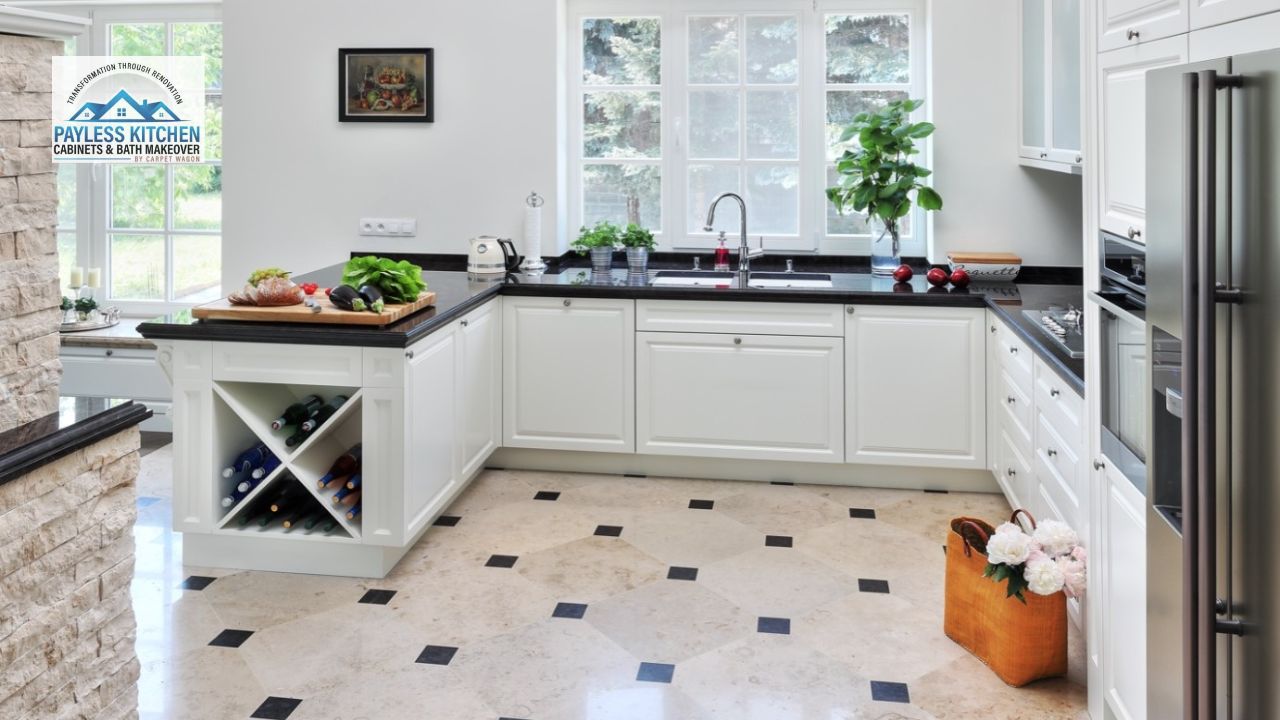
Classic Checkerboard Tile Patterns
Checkerboard flooring remains a timeless option. Typically created using contrasting colors, this pattern adds character without overwhelming the space. It works well in both vintage-inspired kitchens and updated traditional homes.
Wood-Look Tile Flooring Designs
Wood-look tiles combine the appearance of hardwood with the durability of tile. They offer warmth and texture while providing better resistance to moisture and scratches. Many homeowners choose this option when they want a natural look without the maintenance concerns associated with real wood.
Natural Stone-Inspired Tile Floors
Stone-inspired tiles mimic the appearance of slate, marble, or travertine. These designs bring elegance and sophistication to the kitchen while often being more affordable and easier to maintain than natural stone.
Geometric and Patterned Tile Designs
Geometric tiles can create a focal point within the kitchen. Bold shapes and repeating patterns add visual interest and personality. When used thoughtfully, patterned flooring can elevate the entire design of the room.
Herringbone and Chevron Layouts
Herringbone and chevron patterns create movement and visual depth. These layouts are especially effective in larger kitchens where the pattern has room to stand out. They add a custom look while maintaining the durability benefits of tile.
Choosing the Right Tile Material for Your Kitchen
Ceramic Kitchen Floor Tiles
Ceramic kitchen floor tiles are a popular choice because they are affordable, versatile, and available in many styles. They work well for households seeking attractive flooring without a significant investment.
Porcelain Kitchen Floor Tiles
Porcelain kitchen floor tiles are denser and more durable than standard ceramic options. They resist moisture exceptionally well, making them ideal for busy kitchens. Many premium kitchen flooring projects feature porcelain because of its strength and longevity.
Natural Stone Tile Options
Natural stone flooring offers a distinctive and luxurious appearance. Materials such as marble, slate, and travertine provide unique textures and patterns that cannot be duplicated exactly. However, stone often requires more maintenance and sealing than ceramic or porcelain.
Comparing Durability, Maintenance, and Cost
When comparing materials, consider:
- Durability requirements
- Cleaning and maintenance expectations
- Installation costs
- Overall design goals
Balancing these factors helps homeowners select flooring that meets both practical and aesthetic needs.
Kitchen Tile Floor Design Considerations
Selecting the Right Tile Size
Tile size can significantly influence the appearance of a kitchen. Larger tiles often create a more spacious look, while smaller tiles can introduce detail and texture. The size of the room should guide tile selection.
Choosing Colors That Complement Cabinets and Countertops
Flooring should coordinate with surrounding finishes. Light-colored tiles can brighten a room, while darker tones create contrast and depth. Consider how the flooring will interact with cabinetry, countertops, backsplashes, and wall colors.
Grout Color and Maintenance Considerations
Grout affects both appearance and maintenance requirements. Light grout creates a seamless appearance but may show stains more easily. Darker grout can hide dirt but may create stronger visual lines between tiles. Choosing the right grout color helps balance aesthetics and practicality.
Slip Resistance and Safety Factors
Safety is especially important in kitchens where spills are common. Look for tile products that provide adequate slip resistance while maintaining the desired appearance. Textured finishes often improve traction without sacrificing style.
Kitchen Tile Flooring Ideas for Small Kitchens
Using Light Colors to Create Openness
Light-colored flooring can make compact kitchens feel larger. Soft grays, whites, and beige tones reflect light and contribute to a more open atmosphere.
Tile Layouts That Make Spaces Feel Larger
The installation pattern can influence how large a room appears. Diagonal layouts and large format tiles often help small kitchens feel more expansive. Proper installation planning can maximize visual space.
Minimizing Visual Clutter With Simple Patterns
Simple tile patterns generally work best in smaller kitchens. Excessive variation can make the room feel busy or crowded. A clean design often creates a more comfortable and spacious appearance.
Benefits of Installing Tile Flooring in a Kitchen
Kitchen tile flooring offers several valuable advantages:
- Excellent durability for high-traffic areas
- Resistance to moisture and spills
- Wide variety of colors and styles
- Easy cleaning and maintenance
- Strong long-term value
These benefits continue to make tile one of the most popular flooring choices for kitchen remodeling projects.
Common Mistakes to Avoid When Selecting Kitchen Tile Flooring
Several mistakes can affect the appearance and performance of a tile floor.
Choosing tile based only on appearance without considering durability can lead to disappointment. Ignoring slip resistance may create safety concerns. Selecting grout without considering maintenance requirements can increase cleaning challenges.
Another common mistake is choosing tile that clashes with cabinets, countertops, or the overall design theme. Planning the entire space together helps create a more cohesive result.
FAQs
What is the best type of tile for a kitchen floor?
Porcelain tile is often considered one of the best choices because it offers excellent durability, moisture resistance, and design flexibility.
Are porcelain tiles better than ceramic tiles for kitchens?
Porcelain tiles are generally denser and more durable than ceramic tiles. However, ceramic remains a practical and cost-effective option for many kitchens.
What tile color works best in a small kitchen?
Light colors such as white, beige, light gray, and soft neutral tones often help small kitchens feel larger and brighter.
Is tile flooring durable enough for busy kitchens?
Yes. High-quality tile flooring is designed to withstand heavy foot traffic, spills, and everyday kitchen activities.
How do I choose the right tile size for my kitchen?
Consider the room’s dimensions, layout, and design goals. Large tiles often create a more spacious appearance, while smaller tiles can add texture and detail.
Conclusion
Exploring kitchen tile floor ideas can help homeowners find flooring that combines beauty, durability, and practicality. From classic checkerboard patterns and wood-look designs to porcelain and ceramic options, tile offers solutions for virtually every kitchen style. By considering material choices, design preferences, room size, and maintenance needs, homeowners can select flooring that enhances both function and appearance. For larger remodeling projects, consulting experienced kitchen professionals can help ensure the flooring complements the overall kitchen design and long-term goals.