
Kitchen cabinet hinge types affect how cabinet doors open, close, and sit against the cabinet frame. The right hinge depends on the cabinet construction and door position, along with features such as soft-close movement.
If a door rubs, hangs unevenly, or will not stay closed, the hinge may be worn, misaligned, or unsuitable for that cabinet. Knowing the main options can help you discuss a replacement or new cabinet order with more confidence.
Concealed Kitchen Cabinet Hinges
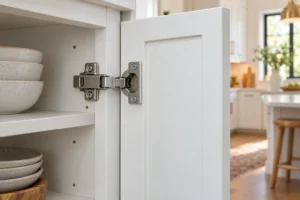
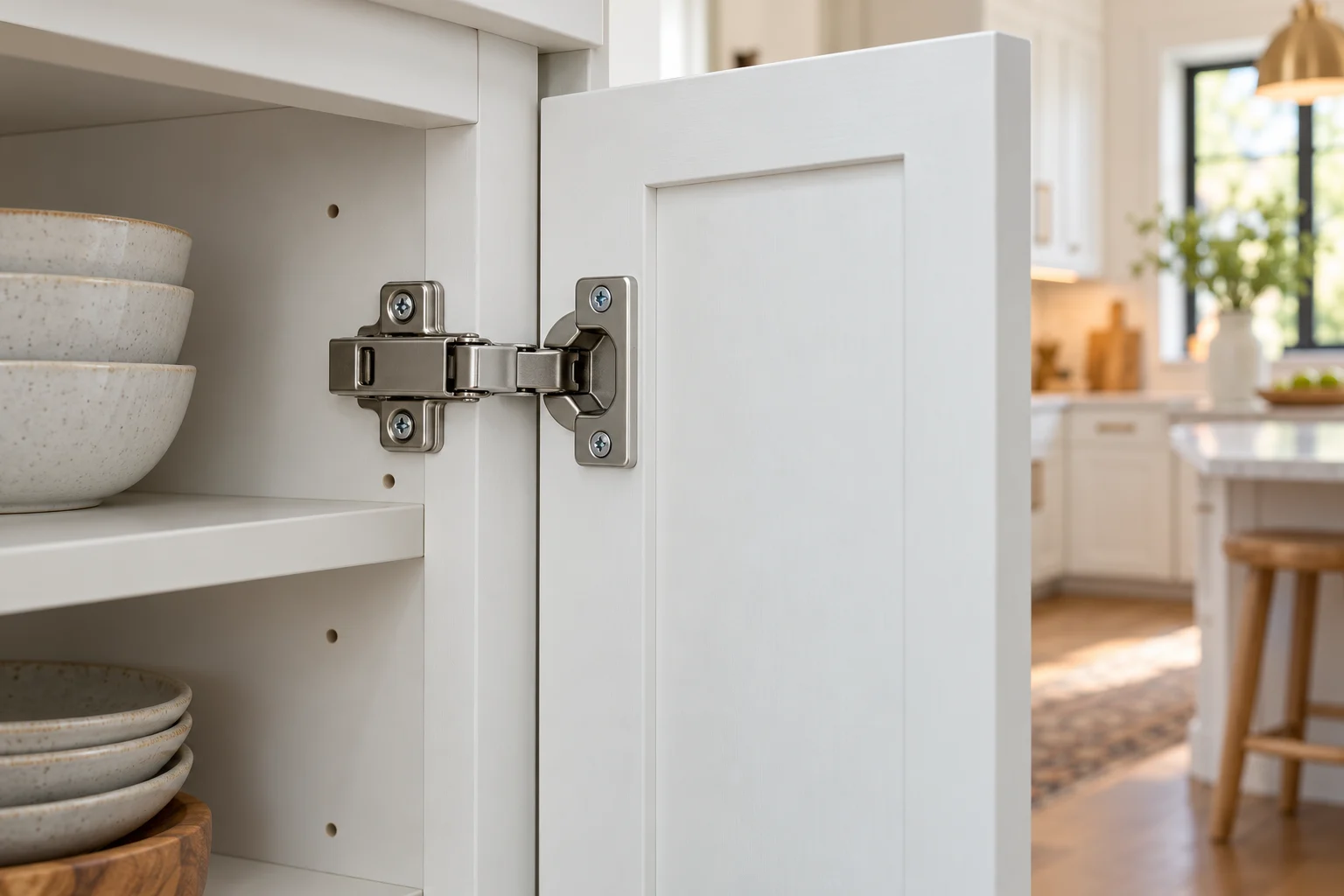
Concealed kitchen cabinet hinges are hidden from view when the cabinet door is closed. Many are European-style cup hinges, which attach inside the cabinet and to a circular recess in the door.
These hinges are common on modern cabinetry because they keep the exterior looking clean. Many concealed hinges can also be adjusted in more than one direction, which helps installers align doors and maintain even gaps.
A concealed hinge must suit the cabinet construction and door position. Confirm the hinge’s compatibility with the cabinet before selecting it.
Exposed Kitchen Cabinet Hinges
Exposed cabinet hinges remain visible when the door is closed. Depending on the design, part of the hinge may be mounted on the cabinet exterior or show along the door edge.
Some homeowners choose exposed hinges to complement traditional or furniture-style cabinetry. The finish becomes part of the visible hardware, so consider how it will look beside cabinet pulls, knobs, and other metal details.
The cabinet and door need to support the hinge’s mounting method. Check the product requirements and the cabinet design before choosing an exposed style.
Face Frame and Frameless Cabinet Hinges
The cabinet box helps determine which hinge configuration will fit.
Face frame cabinets have a frame attached to the front of the cabinet box. Frameless cabinets do not have that front frame, so the hinge attaches to the cabinet side. Hinge products are designed for specific mounting situations; a hinge intended for one cabinet construction may not fit the other properly.
When considering framed or frameless cabinetry, review the differences between cabinet constructions along with the hinge specifications.
Soft-Close and Self-Closing Hinges
Soft-close kitchen cabinet hinges slow the door as it shuts, helping it close more gently. The soft-close mechanism may be built into the hinge or provided by a compatible add-on.
Self-closing hinges use a mechanism that pulls the door toward a closed position. The exact feel and closing action vary by product, so check the manufacturer’s description rather than assuming “self-closing” and “soft-close” mean the same thing.
These are closing features, rather than separate mounting styles. A hinge can combine a closing feature with a concealed or exposed design, if the product is compatible with the cabinet.
How to Choose Kitchen Cabinet Hinges
Start by identifying the cabinet construction and how the door sits when closed. The hinge must work with both. If you are comparing overlay, inset, or partial-overlay doors, use those terms to confirm fit with the supplier. The door position affects hinge selection, but it is a separate detail from the hinge’s mounting style.
Also check:
- The existing hinge model or mounting pattern, if replacing a hinge.
- Door size, weight, and material.
- The opening angle needed for nearby walls or appliances.
- Whether the door needs soft-close or self-closing action.
- The finish, if the hinge will be visible.
When planning a larger cabinet project, include hinge selection in the design and installation discussion. Payless Kitchen Cabinets’ cabinet installation guide covers related planning considerations.
Signs a Cabinet Hinge Needs Attention
A cabinet door that sags or makes noise may need an adjustment, but these symptoms can also indicate worn hardware or a problem with the screw attachment. Check whether the hinge is loose, bent, rusted, or visibly damaged. Look at the cabinet box and door as well; replacing the hinge alone may not resolve damage elsewhere.
If you are selecting new hinges, compare the product’s specifications with the existing cabinet before ordering. For cabinet design and hardware ideas, review Payless Kitchen Cabinets’ guide to cabinet hardware trends.
Choose Hinges That Fit the Cabinet
The best kitchen cabinet hinge types are the ones suited to the cabinet construction, door position, and way you want the door to move. Compare the specifications, confirm compatibility, and consider the hinge’s appearance if it will be visible.
For help planning cabinets and hardware for your kitchen, contact Payless Kitchen Cabinets.
Frequently Asked Questions
What are the most common kitchen cabinet hinge types?
Concealed European-style hinges are common on modern cabinets. Exposed hinges are also used, particularly when the hardware is intended to be part of the visible design. The right option depends on the cabinet and door setup.
Are soft-close hinges different from concealed hinges?
They describe different features. “Concealed” refers to whether the hinge is visible when the door is closed. “Soft-close” refers to how the door closes. A compatible hinge may be both concealed and soft-close.
Can I use the same hinge on framed and frameless cabinets?
Not necessarily. The mounting configuration needs to match the cabinet construction. Check the hinge manufacturer’s specifications or have the existing cabinet assessed before ordering.
How do I know which hinge will fit my cabinet door?
Identify the cabinet construction, door position, and existing hinge type. Then compare those details with the hinge’s specifications. If replacing a hinge, the existing model or mounting pattern can help you find a compatible option.