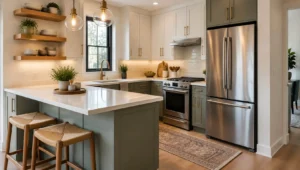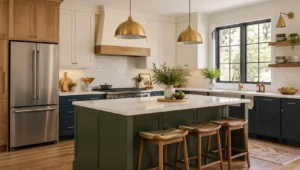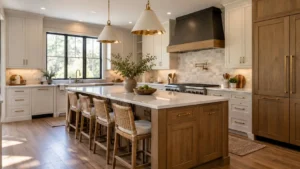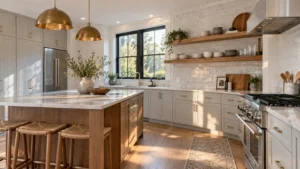

A well-decorated kitchen should feel inviting while still working effortlessly for everyday cooking, dining, and entertaining. The right colours, lighting, textures, accessories, and storage solutions can transform an ordinary space without requiring a complete renovation. Whether you prefer a modern, traditional, rustic, or minimalist look, thoughtful kitchen decor ideas can help you create a room that reflects your personality.
The key is to combine beauty with practicality. Instead of filling every surface with accessories, choose decorative elements that serve a purpose, complement your kitchen’s layout, and make the space easier to enjoy.
Kitchen Decor Ideas: Where Style Meets Functionality
Why Kitchen Decor Matters Beyond Looks
Kitchen decor does more than improve appearance. Well-chosen finishes, accessories, and decorative features can make the room feel warmer, more organised, and more comfortable for everyday use. Elements such as wall art, cabinet hardware, lighting, and textiles can also give an outdated kitchen a refreshed appearance without major construction.
The best decorating choices work with the existing layout rather than against it. For example, attractive storage containers can keep frequently used ingredients accessible while reducing visual clutter.
How to Balance Kitchen Style With Everyday Function
When choosing kitchen design decorating ideas, consider how each item will be used and maintained. Decorative pieces should not block preparation areas, interfere with cabinet doors, or make cleaning unnecessarily difficult. Keep frequently used items within easy reach and reserve less practical accessories for areas with minimal activity.
A simple rule is to decorate around your kitchen’s natural working zones. Keep cooking essentials near the range, beverage accessories near the coffee station, and attractive displays in areas that do not interrupt daily movement.
Choosing a Decorating Style That Fits Your Kitchen
Start by identifying a style that complements your cabinets, flooring, countertops, and overall home. Modern kitchens often benefit from clean lines and restrained accessories, while farmhouse spaces can incorporate natural wood, woven textures, and vintage-inspired pieces.
If you are unsure which direction to take, create a simple colour and material palette first. Limiting the room to a few complementary finishes helps create a cohesive look rather than a collection of unrelated decorations.
Kitchen Color and Theme Ideas to Transform Your Space
Choosing the Right Kitchen Color Scheme
Colour has a major influence on how a kitchen feels. Light neutrals such as white, cream, beige, and soft grey can make a space feel brighter, while deeper greens, blues, and charcoal tones can add character and visual depth.
Rather than using one colour everywhere, combine a dominant shade with one or two complementary accents. Cabinet hardware, bar stools, artwork, rugs, and small appliances can introduce colour without requiring permanent changes.
Popular Kitchen Decorating Themes to Consider
Popular kitchen decorating themes include modern, transitional, farmhouse, coastal, industrial, and traditional kitchen styles. Each creates a different atmosphere, but the most successful rooms usually maintain consistency in materials, colours, and accessories.
For example, a coastal kitchen might combine soft blue accents with natural wood and light textiles, while an industrial space may use black metal, exposed textures, and streamlined lighting. Choose a theme that feels natural with the architecture of your home.
Using Accent Colors Without Overwhelming the Kitchen
Accent colours are most effective when used selectively. A colourful backsplash, pendant light, runner, or collection of ceramic accessories can provide enough contrast without making the room feel busy.
If your kitchen already has bold cabinets or countertops, keep decorative accents more subdued. In a neutral kitchen, however, stronger colours can create an attractive focal point.
Kitchen Wall Decor Ideas to Create a Stylish Focal Point
Creating a Kitchen Wall Accent With Paint or Wallpaper
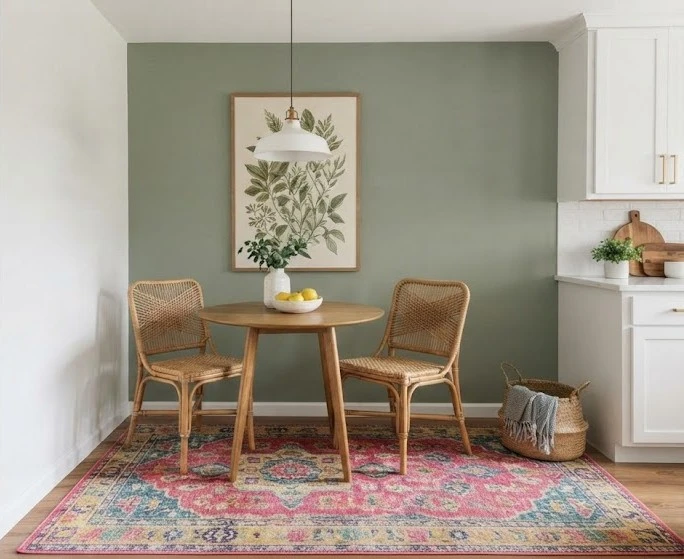
An empty wall can become one of the most noticeable decorative features in the room. A contrasting paint colour can define a dining nook or highlight a particular wall, while washable wallpaper can introduce pattern and personality.
For busy kitchens, choose finishes that are durable and easy to wipe clean. Keep patterns proportional to the size of the room so they enhance the space rather than dominate it.
Using Tile and Backsplashes as Decorative Features
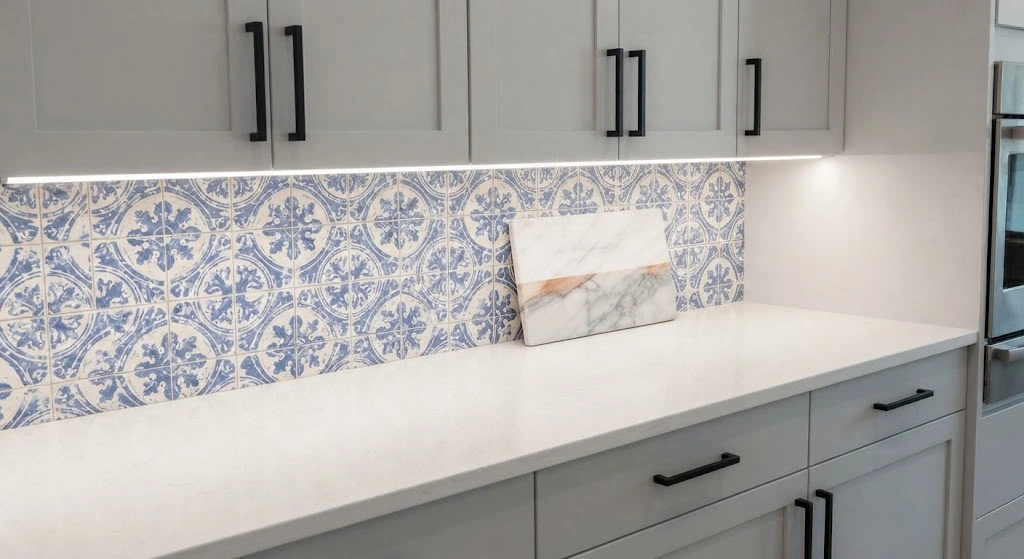
A backsplash can function as both protection and decoration. Subway tile offers a timeless appearance, while patterned, textured, or colourful tile can become a striking focal point behind the range or sink.
Consider the relationship between the backsplash and countertops before choosing a design. If your countertop has prominent veining or patterns, a simpler backsplash can create a more balanced appearance.
Adding Artwork, Shelves, and Other Wall Decorations
Artwork can make a kitchen feel more personal and less purely functional. Framed prints, small paintings, decorative signs, or photographs can work particularly well on walls away from cooking splashes.
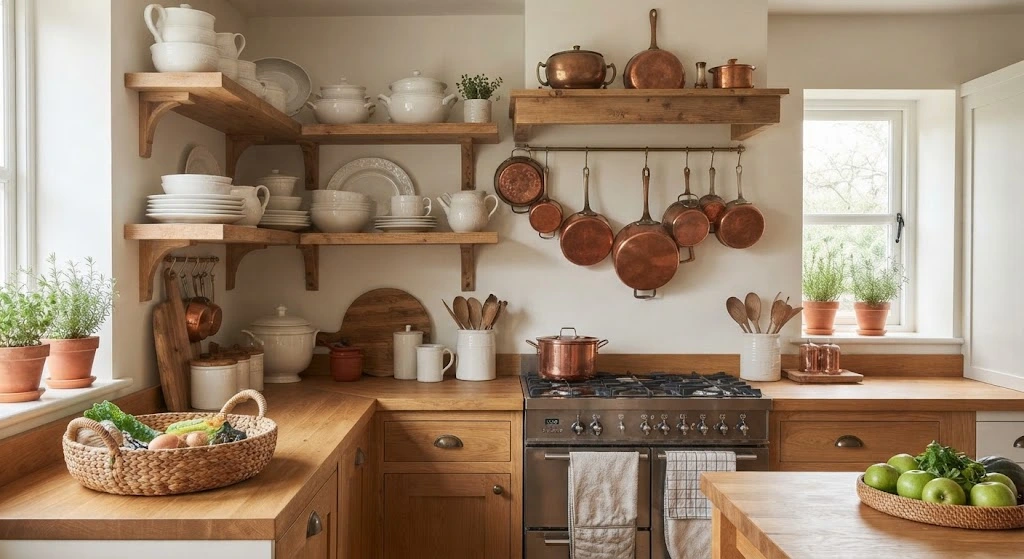
Floating shelves provide another opportunity to combine display and storage. Use them for attractive dishes, cookbooks, plants, or ceramics while leaving enough empty space to prevent a crowded appearance.
Kitchen Lighting Ideas That Enhance Decor and Function
Layering Ambient, Task, and Accent Lighting
Good lighting should support both the appearance and usability of the kitchen. Ambient lighting provides general illumination, task lighting helps with food preparation, and accent lighting highlights architectural or decorative features.
Combining these layers gives you greater flexibility throughout the day. Bright task lighting is useful while cooking, while softer accent lighting can create a relaxed atmosphere when the kitchen is being used for dining or entertaining.
Using Pendant Lights and Statement Fixtures as Decor
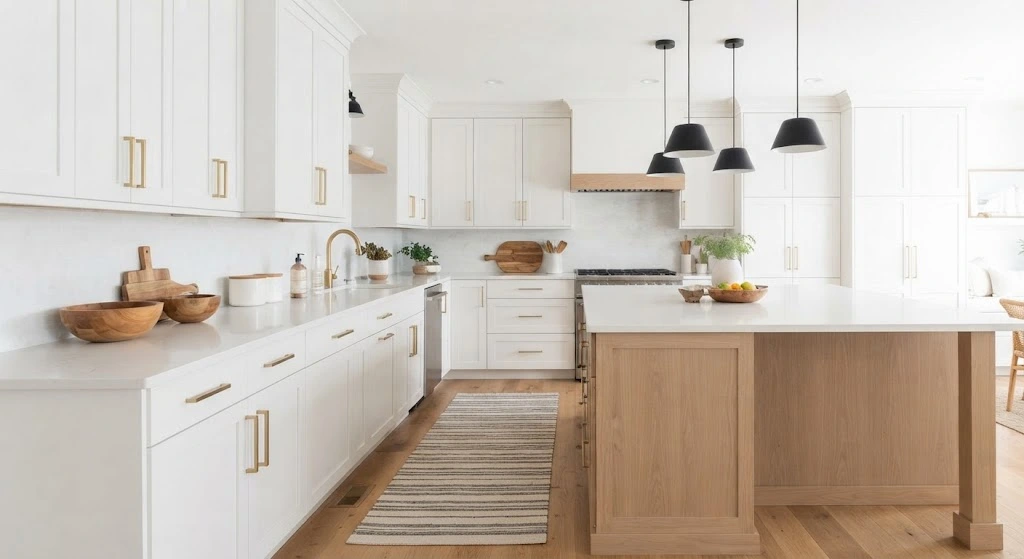
Pendant lights can act as functional artwork above kitchen islands, peninsulas, or dining areas. Choose fixtures that complement the kitchen’s finishes without competing with other major features.
For a minimalist kitchen, simple geometric fixtures can reinforce the clean aesthetic. More decorative chandeliers or glass pendants can add personality to traditional or transitional spaces.
Adding Under-Cabinet Lighting for Style and Visibility
Under-cabinet lighting is particularly useful because it illuminates countertops while adding a subtle glow. LED strips and compact fixtures can improve visibility in preparation areas and make the kitchen feel more welcoming in the evening.
Kitchen Cabinet Decorating Ideas for a Finished Look
Choosing Cabinet Hardware That Complements Your Style
Cabinet handles and knobs may be small, but they can have a significant visual impact. Matte black, brushed metal, brass, and polished finishes can each create a different impression.
Choose hardware that coordinates with your lighting and other metal finishes where possible. Consistency helps the kitchen feel intentionally designed.
Styling Open Shelves and Glass-Front Cabinets
Open shelves and glass-front cabinets can display attractive dishes, glassware, plants, and decorative objects. Group similar colours or materials together to create an organised display.
Avoid filling every shelf. Leaving some open space allows individual pieces to stand out and makes cleaning and rearranging easier.
Decorating the Space Above Kitchen Cabinets
If there is a gap between the cabinets and ceiling, use it selectively rather than automatically filling it. A few large decorative objects, baskets, or plants can work better than numerous small items.
If the space is difficult to clean or rarely used, leaving it empty may actually create a cleaner appearance. Decoration should enhance the kitchen rather than create another maintenance task. Alternatively, you could add floor-to-ceiling cabinets.
Kitchen Countertop Decor Ideas Without Creating Clutter
Styling Countertops With Trays, Bowls, and Decorative Objects
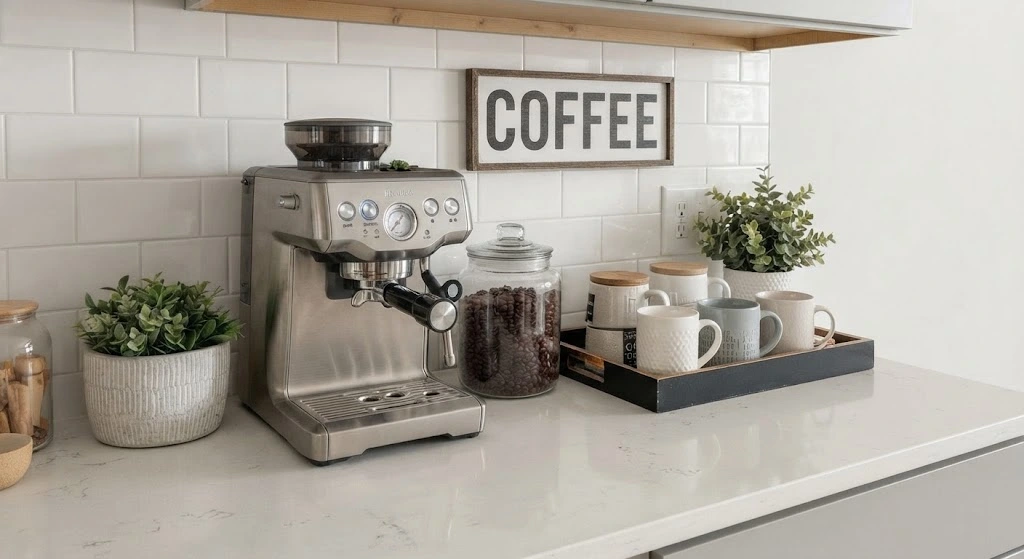
Countertops need to remain practical, but that does not mean they have to look bare. A wooden tray with a few carefully selected items, such as an attractive container, small plant, and decorative bowl, can create a polished display.
Keep decorative groupings away from the areas where you regularly chop, prepare, or serve food. This makes the kitchen easier to use while maintaining a styled appearance.
Creating a Functional Coffee or Beverage Station
A coffee station can combine organisation and decoration. Place your coffee maker, mugs, canisters, and a small tray together in one dedicated area.
This approach works particularly well in larger kitchens where a small section of countertop can be assigned to beverages. It also prevents everyday accessories from spreading across multiple work surfaces.
Keeping Countertop Decor Practical and Easy to Clean
Choose materials that can withstand kitchen conditions and wipe clean easily. Ceramic, glass, wood, and metal can all work well when appropriately positioned.
Avoid excessive decorative pieces near sinks and cooking areas. A smaller collection of useful items will generally look more sophisticated than a crowded countertop.
Beautiful Kitchen Decor Ideas With Natural Elements and Texture
Adding Plants and Fresh Greenery to the Kitchen
Plants can instantly soften hard surfaces and bring life into a kitchen. Herbs on a sunny windowsill can be both attractive and useful, while larger plants can fill an empty corner.
If natural light is limited, choose low-maintenance varieties suited to indoor conditions. Even a small vase of fresh greenery can provide a simple seasonal update.
Using Wood, Rattan, Stone, and Ceramic Accents
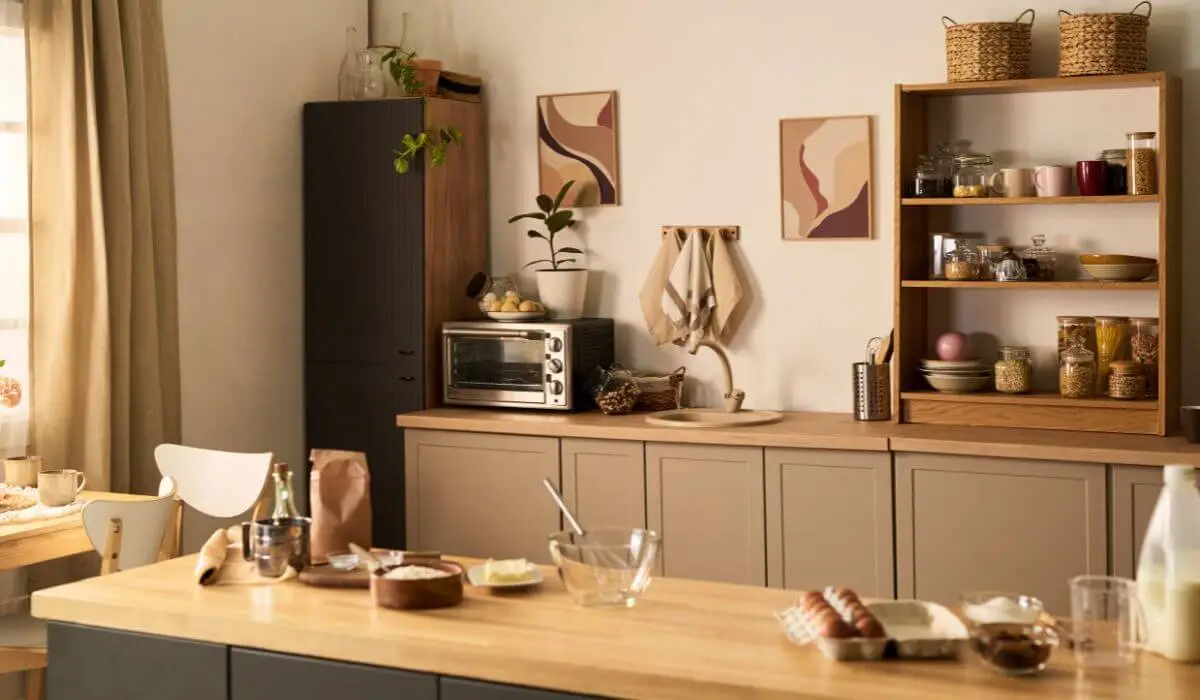
Natural materials introduce warmth and visual texture. Wooden cutting boards, rattan baskets, stone accessories, and handmade ceramics can prevent a kitchen with smooth cabinetry and countertops from feeling too sterile.
Mix textures rather than matching everything exactly. Combining several complementary materials creates depth while maintaining a cohesive appearance.
Bringing Warmth With Textiles, Rugs, and Kitchen Linens
Runners, washable rugs, tea towels, and fabric accents are simple ways to introduce colour and softness. They can also be changed seasonally or whenever you want to refresh the room.
Choose durable, washable materials because kitchens are prone to spills and splashes. A patterned runner can also help define a long kitchen or visually connect separate areas.
Smart Kitchen Decoration Ideas for Better Organization
Using Decorative Baskets and Storage Containers
Storage can become part of the decor when attractive containers are used thoughtfully. Woven baskets can hide less attractive essentials, while matching jars and canisters can keep frequently used ingredients organised.
Choose containers that suit the kitchen’s overall colour palette. A consistent collection creates a more intentional look than a mixture of unrelated packaging.
Combining Open Storage With Decorative Displays
Open storage works best when it combines useful and decorative items. Display everyday dishes, glasses, cookbooks, or serving pieces alongside a few decorative objects.
This approach is especially helpful for small kitchens because it makes storage visible and accessible. Just avoid overcrowding shelves, as too many items can quickly make the room feel untidy.
Keeping Everyday Essentials Organized and Accessible
Organisation should always support your kitchen’s workflow. Store frequently used utensils, spices, cookware, and appliances where they are easiest to reach.
When everything has a designated place, decorative elements become more noticeable because they are not competing with unnecessary clutter.
Small Kitchen Decor Ideas for Limited Spaces
Using Light Colours to Make a Small Kitchen Feel Larger
Light colours can reflect more light and make a compact kitchen feel open and airy. White, pale grey, cream, and soft natural tones are particularly versatile.
You do not need to make everything white. Adding one darker accent through hardware, lighting, or accessories can provide contrast without visually shrinking the room.
Decorating Vertically to Save Counter and Floor Space
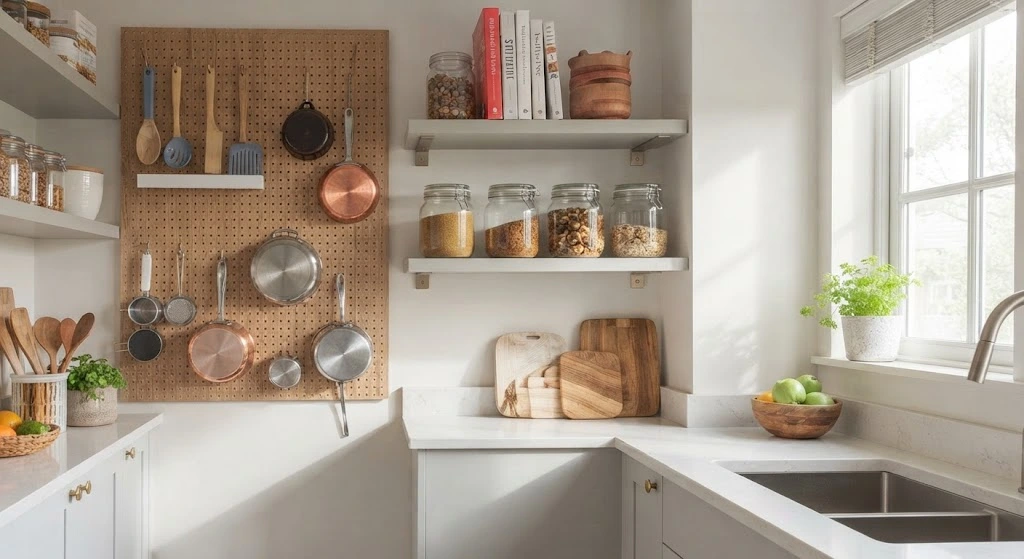
Use walls to your advantage when floor and countertop space are limited. Floating shelves, rails, hanging storage, and vertical artwork can add personality without taking up valuable work surfaces.
Tall decorative elements can also draw the eye upward, making the kitchen feel more spacious. Keep vertical displays organised so they do not become visually overwhelming.
Choosing Small-Scale Accessories Without Adding Clutter
In a compact kitchen, scale matters. Choose a few appropriately sized accessories rather than trying to recreate the displays found in a large kitchen.
A small plant, compact artwork, attractive utensil holder, or narrow runner may provide enough decoration. Leaving clear surfaces is just as important as adding decorative elements.
Budget-Friendly Ideas to Decorate Kitchen Spaces
Updating Cabinet Hardware and Decorative Accessories
Replacing cabinet knobs and pulls is one of the easiest ways to refresh a kitchen without replacing the cabinetry. Pair new hardware with a few coordinated accessories for a noticeable change.
You can also update containers, towels, rugs, artwork, and small decorative pieces. These affordable changes can give an older kitchen a more current appearance.
Refreshing Walls, Lighting, and Textiles Without Remodeling
A fresh coat of paint can dramatically change the atmosphere of a kitchen. New light fixtures, removable wallpaper, curtains, or a washable runner can provide additional impact without major construction.
Focus your budget on the features you notice most. Updating one prominent wall or lighting fixture can sometimes make a greater difference than buying numerous small accessories.
Choosing High-Impact Kitchen Decor Updates on a Budget
Before buying anything, identify what currently feels dated or unfinished. Prioritise changes that improve both appearance and usability, such as better lighting, updated hardware, or more organised storage.
A successful kitchen room decoration does not have to be expensive. Thoughtful choices, a consistent palette, and careful editing can make even a modest kitchen feel polished and welcoming.
FAQs
What are the best kitchen decor ideas for a modern kitchen?
Modern kitchens generally benefit from clean lines, simple accessories, coordinated hardware, statement lighting, and a restrained colour palette. Add warmth through wood, plants, ceramics, or textured textiles.
How can I decorate my kitchen without making it look cluttered?
Focus on a small number of useful or meaningful accessories and leave clear areas around your main work zones. Group decorative objects together on trays or shelves instead of scattering them throughout the kitchen.
What can I put on my kitchen countertops for decoration?
Consider a decorative tray, fruit bowl, plant, attractive canisters, cutting boards, or a small collection of ceramics. Choose items that complement the kitchen while keeping food-preparation areas clear.
How can I decorate a small kitchen?
Use light colours, vertical wall storage, compact accessories, reflective surfaces, and layered lighting. Keep countertops as clear as possible and choose decorations that provide either visual interest or practical value.
How can I make my kitchen look more beautiful on a budget?
Start with high-impact, affordable updates such as new cabinet hardware, paint, lighting, textiles, plants, and decorative storage. You can create a significant transformation without changing the kitchen’s basic layout.
Conclusion
The most successful kitchen decor ideas combine personality with practicality. From colour schemes and wall accents to lighting, cabinet details, natural textures, and smart storage, even small changes can make a kitchen feel more inviting and complete.
Rather than decorating every available surface, focus on creating balance. Choose pieces that complement your kitchen’s style, support the way you use the space, and are easy to maintain. With thoughtful planning, you can create a beautiful kitchen that remains functional for everyday life.